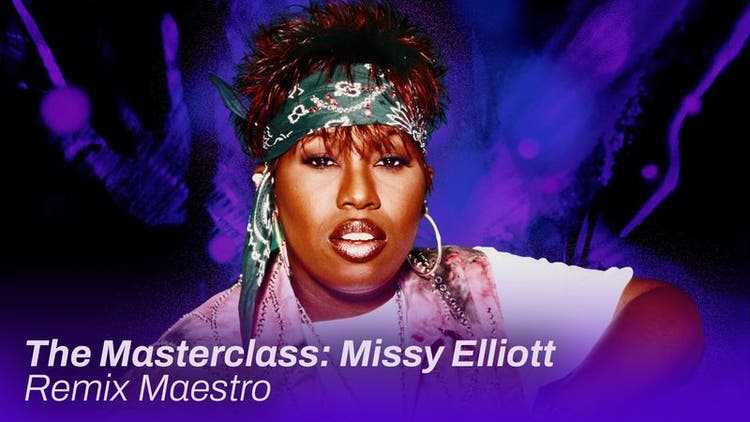
Missy “Misdemeanor” Elliott treated remixes like full events, using new guests, sharper punchlines, and fresh energy to give records another reason to matter. Sometimes she used a remix to stretch a single’s life. Other times, she used one to bring women in rap together, turn a club record into a bigger-room anthem, or show how far her sound could travel outside one genre.
That gift made sense because she has always understood records from every angle. She is a rapper, singer, writer, producer, visual thinker, and full-body performer. She knows when a beat needs more bounce, when a guest verse needs personality, when a hook needs more chaos, and when a song can shift from hit to moment.
Across her own catalog and her guest appearances, she helped make the remix feel essential again. These songs show how she used collaboration, humor, timing, and star power to give records a second life.
1. “Hot Boyz (Remix)” by Missy Elliott featuring Nas, Eve, and Q-Tip
Original version:
“Hot Boyz” first appeared on Missy Elliott’s 1999 album Da Real World with a cold, dark Timbaland bounce and background vocals from Lil’ Mo.
Her spin on it:
The remix brought Nas, Eve, and Q-Tip into her universe without making the song feel crowded. Nas added street-level cool, Q-Tip gave it veteran charm, and Eve brought direct, hungry energy during a key moment in her rise. Elliott still controlled the room, but she let each guest give the record a different kind of heat.
The remix’s impact:
This became one of her biggest chart moments. The remix helped push “Hot Boyz” into the top 10 on the Billboard Hot 100 and turned the track into a major rap and R&B radio record.
Why it mattered:
“Hot Boyz” proved a remix could sharpen a song’s identity instead of simply extending it. She curated the lineup so each guest made the record feel bigger, slicker, and more dangerous.
2. “One Minute Man (Remix)” by Missy Elliott featuring Ludacris, Trina and JAY-Z
Original version:
“One Minute Man” appeared on Miss E... So Addictive with Ludacris, who matched the Grammy Award winner's sexual humor with his own animated delivery.
Her spin on it:
The remix universe around “One Minute Man” gave the song more angles. Trina appeared in the video version and brought a blunt, Miami-bred confidence that made the record even funnier and more direct. A separate version with JAY-Z added another layer of slick wordplay. Instead of letting the vibes run out, Elliott let different personalities expand them.
The remix’s impact:
The single became one of the Virginia native's signature early-2000s hits, reaching the top 20 on the Hot 100 while also crossing into the U.K. Top 10.
Why it mattered:
She made sex talk feel playful, strange, and fully controlled. “One Minute Man” worked because she refused to soften the joke or hand the song over to the men around her. The remix versions only made that clearer.
3. “Get Ur Freak On (Remix)” by Missy Elliott featuring Nelly Furtado
Original version:
“Get Ur Freak On” was already a landmark. Built with Timbaland around bhangra-inspired percussion and a lean, futuristic groove, the original sounded like nothing else on mainstream rap radio in 2001.
Her spin on it:
The remix with Nelly Furtado moved the record into a different pop space without dulling its edge. Furtado’s voice gave the remix bounce, melody, and global-pop additions that sharpened the song’s already boundary-pushing sound.
The remix’s impact:
The remix appeared on the Lara Croft: Tomb Raider soundtrack and helped extend the song’s reach beyond her album cycle. The original also earned the rewnowned artist her first Grammy Award for Best Rap Solo Performance.
Why it mattered:
This remix showed how flexible the Supa Dupa Fly artist's sound could be. “Get Ur Freak On” already bent genre rules, and with Nelly Furtado, it became even clearer that pop needed to catch up to Missy.
4. “Work It (Remix)” by Missy Elliott featuring 50 Cent
Original version:
“Work It” became one of her defining records. The backwards hook, rubbery production, sexual confidence, and absurdist humor made it feel like a hit from another planet.
Her spin on it:
The remix brought in 50 Cent right as he was becoming one of rap’s biggest new stars. His presence gave the song a harder street-radio edge, while her original weirdness stayed intact. The pairing worked because of the contrast: 50 sounded direct and controlled, while Missy kept the record loose, funny, and unpredictable.
The remix’s impact:
“Work It” reached No. 2 on the Hot 100 and became Elliott's biggest solo chart hit. The remix did not replace the original, but it showed how strong the record was. Even with a major rap guest added, her concept remained the main attraction.
Why it mattered:
A lot of remixes from that era used a hot rapper to chase momentum. In the BET Award winner's case, 50 Cent entered her world, not the other way around.
5. “4 My People (Basement Jaxx Remix)" by Missy Elliott featuring Eve
Original version:
“4 My People” appeared on Miss E... So Addictive as a Missy Elliott record featuring Eve, whose presence helped give the original version extra rap muscle.
Her spin on it:
The Basement Jaxx remix pushed the song into full dance-floor territory and centered Elliott's club-command energy. The beat became brighter, faster, and more explosive, turning her chants, attitude, and crowd-control delivery into the main attraction.
The remix’s impact:
The remix helped “4 My People” travel internationally, especially in the U.K. and Europe, where the song became one of the "Get Ur Freak On" artist's biggest dance crossover moments.
Why it mattered:
“4 My People” showed how easily her voice could move between rap, R&B, and house music. The remix worked because she already sounded like a DJ, hype woman, and headliner at once.
6. “Pass That Dutch (Remix)” by Missy Elliott featuring Busta Rhymes
Original version:
“Pass That Dutch” came from This Is Not a Test! and already had the kind of bounce that made her records feel like they were built for choreography, block parties, and video screens at once.
Her spin on it:
Adding Busta Rhymes made perfect sense. Few rappers can match the "Star" actress' command of volume, rhythm, humor, and physical performance. The remix doubled down on movement. It felt less like a simple guest verse and more like two high-energy performers trying to out-animate the beat.
The remix’s impact:
The remix gave the record another jolt after the original had already established itself as one of her most recognizable early-2000s singles.
Why it mattered:
Missy Elliott and Busta Rhymes share a rare skill: They can make a song feel visual even with no screen in front of you. On “Pass That Dutch,” that chemistry made the remix feel louder, faster, and more alive.
7. “I’m Better (Remix)” by Missy Elliott featuring Lil’ Kim, Eve, and Trina
Original version:
“I’m Better” marked one of her later-career returns, pairing her with Lamb over a sparse, modern beat that left plenty of room for attitude and rhythm.
Her spin on it:
The remix brought in Lil’ Kim, Eve, and Trina, three women who provided their own unique blends of rap confidence, and such a lineup immediately gave the song more history. Like Elliott herself, the women she brought together had voices, images, and attitudes that helped reshape Hip Hop.
The remix’s impact:
The remix became a reminder of her role as both participant and connector. Even years removed from her last full studio album, she could still gather major voices and make the moment feel natural.
Why it mattered:
“I’m Better (Remix)” worked as more than nostalgia. It showed how much of today’s women-led rap landscape sits on foundations that artists like the aforementioned parties helped build.
8. “Not Tonight (Ladies Night Remix)” by Lil’ Kim featuring Da Brat, Left Eye, Missy Elliott, and Angie Martinez
Original version:
Lil’ Kim’s original “Not Tonight” appeared on Hard Core with Jermaine Dupri. The later “Ladies Night Remix” changed the song’s whole legacy.
Her spin on it:
The remix turned “Not Tonight” into an all-women rap summit. Lil’ Kim led the charge, while Da Brat, Left Eye, Missy Elliott, and a then-rapping Angie Martinez each brought a distinct voice. The Hollywood Walk of Fame honoree's presence on the hook, final verse, and ad-libs seemed effortless. Her tone added bounce, humor, and personality to a record already packed with star power.
The remix’s impact:
“Not Tonight (Ladies Night Remix)” became a major hit, reaching the Top 10 on the Hot 100 and earning a Grammy nomination for Best Rap Performance by a Duo or Group.
Why it mattered:
This is one of the great women-led posse cuts in rap history. It was glamorous, funny, competitive, and communal at the same time. She was not the lead artist, but her presence helped make the record feel like an event.
9. “Level Up (Remix)” by Ciara featuring Missy Elliott and Fatman Scoop
Original version:
Ciara released “Level Up” in 2018 with a sharp dance video that helped the song spread quickly online. The record already had the feel of a fitness challenge, a comeback statement, and a club chant rolled into one.
Her spin on it:
The remix reunited her with Ciara and Fatman Scoop, the same combination that helped power “Lose Control” in 2005. Scoop brought the hype-man energy, while Elliott provided a verse that connected the track to her and Ciara’s shared dance-floor history.
The remix’s impact:
She performed with Ciara at the 2018 American Music Awards, giving the remix a live-stage moment that matched the song’s choreography-first identity.
Why it mattered:
With “Level Up (Remix),” her energy still made sense in a social media-driven era of dance music. Her voice cut through because it already had what viral records chase: movement, personality, and instant command.
10. “Touch It (Remix)” by Busta Rhymes featuring Mary J. Blige, Rah Digga, Missy Elliott, Lloyd Banks, Papoose, and DMX
Original version:
Busta Rhymes’ “Touch It” was already built for impact, with its heavy beat and Daft Punk sample giving him a dramatic platform.
Her spin on it:
The remix turned the record into a full posse-cut spectacle. Mary J. Blige, Rah Digga, Missy Elliott, Lloyd Banks, Papoose, and DMX each brought a different intensity. Elliott's verse stood out because she knew how to cut through a crowded lineup without forcing it. Her delivery gave the remix a quick burst of style, confidence, and personality before the record charged forward again.
The remix’s impact:
The “Touch It” remix became one of the major rap remix events of the mid-2000s, complete with an all-star video and a lineup making the record larger than the original single.
Why it mattered:
She could dominate her own remixes, but this showed something just as important: She could step into another artist’s blockbuster moment and still leave a mark. That is the difference between a guest verse and a presence.