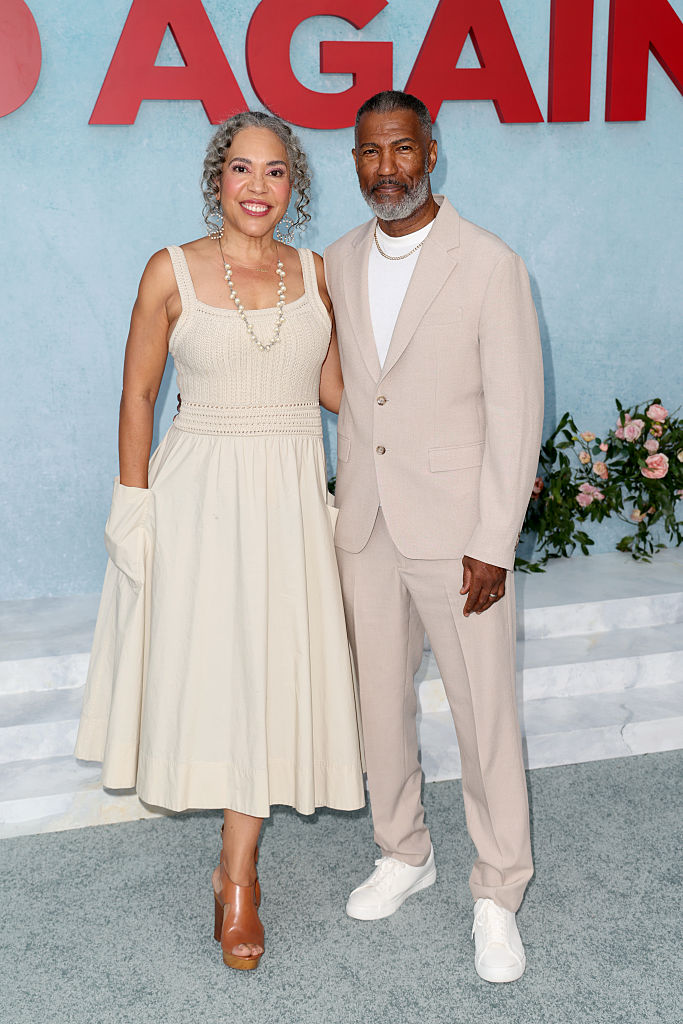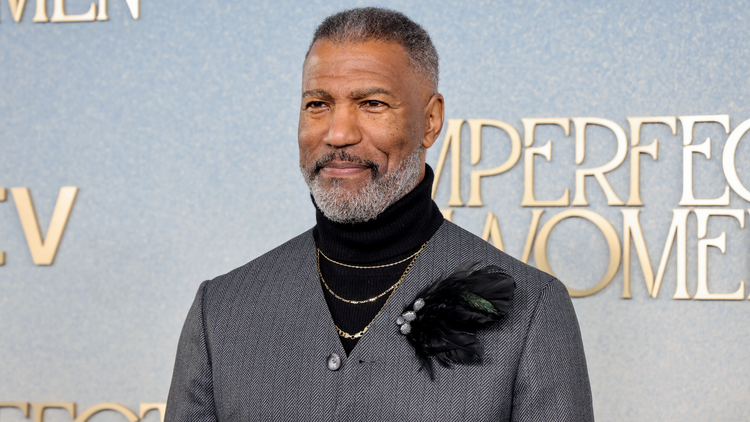
Ricco Ross has spent decades in the entertainment industry, building a career that includes James Cameron's Aliens, 1996’s Mission: Impossible, "Doctor Who," "Babylon 5," "P-Valley," and a long list of other film and television credits. Beyond acting, he's also a writer, producer, director, and the founder of production company Can You Dig It. In Tyler Perry's celebrated drama "Beauty in Black," which reached No. 1 on Netflix, an exotic dancer named Kimmie (Taylor Polidore Williams) becomes entangled with a wealthy family behind a beauty empire. Ross plays Horace Bellarie, the family patriarch who ends up marrying her. He takes on a different kind of villainous role in Perry's star-studded The Gospel of Christmas, a story about a pastor fighting to save his family's struggling church while facing challenges to his faith.
With that much experience under his belt, Ross has plenty of stories to tell, and some might surprise you. In the exclusive conversation with REVOLT below, he looked back on the decisions that shaped his career, the lessons he picked up overseas, and what Hollywood could learn from talent beyond its borders. He also got candid about the choices actors make when the cameras are rolling, the opportunities he could have pursued outside entertainment, and what matters to him more than another role on his résumé.
Let’s get into “Beauty in Black,” because your character, Horace, is something else! He can make you feel like he’s protecting someone and controlling them in the same breath. When it comes to Kimmie, where do you think his love ends and his need for control begins?”
I think he admires her because of her intelligence [and] her fearlessness, but I also think he is a control freak when it comes to business. And I think what he struggles with is finding that balance.
You’ve spent decades on different sets. What has working on “Beauty in Black” given you that you hadn’t experienced before — and did anything about making the show surprise you?
First of all, I'm surprised at the love for Horace because, when I read him, I did not think the audience would love this character because he can be pretty vicious at times. What I've learned from working on the show is the pace — that not having multiple takes can work in your favor sometimes because it forces everyone to come with their A game. There's a synergy that happens when everybody in front of the camera, as well as behind the camera, understands that we all have to be on our P's and Q's and locked in and zoned. It tends to work. I always thought that you needed repetition on screen, and I found out that sometimes it works without the repetition if you can get the right actors.
With actors like Debbi Morgan and Richard Lawson in the "Beauty in Black" cast, there’s so much experience in the room. What’s a moment working with one of your castmates that reminded you why you still love doing this?
I think the improvs… when you go off-book. One of the jobs for an actor is to try and be as authentic as you can. There's a certain amount of authenticity that you can create using the lines, but when you go off-script, that's when you're really locked in, and you're just inspired to say something or to do something that's not on the page. That's when it really feels like it's something special. Tyler [Perry] fortunately gives us enough room to play like that.
As a big fan of the show, I have to ask this: What did Horace do to Kimmie in the back of that truck in Season 3 (laughs)?
(Laughs) You better stop it. You better stop it.
But seriously, how did you and Taylor Polidore Williams approach that chemistry with the difference in age and power?
We actually met and rehearsed on our own for that scene, and we had a completely different kind of take than Tyler had. And so we decided to just do our thing. And a lot of what we did never made it on screen. I thought our take was really special, but Tyler didn't like it, so it didn't make it on screen. But he gives us room to play, and if it works for him, then you see it. If it doesn't work for him, you don't see it.
You play the “devil” in 'The Gospel of Christmas,' where a pastor is battling doubt and temptation while trying to save his church. What interested you more: how your role frightens people or how he gets them to trust him?
I think how he gets them to trust him. His means of manipulation. How he pulls you in and makes you think that he's on your side, and that it's all about your best interests.
How did you make that work in your performance?
Well, a lot of it is in the script already, the situations that they encounter. But the reveals are what's most surprising. Our whole concept of the “devil” is that he's very manipulative and very smooth. That's how he gets people to do what he wants to do. So I just went with that as the foundation of the character… Just make him very lovable, very likable, very trustworthy until he's not.
Between Horace and your role in 'The Gospel of Christmas,' you’re playing men who know how to get inside people’s heads. What did you change about your voice, movement, or timing to make the characters feel different?
Well, there are two versions of Lived, the character I play in The Gospel of Christmas. When he is being lovable and manipulative, that is one voice. That's one accent as well. When he is finally revealed and being his authentic self, then the voice changes and the accent changes as well. I think he has a little bit more of a kind of Mid-Atlantic voice when he reveals himself because I just thought having a straight American voice with a character that's been around long before America was ever discovered was not right. And so I wanted to give him something that was probably a more, kind of older, voice, or accent. The American accent just seems to be too familiar and too current.
What was it like working alongside Fantasia, Yolanda Adams, Tank, and Shirley Caesar?
Wow. That is a good question because it was… You know, you hear about these people, and you hear their voices, and you really do put them on a pedestal. And then to actually meet these people and see that they're just regular people — they're beautiful, they're intelligent, they're kind. It was a really good experience for me. I loved every minute of it. Tyler shoots so fast, so we don't get a lot of time to play around. But even at his pace, there is time to talk, and we developed friendships that I think will last.
You’ve worked with filmmakers like James Cameron and Tyler Perry, whose sets have very different rhythms. Can you remember a moment when you had to throw out your preparation because another actor gave you something you weren’t expecting?
When I work with Julian Horton… He plays the character Roy Bellarie in “Beauty In Black”; he plays my son. Julian likes to really get locked in and go for it. And in the process of doing so, if he's inspired, he will do his thing, and it may be off-book. And I love that because that means he's really there where we need to be. And when he goes there, I want him to feel comfortable that he can go there because I got you. Whatever comes out of your mouth, we're gonna play it. We're gonna play it for its authenticity; we're gonna be real with it, and let's create greatness.
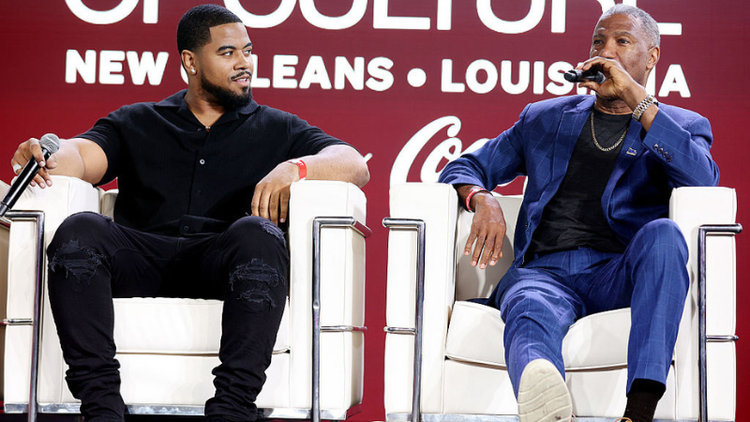
I did a podcast with Richard Lawson, who plays my brother, Norman Bellarie, in the show, and Richard had this quote that I hadn't heard of. He said, "When you're searching for greatness, you have to learn to be comfortable with the uncomfortable." And some people find it uncomfortable when you go off-script. I actually love it because I think that's the time when you really have an opportunity to find greatness.
You’ve spoken about going abroad because you wanted opportunities beyond the roles Hollywood was offering you. What part of your range do you still feel the industry hasn’t tapped into? What kind of character would bring it out?
First of all, I think that there are really amazing filmmakers outside of Hollywood. Tyler has shown us that. I like to take that even further and take it outside of the shores of America. There are great filmmakers in Britain. There are great filmmakers in Europe. There are great filmmakers in Africa and in South America, and we ignore those. What I would like to do is build a bridge where we use American actors so that these films are seen over here, and that we can introduce these great filmmakers and storytellers to America and to the West.
So yeah, I am looking for roles outside of Hollywood. I am looking for roles in Africa in particular because I've seen some of their movies, and I am surprised that we don't see them over here. There is one that kind of broke out called "The Polygamist." It's on Netflix, and that kind of came out here. But I think there's a lot more. We haven't touched the surface of the talent there, in front of the camera and behind the camera. I would like to be part of that, the engine that builds this bridge between the continent of Africa, the Black Brits, the Caribbean, and Black Hollywood because I think we have something special. And if we were to put it all together, I think Hollywood will come crawling to us.
If you noticed, there wasn't a single person of color who won an Emmy in 2026, and there were some great performances. So I think that instead of waiting and letting them set the standard, we have to set our own standard. We have to create our own standard. We are people that creativity is in our bones, in our DNA, and we should not look to copy or replicate. We should be our authentic selves and be our creative selves and make magic on the screen.
I know you studied Shakespeare at the London Academy of Music and Dramatic Art (LAMDA). I actually took a course there, so it's special to have that in common with an industry GOAT! What drew you to London?
What drew me there was that I was working in Hollywood right out of college at UCLA, and I bleed blue and gold because UCLA gave me a free ride to study acting. I got a master's degree. Right after that, I started working in Hollywood. The big role that I got was on a TV series called “Hill Street Blues,” and I was playing a gang member. But unfortunately, the success of that show made it so that every job I got after that... The next three jobs were also gang members. And I come from Chicago. I could play gang members, but I thought, "I have a master's degree. I can play other things too." And, at that time, that seemed to be the only thing that I was being offered. So a professor at UCLA suggested that I go to London and study Shakespeare. He said, “There's a school called LAMDA. Audition, and if you get in, you should go." He said, "It'll be good for you as an actor, but more importantly, it'll be good for you as a young man." And I went, I auditioned, I got in, and I studied there.
What’s the most important thing you learned there that you still apply today?
What I took away from there was that very often we in America, we find characterization from the inside out with our method acting. We find the emotions, and then we kind of work from the inside out. In Britain, because they do a lot of period pieces, they often need a costume that will assist them in finding that character. The right costume, or a crown or a pair of boots, you know, will assist them... These period pieces will, once you put those things on, all of a sudden you feel like that character. So I have learned to use both.
For the character Horace… I had a hard time with this character because he was really a far reach for me, from Ricco. So, I used my father as the foundation. My father was a man who really never shouted in anger, and so that was kind of the foundation of him. But I used the cane and the cigar and the outfit to really complete the character.
Interesting. So the cane and the cigar were like your costume?
My costume, right. That was working from the outside in, which is what I got from Britain. Finding that cane, smoking a cigar. I didn't smoke. I don't smoke cigars, but I started smoking them when I knew I was gonna use it for the character so that I would get used to it. When you smoke cigars, there is a certain calm that comes over you. And I also found that it lowered my voice and it made my voice more baritone, more bass, where it's normally baritone. That was working from the outside in, sort of. When I started walking with the cane, that's when I thought, "I got you now, Horace. I got you."
I don’t know if you’ve seen Druski’s comedy skit about British actors taking all our roles, but he’s definitely not the first person to bring that up. Having worked on both sides, do you think there’s any truth behind the joke? What do you think draws American casting directors to British actors?
First of all, I don't think American actors or British actors are better than one another. I think they're good actors. There are great actors on both sides. Their techniques may be different. I think personally the real reason why is that these actors are tried and proven in Britain, and that you can get them over here for a fraction of the price. I think that's primarily the reason why a lot of British actors are here. They're big over there, so they know that what they're doing with their craft is working, and they bring them over here with a certain confidence that they'll be good over here. The Brits are very good at doing accents.
But, you know, when I hear this conversation, it hits a little differently for me because when I got out of LAMDA, all of my English classmates were going out and auditioning and getting jobs. I ended up staying a total of 13 years. I didn't have a work permit there, so I couldn't do that. So what I did was I put on my best British accent, and I went out and auditioned in Britain, in London, and I started working as a Black British actor. And for four years, until I was able to get my papers, I was that person taking jobs from the Brits as an illegal alien because I had my English accent, and I would go and take these jobs from the Brits. It works both ways. If you're good at what you do, good things will happen, whether you're putting on an accent or not.
You’ve built a career across decades. Was there ever a time when you seriously questioned whether to keep going? If so, what was happening in your life that helped you make that decision?
I always knew I wanted to keep going, but there were periods where I thought I could find easier success doing something else. I think I'm very good at real estate. I could have done that and been good at that. I think I could have been good in the stock market. I'm good at stocks. I got offered a pro basketball contract in Europe. I could have done that. So I've had opportunities to do other things, and those were the times when I felt like I was at a crossroads where I had to make that decision. I always knew I wanted to do acting, but I just thought, “This could be an easier road.” And do I wanna take the easier road, or do I really wanna follow my passion? And I chose to follow my passion.
What did you once believe you had to sacrifice to have a successful career that you’re no longer willing to give up?
I thought that I had to focus on it 24/7. And one of the things I took back from Britain is that a lot of the actors understand that this is just a job. It's a job, and you have to live life, because what you're doing on screen is you're imitating life. And if you're never really living life, then you don't have anything to imitate. So you have to understand it's just a job. You put it down. You're no different or better than anybody else. You just happen to have a job that puts you in the public eye, and I think a certain amount of humility comes with that. I understood this is just a job. It's not the end of the world if something goes wrong or if you don't get the job.
For example, there was an incident. We were working on Aliens, and one of the actors’ brothers was very sick and needed to have a bone marrow transplant. Because he was his brother, he was a perfect match. The actor went to the producers and said, "Can I have Friday off, because I have to give my brother a bone marrow transplant?" And the producers looked at the schedule and said, "No, we need you on Friday. Can you do it next Tuesday?" And then he says, "Well, I'm gonna rephrase the question. I won't be here on Friday." And so he didn't come on Friday. He gave his brother the bone marrow, and his brother ended up passing away anyway.
But I remember thinking how badly he would have felt if he had delayed it and waited till Tuesday because of a film. And that was real life, and what we're doing is pretend, so he had his priorities right. He did the right thing. It worked out for the production. They figured a way to get around him, and it all worked out. But that was an incident that reminded me this is just a job. That's all it is… a job. It is not life and death. And that kind of keeps it in perspective.
I’m sure the people closest to you know a version of Ricco that audiences don’t. What would they say you’re most passionate about when the conversation has nothing to do with acting?
I used to be very passionate about politics, but since the orange guy got in, I kind of threw in the white table, the white flag. But I'm very passionate about people, justice, [and] being fair. I'm very passionate about sports, about my family — I'm very passionate about my family. And I'm very passionate about traveling, because I think there are three types of education. There's street education, there's formal classroom education, and then there's worldly education. I think if you have all three of those, you have a better perspective on life.
With everything you’ve already done, what’s a goal you’re still willing to be a beginner for?
Wow. I think I'm willing to be a beginner in a new language. I love languages. I can speak maybe bits of five different languages, but I'm not fluent in any of them other than English. I'm pretty close to being fluent in Spanish. And I think another language would be good. Or just to become fluent in one of those other languages, like French, or German, or Italian, would be something that I would be willing to do.
When you think about the next chapter of your life, what do you want more room for?
I think if I can do something monumental for maybe those who are less fortunate than myself. If I can do something big. I don't know what that would be, but that would be the most fulfilling thing for me. If I can do something big for people who are less fortunate, because I come from that struggle. I know how it is. And I know a lot of times it's no fault of their own; it's just circumstantial. I used to feed the homeless, and I used to hear their stories, and I remember hearing their stories about how they became homeless and thinking that, “Wow, that could have happened to me.” That could have happened to me a number of different times. And so I think that sometimes people just need a little help. So if I can do something at a grand scale, I wanna do something monumental.
What’s something you’re surprisingly bad at that your friends or family will never let you live down?
I'm not gonna lie to you, I'm a bit of a jack of all trades. I'm good at a lot of things. I might not be great at them, but I'm good at a lot of things. I was a ballet dancer before I was an actor, and I'm very good physically. I got three degrees. I'm very good intellectually in conversations. What I'm not good at? Wow, I don't know what I'm not good at. I don't know. I'm not being cocky here; I'm just being honest.
Okay. Ricco Ross is not bad at anything (laughs).
I have to ask my family. I have to ask my wife what I am not good at.
You should. She's a woman, and we're always going to find something (laughs).
All right. I'll have to get back with you on that one… Actually, I do remember now. I am bad at spelling. I am not really good at spelling.