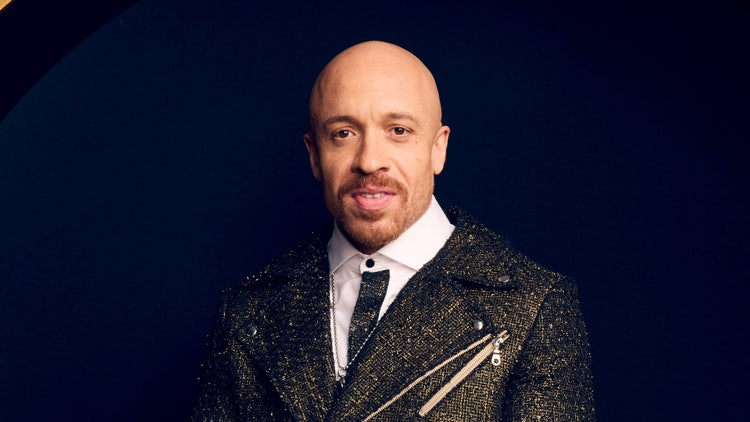
Key Takeaways
- KeiLyn Durrel Jones says portraying Bill Bray required restraint, presence, and emotional intelligence rather than spectacle.
- Through research and conversations with people who knew Bray, Jones came to view him as a father figure and confidant in Michael Jackson’s life.
- Jones describes Bill Bray as someone who protected Jackson while giving him space to grow creatively.
Michael Jackson naturally commanded attention with his music, movement, voice, clothes, and mythology. In Michael, Bill Bray’s importance comes from the opposite place. Instead of fighting for the frame or needing the biggest line in the scene, his power comes from standing close enough to protect the King of Pop while giving him enough room to become himself.
That gives KeiLyn Durrel Jones one of the 2026 film’s most delicate assignments. As Bray, he had to make his presence feel purposeful without turning the character into a spectacle. He watched, listened, read the room, and stepped in only when the moment called for it.
That matters a lot in a story about an artist who spent much of his life surrounded by noise, expectation, and control. Bray’s role in Michael’s world was not only about keeping danger away. In Jones’ view, he also gave Michael an emotional space that allowed him to speak freely, think through his next move, and imagine a life beyond the limits placed around him.
Speaking with REVOLT in an exclusive conversation, Jones opened up about looking past the word “bodyguard,” studying the people who knew Bray, working opposite Jaafar Jackson, and finding the emotional weight in a man whose impact on the Thriller icon did not need to be loud to be felt.
When you first stepped into the Bill Bray story, what did you realize he had to represent beyond the title of bodyguard?
I hadn’t known a whole lot about Bill Bray before I signed on to do this. But as the process went on, and as I did some more research, I met more people because of the authenticity that the filmmakers tried to cultivate. We shot at Hayvenhurst. We shot at the real strip of L.A. street where Michael shot "Thriller." Along the way, I met hair and makeup people, the groundskeeper at Hayvenhurst. All that to say, the more people that I met that knew the man Bill Bray and knew these two men and their rapport, the more I learned that he was a very pseudo father figure, confidant, protector, you know, avuncular sort of energy. And I just tried to capture that and cultivate that with Jaafar. I think we did a pretty solid job, but it just became clearer and clearer to me how important these two men were to each other outside of all the iconography, and fandom, and music, and so on. You definitely see that in the film.
When people watch old footage of Michael, they are usually trained to look only at the star. When you started studying Bray, did it change the way you watched those images and footage?
Yeah, for sure. I think a part of that is the way that I sort of consume media these days, the artist that I am now. I am an actor first. I love acting, the craft of acting. I’ve been studying it and doing it my whole life. However, and notwithstanding, I also appreciate and enjoy the other aspects.
With that comes, as a director, which Antoine [Fuqua] did so well, you have to sort of be the quarterback, the team captain, the general manager, and head coach all in one. And so you sort of zoom out and see the whole thing. To answer your question with much verbosity, I have enjoyed zooming out and watching who’s around the star, not just in narrative media that I consume — TV and film — but at any time I watch anything that is collaborative. The collaboration sort of kind of goes by the wayside when you have a lead singer, or a frontman, or a frontwoman. And so I have sort of trained myself, especially in this process, to watch and see who’s around the star as much as one can.
Bray is one of the quietest roles in the film, but it is definitely not a small role. How did you approach making his importance felt without overplaying him?
I watched this old Don Cheadle interview years ago, and he sort of articulated the way that I approach acting. I think, whether it’s on stage or on camera, and certainly something to this scale, whatever I can bring to the character and thus the project to uplift in a communal, supportive way, the thing at large, it’s not about stealing the scene. It’s about making the best product, the best project possible. That’s the way I approached it.
Honestly, on the day-to-day, while we were making the thing, I didn’t think much of it. I just wanted to be a good scene partner for Jaafar, a good actor for Antoine and [film producer Graham King], to meet and serve the man himself, the man Bill Bray.
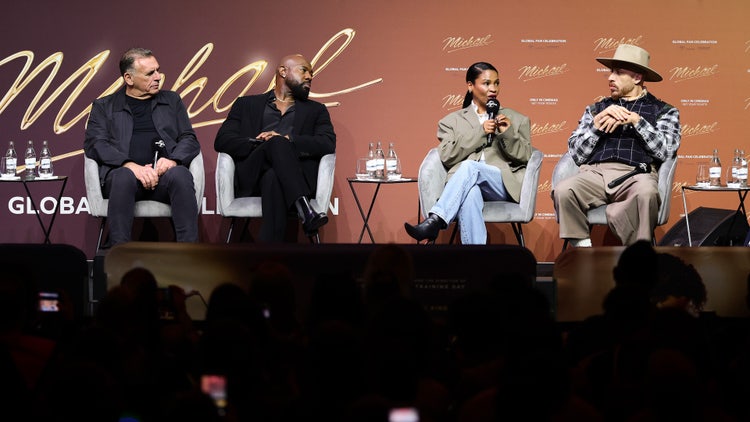
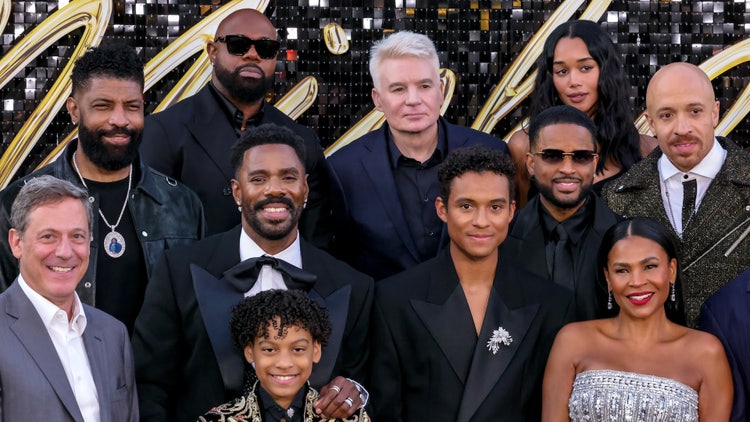
Speaking of Jaafar Jackson, were you thinking more about what Bray says to Michael or what Bray allows Michael not to have to say?
Yeah. With both KeiLyn and Jaafar, and Bill and Michael, in the scenes that we had together, obviously, Jaafar is the star, and he’s playing Michael... we were trying to cultivate a safe space where Michael/Jaafar could just be. He didn’t have to be an entertainer. He didn’t have to be a father — he wasn’t yet at this time. He didn’t have to be a son, or a brother, or dancer, or writer, or, you know, a bank or anything. He could just sort of be as he struggled to find his own creative and personal independence from his family, whom he loved so much. They are a really tight-knit family.
Michael had these, he says it in the movie, “I just got these ideas. I need to get them out. I need to get them out.” He felt so stifled by the family, by means of Joe Jackson and his sort of oppressive tutelage. In trying to support Jaafar/Michael in that creative independence and allow the space for these two men just to be and not say a whole lot, like that scene when they’re on the mountaintop, I don’t have a whole lot of lines. I’m not saying a lot, but it’s just us two in that scene.
It’s about this man Bill allowing his pseudo son/his ward to just vent and get it all out and work through the process himself. And then, when the time is right, as a wise old sage would, he drops a little nugget, you know, “Maybe you need to go out on your own.” Just let that sit in the water. You do with it what you will. Bill never tried to tell him what to do. You got to cultivate a safe space.
Did you think about Bray as representing a different kind of protection than the kind of tutelage Michael grew up around?
Yeah, I think so. He was sort of the yin to Joe Jackson’s yang. Joe Jackson was Joe Jackson. He’s a very hard man or whatever. Far be it for me to speak on something I don’t know much about, but in some ways, there would be no Michael without Joe. But also, we might not have gotten Thriller or whatever without Bill providing that safe space and the room for Michael to grow.
I feel like Joe and, for purposes of the film, they’re sort of each other’s antithesis, the way they relate to Michael. But in the larger aspect, I feel like both their roles were super important. I think that Bill was potentially just as instrumental in Michael’s successes as Joe was.
A lot of actors chase the big visible moment, but this role asked you to make smaller choices matter. What did playing Bray teach you about restraint as an actor?
Coming from the training background that I come from, I learned to support my scene partner and the production at large. When you’re doing a play, for instance, you can’t tell the audience where to look. On camera, you can tell the audience, “This is where I need you to look,” even if it’s as close as an eyeball or as wide as this canyon that is the Hollywood Canyon or whatever. But on stage, you don’t have that luxury. Sure, this person is talking, and you might want them to look over there with lighting and sound and movement, but the audience can look wherever they want.
When I’m on stage as a smaller or an ancillary character, or even just in the scene, I’m not doing a whole lot. I still have to stay alive to the world. That’s what I tried to approach Bill with. I just wanted to be alive and truthful to the world that we were rendering on camera. That’s how it came out. Luckily, Antoine shoots every single angle that you can think of and was able to tell this story through Bill Bray that way.
You appeared in projects like "Succession" and "Better Call Saul" before this role in a major music biopic. What did Michael allow you to show as an actor that people may not have seen from you yet?
I had a professor tell me, once upon a time, a bald head reads as harsh on screen or whatever. Oh, well. Because of my physique, I’m not a slight man. I’ve got this athletic build. I get cast as a lot of bodyguards, military guys, cops, drug dealers, things like [that]. There’s a certain sort of roughness and toughness that is inherent in those roles.
While Bill Bray is the bodyguard, he is more of a Jiminy Cricket sort of sage — avuncular figure, like I’ve said. By being cast as a bodyguard, I’m like, “This is very much in my wheelhouse.” But being able to broaden the spectrum of emotion without saying or doing a whole lot, I think that allowed me to bring all this other training and chops that I was talking about before to the table, to the forefront, and show these folks what I’m capable of.
What did playing Bray teach you about the difference between being seen and being important?
You can play an integral role without doing a whole lot of physical action or saying a whole lot of words. The truth is still the truth. Even in those two words [that my character said to Joe], “It’s over,” we know it’s so loaded with so much backstory and so much weight, but it’s just two little words. I didn’t have to punch him or shove him down. I’ve seen a lot of fans like, “I wish Bill would have punched Joe,” or whatever. None of that was necessary because he was able to say it with a look and with two words, and then a smile as he walked off.
It just reinforced that you don’t have to push, or say, or do a whole lot to still be truthful to the world that we’re rendering on camera, on stage, or whatever the case may be.
When people leave the theater, what do you hope they remember most about Bray, the character and the man?
I think we all need a Bill Bray in our lives. I think most of us, if we’re fortunate, we have at least one. It’s not always a man. It’s not always someone older. It could be a child or someone that you’re taking care of, but just someone who allows you space to be your true, authentic self.
Those are words that are very much in the zeitgeist right now, and they’re thrown around a lot, but that’s something that’s very rare. We inherently, psychologically adjust who we are depending on who we’re with. We’re a little bit different than we are with our mama versus the homies versus at work or whatever. I think when someone in your life allows you that space just to lay it all down and be your true, authentic self, remove the mask, as it were, to quote Paul Laurence Dunbar, that’s important. That’s integral to peace and happiness.
I think when people walk away, hopefully they reflect on their own lives, who that person is, whether it’s the auntie, mom dukes, a child, a brother, a mentor, a frat brother, or whatever it is. Zooming out in the macro, just feeling inspired and joyful, not just from the Bill and Michael relationship, but the movie itself. I think it’s a joyful, fun, entertaining, nostalgic piece of cinematic blockbuster theater. I’ve seen it nine or 10 times, and I always walk out feeling inspired as an artist, also joyful and nostalgic for the music and all those things, but just like, “Oh man, I got to go make some art. I got to go do the thing,” whatever it is.
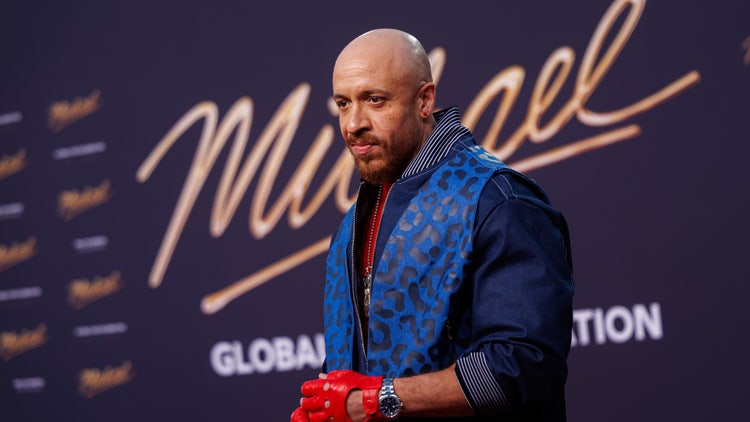
Is there anything else you want to tell the readers? Anything you’re working on or anything people should know?
I’m excited for whatever comes next. I got an indie film that we’ve already shot. We’re just trying to get it off the ground. And just to go see the movie while it’s still in theaters, man. That’d be the main thing. I feel like you have to experience this movie on the biggest screen possible. Like me, unfortunately, I never got to see Michael [perform in person]. This is as close as you’re going to get to seeing him in concert. So I would say, while it’s still in theaters, go check it out in theaters.