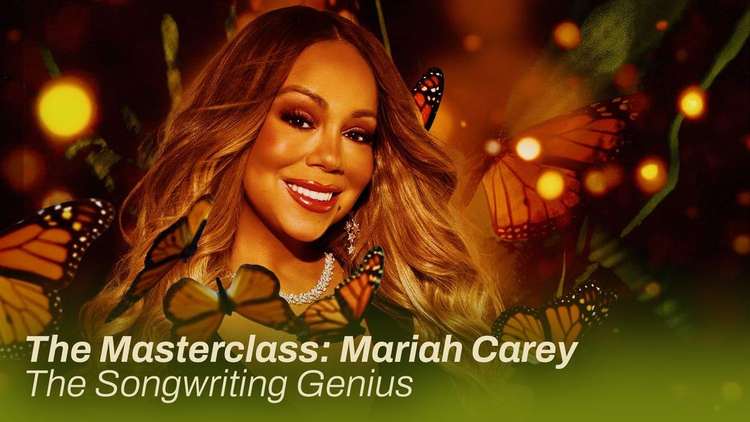
Mariah Carey’s voice gets the loudest praise, and for good reason. The range, the runs, the whistle notes, and the stacked harmonies all helped make her one of the most recognizable singers in music history. But focusing only on the voice misses one of the biggest reasons her catalog lasts: She sure can write.
Her songwriting always carried personality. She knows how to make romance sound cinematic, heartbreak sound private, flirtation sound funny, and shade sound expensive. But she can also take a word that feels formal, a phrase that feels playful, or an insult that feels unserious and turn it into a full mood. Sometimes the writing feels like a diary. Sometimes it sounds like a clapback in diamonds. Sometimes it works because she sings a line with enough restraint to make the feeling hit harder.
The real lesson is that, instead of using language to show off, the Here for it All artist uses it to sharpen emotion. Across ballads, club records, Hip Hop-leaning singles, and deep cuts, these 10 songs show how she turned specific words, titles, and phrases into lasting pop and R&B moments.
1. “It’s Like That” / The Emancipation of Mimi
Lyric/vocabulary anchor:
“It’s a special occasion, Mimi’s emancipation / A cause for celebration, I ain't gonna let nobody's drama bother me”
Her spin on it:
On paper, “emancipation” sounds formal, serious, and heavy, but the NY native flipped it into party language. With “It’s Like That,” she made the word feel like release, nightlife, freedom, and a comeback rolled into one. The song is essentially labeling her comeback as a celebration, not a plea for sympathy.
The songwriting impact:
That choice gave The Emancipation of Mimi a title that expanded past a typical album campaign. The project positioned her as someone stepping out of old narratives and back into control. The phrase tied the club energy of “It’s Like That” to the larger story of the era: No stress, no drama, and no time wasted on anyone trying to keep her in the past.
Why it lasted:
The title became part of Carey's mythology because it made a comeback sound personal without over-explaining it. She did not call the album The Return or The Comeback. She called it an emancipation, and that one word made the era feel like a liberation.
2. “Obsessed”
Lyric/vocabulary anchor:
“See right through you like you’re bathin’ in Windex... He’s all up in my George Foreman”
Her spin on it:
She turns a diss record into stand-up comedy with a beat. She does not sound angry as much as entertained, which makes the insults hit harder. One second, she’s brushing off someone with a “Napoleon complex.” The next, she’s saying he’s “all up in my George Foreman,” referring to being all up in her grill and dedicated to staying in her face and her business. And there's the Windex line, which is so ridiculous and so clear that it barely needs explanation.
The songwriting impact:
The genius is in how specific the shade gets. The Grammy winner does not rely on generic “you’re jealous” language. She builds the whole song around little punchlines that make the target (who is generally accepted to be Eminem, in this case) sound desperate, confused, and easy to laugh at. The hook asks a simple question, but the verses and ad-libs keep finding new ways to say, “This is embarrassing for you.”
Why it lasted:
“Obsessed” became one of her most quoted late-2000s singles because the writing is funny, petty, and instantly repeatable. The song gave fans a clean comeback for anyone doing too much, and the George Foreman and Windex lines made the shade feel even more unserious in the best way.
3. “A No No”
Lyric/vocabulary anchor:
"After everything I already been through / I can't waste no time, pay no 'tention to you / I said no, no-no, no"
Her spin on it:
“A No No” proves how much mileage she can get out of one tiny word. The song builds around rejection, but she makes the refusal playful instead of heavy. The title sounds simple, almost childish, but then the record turns that simplicity into a complete dismissal.
The songwriting impact:
The Lil’ Kim “Crush on You” energy gives the song its Hip Hop foundation, while the Precious actress' delivery gives it grown-woman ease. She does not need a dramatic "I'm done" speech. She needs a beat, a smirk, and one word repeated until the answer becomes impossible to misunderstand.
Why it lasted:
Later-career Mimi often shines when she leans into humor and taste at the same time. “A No No” does that perfectly. It connects her love of Hip Hop to her gift for turning a phrase into a personality trait.
4. “Honey”
Lyric/vocabulary anchor:
"Oh baby, I've got a dependency / Always strung out for another taste of your honey"
Her spin on it:
“Honey” sounds bright and sensual, but the writing is built around craving. Carey takes the sweetness of the title and pushes it into dependency language. The result makes romance feel delicious, physical, and slightly overwhelming.
The songwriting impact:
That metaphor gives the song its whole body. The hook feels light, but the words suggest a kind of romantic fixation. Not just singing about attraction, she is describing the pull of someone she keeps wanting to "taste" again, and the vocal delivery makes that desire feel effortless.
Why it lasted:
“Honey” helped mark a major creative shift for the songstress because it leaned into R&B and Hip Hop with confidence. The writing matched that shift. It was glossy, flirtatious, and direct, but the central metaphor gave the song a clean identity that still feels instantly recognizable.
5. “Breakdown” featuring Bone Thugs-n-Harmony
Lyric/vocabulary anchor:
"Underneath the guise of a smile, gradually, I’m dying inside"
Her spin on it:
“Breakdown” is one of her strongest writing showcases because the song studies the difference between how heartbreak looks in public and how it feels in private. Words like "nonchalant," "sacred," "guise," and "disguise" make the narrator sound composed, but the actual story says the opposite. She is falling apart and trying to sound fine.
The songwriting impact:
Carey writes heartbreak through the act of pretending to be fine, not through one big dramatic collapse. The song understands the small humiliations of rejection: Lying to friends, smiling through pain, going home, and losing it when nobody can see.
Why it lasted:
The Bone Thugs-n-Harmony collaboration gave the song a unique rhythm, but her pen gives it emotional weight. She uses precise language to describe a messy feeling, which is why “Breakdown” still feels like one of the clearest examples of her as a serious R&B writer.
6. “Butterfly”
Lyric/vocabulary anchor:
"If you should return to me, we truly were meant to be / So spread your wings and fly... wild horses run unbridled / Or their spirit dies"
Her spin on it:
“Butterfly” takes a familiar idea, loving someone enough to let them go, and turns it into a full emotional statement. The title image gives the song beauty, but the writing gives it pain. She treats goodbye (presumably to her ex-husband Tommy Mottola) as something to survive with grace, not something to romanticize.
The songwriting impact:
The song works because the metaphor stays consistent. The different metaphors all point to the same lesson: Love cannot thrive under control. Her vocal delivery adds another layer because she sings it like someone trying to be noble while still hurting.
Why it lasted:
“Butterfly” became one of the E=MC² artist's defining symbols because it speaks to romance, personal freedom, and creative independence at once. The word became bigger than the song, but the song earned that status through writing that feels sincere, elegant, and emotionally clear.
7. “The Roof (Back In Time)”
Lyric/vocabulary anchor:
"I envision you caressing me and go back in time / To relive the splendor of you and I on the rooftop that rainy night"
Her spin on it:
“The Roof” might be the best example of Carey writing like a literary storyteller. She gives the listener weather, setting, tension, desire, and regret. Instead of simply saying she remembers someone, she pulls the listener onto that rooftop with her through the mist, longing, and flashback.
The songwriting impact:
The vocabulary matters because it slows the scene down. Words tied to apprehension, desire, and splendor make the memory feel dramatic without turning it into melodrama. The mom of two writes the moment like something she can still see, touch, and replay, which makes the song feel intimate instead of distant.
Why it lasted:
“The Roof” sits at the intersection of her R&B pen and her Hip Hop ear. The Mobb Deep connection gives the track a darker pulse, while her writing turns it into a sensual memory piece. That mix makes it one of the clearest examples of her as both a storyteller and a sonic curator.
8. “Touch My Body”
Lyric/vocabulary anchor:
"I know you got that fever for me, 102 / And, boy, I know I feel the same, my temperature's through the roof... they be all up in my business like a Wendy interview"
Her spin on it:
“Touch My Body” works because she makes the fantasy flirtatious, private, and knowingly ridiculous instead of treating it like a heavy confession. The language around imagination, fever, and temperature gives the record heat, but the jokes keep it light.
The songwriting impact:
The song is sensual, but it also understands comedy, making it a perfect balance. The Rock & Roll Hall of Fame nominee can create a bedroom record and still sneak in a media-age punchline about privacy, cameras, and people running their mouths ("I best not catch this flick on YouTube").
Why it lasted:
“Touch My Body” became a No. 1 hit because it sounded effortless, but the writing is smarter than it first appears. She turns sexual tension into pop theater, then undercuts it with humor before anyone can take it too seriously.
9. “GTFO”
Lyric/vocabulary anchor:
"My prince was so unjustly handsome / Who was that knight in shining armor? / I could've sworn you'd love me harder... I ain't the type to play the martyr / How 'bout you get the f**k out?"
Her spin on it:
“GTFO” works because she dresses the breakup in elegance before she kicks the door open. The opening verse gives the betrayal a polished, almost storybook quality: Love taken for granted, a heart bulldozed, a prince who looked better than he acted. Then the pre-chorus adds expensive exhaustion ("Might as well down this Caymus bottle").
The songwriting impact:
It's all in the contrast here: Carey can sound wounded, glamorous, and fed up in the same breath, then turn the title into the cleanest possible exit sign. Disappointment may be complicated, but leaving is not.
Why it lasted:
“GTFO” fits perfectly into her later-career sweet spot because it is smooth, funny, rude, and elegant at once. She does not need a huge vocal explosion to sell the moment. The words do the damage all on their own.
10. “Melt Away”
Lyric/vocabulary anchor:
"Thoughts run wild as I sit and rhapsodize / Paint pretty pictures of what I'd do if you were mine"
Her spin on it:
“Melt Away” shows her writing attraction as something that happens internally before it becomes physical. The words point to fantasy, reverie, and romantic overthinking. She is not rushing the feeling. She lets it build inside her head until the title image takes over.
The songwriting impact:
The writing gives the song softness without making it vague. Mimi uses dreamy language, then grounds it in a clear physical image: Melting. That turns desire into something the listener can feel. Her lower vocal tone also makes the record warmer and more intimate.
Why it lasted:
“Melt Away” proves that her deep cuts can carry as much writing detail as her biggest singles. The song works without a massive hook or public storyline because its mood is specific, its language is lush, and its feeling is immediately clear.