Key Takeaways
- Khris Riddick-Tynes stepped in early to help shape the direction of Kehlani’s self-titled project alongside her.
- He advocated for keeping the orchestral intro on “Folded” during internal discussions about the song’s structure.
- “Cruise Control” began as an Afrobeats concept before being reproduced to align with the album’s R&B direction, reflecting his adaptable studio process.
Khris Riddick-Tynes helped shape Kehlani’s self-titled album from its earliest sessions. After years of contributing to individual records with the singer, the Grammy-winning songwriter and producer built the well-received effort from “ground zero” alongside his LA peer. That foundation produced records like “Folded,” a Top 10 masterpiece that scored double-platinum certification, and “Cruise Control,” which began as an Afrobeats idea before being fully reproduced to fit the album’s R&B direction.
Riddick-Tynes’ ear, however, extends far beyond one major project. His work is also featured in Ariana Grande’s early catalog, SZA’s “Snooze,” his longtime creative partnership with Leon Thomas, and Season 2 of Netflix’s "Forever." Together, those credits point to a multi-talent operating at the top of his field, with a catalog that shows how his ear for feeling can shape R&B records, creative partnerships, and storytelling as a whole.
In this installment of “Studio Sessions,” Riddick-Tynes spoke with REVOLT about building Kehlani’s album from the beginning, trusting feeling over outside opinions, learning collaboration through The Rascals, protecting creatives in the room, and creating music for characters and story.
What were some of the earliest sessions for 'Kehlani,' and when did you realize you were making a full album instead of just creating songs?
We went in with the full intent of doing an album. From day one of the studio, we decided we were going to do an album. So, it wasn’t like we were just doing one-off sessions, but the first songs that came out of those sessions were “Cruise Control” and “Pocket,” which is the one featuring Cardi B.
How was your role on the album different from the role you played on earlier records you made with Kehlani?
I think this one was full creative control alongside her, where before it was kind of trying to fit into a world that was already built. A lot of records that we’ve done have been once the album has kind of already been done. Like when we did “After Hours,” all the songs on Crash were done. That was the last song we did, which ended up being a single and doing pretty well for her.
But we’ve always kind of come in at the last minute, or we’ve done things that were kind of like whoopsie singles that we put out, like “Valentine’s Day” or “You Know Wassup.” So this time, it was, like, from the ground zero, building it up. That was the main difference.
What was the hardest creative problem you had to solve on “Folded” before it became the version people know now?
The song kind of came together pretty seamlessly. I think that the challenge, if you even call it a challenge, the small battle that happened with “Folded” was whether we went full on with the orchestral intro or if we kind of kept it going straight into the song. And ultimately, we landed on the orchestral intro because I felt strongly about that. And that’s where we ended up landing. That was probably the only challenge.
The other challenge would have been... was it the right time to drop it? Because it is a mid-tempo song, and we were aiming to release a record in the summertime. I think that the label kind of had expectations of a quote-unquote summer bop. So we kind of went against the grain on that. But Atlantic was super supportive.
Was there a song from 'Kehlani' that changed the most from its earliest version to the final master?
The song that kind of went through the most dramatic change would have been a song called “Cruise Control,” which is the second-to-last record on the album. That record was initially done as kind of, like, an Afrobeats idea for her and a potential Afrobeats artist, because at the time, we were experimenting with more worldly sounds.
Once we kind of decided we were going to go straight into the lane that we went into, which was a more traditional R&B route, the song died for about eight months. At the last, last, last minute, I pulled it up, and this kind of just goes into the mentality that I have when it comes to being song first.
The song, its essence, the lyric and melody [were] really strong, and I felt like it had to come out, but it just had to be repackaged in a way that was more fitting for this project. So I reproduced it fully and made it what it is today. And that ended up becoming one of my favorite songs.
What was the most useful disagreement you had while making the album?
The most useful disagreement? Man, we didn’t really disagree so much when we made it. I think the most useful disagreement probably would have been the back and forth on the intro to “Folded,” but other than that, we pretty much saw eye to eye on the experience process.
When an artist is being especially vulnerable in the studio, what do you do to protect the emotion of the song once more opinions start entering the room?
You gotta limit the amount of opinions. Easy question to answer. I think that’s the thing. If you, as a producer and writer, know what you’re trying to achieve and you feel that you’ve captured it, I think trying to get a bunch of people’s opinions is not the thing to do. And in fact, the intelligent thing to do is just to watch people’s reactions. And if you’re not getting the reaction, then I think you start to dissect from there.
But I think haphazardly going off and trying to get opinions on records is not the wisest thing to do. I think you just gotta pay attention to people’s body language. Are they moving? Are they tearing up? Are they asking to hear it again? You know when something touches the body.
As far back as your early records with Ariana Grande to SZA's “Snooze” to Kehlani’s self-titled album, what has changed most in your studio process when you’re building an R&B record?
I think once again, it’s just trying to make people feel something. It’s really just kind of tapping into these girls’ lives and stories and really trying to throw gasoline on a fire that’s already there.
I think women can have way more interesting perspectives and life experiences than male artists. So I think you’re already dealing with the box of gold, but it’s like, how can you write it in a way in which everybody can listen to it? Where it’s not just women, but where guys feel that they can relate to the record as well.
It’s funny when you look at records, both “Snooze” and “Folded,” they had a huge male fan base, where it’s like there were memes and TikToks of dudes being like gangsters, but when the song comes on, they repeat all the lyrics, and they go back into the gangster mode. So I think because they’re really raw, honest records, the emotion captures [something] for everybody.
What did working in The Rascals with Leon Thomas teach you about creative chemistry that still shows up in how you build records?
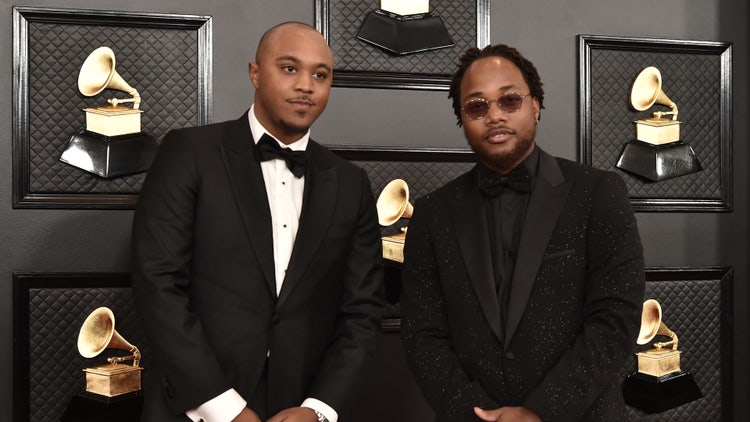
I think when you work with somebody as talented as Leon for over 10 years, I think it’s very wise to understand that you don’t know everything. I think that’s something that we both did. We challenged each other, and we pushed the limits on where we wanted to go and how far we could go.
And also just how to handle disagreements, how to get your point across, and deal with people’s emotions. Because when it’s just you, you’re not really taking into consideration what other people think, but when you’re collaborating with somebody, it’s a joint baby. You have to really take into consideration how to work with people.
And that can be seen in both him and I’s careers outside of each other, where we have collaborative success with other people. It’s like we learned how to be team players to get to where we got to go.
What is your private test for knowing when a song is actually done?
I think it just goes back to does it make you feel something? After you push play, are you left wanting more? Does it satiate you? Does it make you feel like you’ve gone through that emotion that you’re trying to evoke out of somebody? I think that’s the best way to put it. Does your soul feel full? Not to be all whimsical, but I think you’ve really got to ask yourself, does it feed your soul?
As someone who obtained a J.D. from Loyola Marymount Law School, how has your legal background changed the way you handle sessions, credits, and protecting the work once a song starts taking shape?
It’s just got to be direct. You can’t be afraid to be the a**hole in the room, in the sense of kicking people out of the room or being direct with people. They’re trying to take more than what they should get, or they were trying to say they were a part of something.
A lot of times in creative fields, we’re not taught to be aggressive, or to stand up in that moment, or stand up after the fact. We try to let lawyers deal with everything, but at the end of the day, the only people that can really resolve a creative discrepancy [are] two creatives. The lawyer is going to try to get what the lawyer is going to get [out of] what the creative is telling them. The manager is going to do the same thing, or they might have their own ulterior motives.
So I think it’s important that creatives have to understand how to communicate with each other because, at the end of the day, it’s the problem that you create, and you just can’t push it off. And I’ve had to deal with a lot of stuff on that end, but a lot of it gets squashed because we just have man-to-man or man-to-woman or whatever conversation.
You worked on Season 2 of "Forever." What changes creatively when the music has to serve different characters and stories outside of just the emotions of a single track?
I think that it’s just like working with artists. It’s not about you, or it’s not about me as a producer or me as a writer. It’s about what story am I trying to shine light on for these different characters?
Justin (Michael Cooper Jr.'s character) is in a different place in life, and he’s trying to figure things out. And so the music represents that. Same thing with the other characters. One may be more aggressive, one may be more empathetic, one may be more angry, one may be more joyful. So I think it’s really just piggybacking off of where they are at.
It would be the same exact thing if I were dealing with the artist. If somebody in their life is feeling down, I don’t know if I would try to pitch a song to them that is, “Hey, we’re there.” If you’re really happy, you might not come off the same way. It’s going to feel fake. It’s going to feel forced.
It’s a little bit different when you’re dealing with imaginary characters, especially when they’re still being developed and fleshed out. These are new elements for new characters, so we don’t really have a baseline yet. It’s that kind of creating something from scratch, along with the production team on the film side, because you’re trying to figure out what kind of clothes they wear and what kind of music that they listen to. What are their influences? Where are they from? What time period are they from? What time period do they most relate to?
You’re working with the writers, with production, to kind of create this artist or to create this sound that doesn’t really exist. So it’s very much more involved than the actual person who has lived experience, because you can just pull that from them.
You’ve stayed connected to Loyola Marymount University and kept mentoring younger talent. What do you think the next generation of producers and music executives most needs to understand about building a lasting career?
They need to understand relationships, and they need to understand the business. Understanding how to navigate. I think sometimes people get too blinded by the creative.
It’s understanding how to collaborate, but also understanding how to be about your business and [not getting] blinded by the art. It’s a fine line. You don’t want to be a jacka**, but you also can’t be afraid to stick up for yourself. I think that’s something that people need to just get comfortable with, having those uncomfortable conversations when you’re coming into the industry.
But really, the other main thing is having community, people around you building community, and not being so, “I’m gonna do everything by myself.” Collaboration doesn’t necessarily happen via creativity. Collaboration can happen on the executive side as well.
There’s people that I’ve grown up with who kept great relationships with from high school to college or whatever, who are now label execs, or big managers, or big producers, or big film and TV execs. You grow up, and you help each other out. So I think development and fostering community is a really important thing for up-and-coming writers.