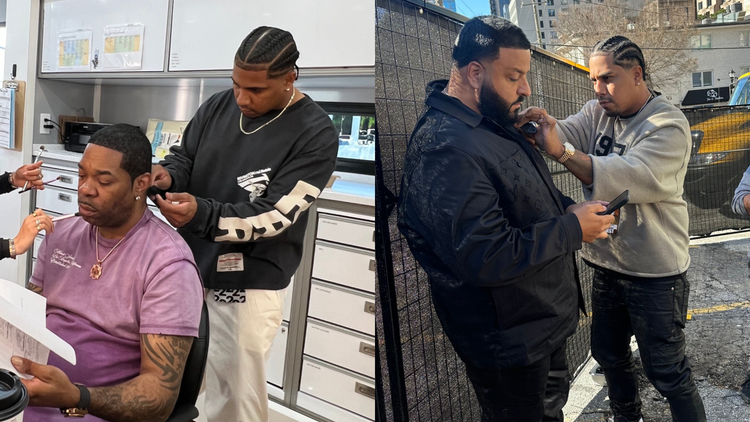
For Mark Marrero, professionally known as Mark The Barber, access to some of Hip Hop’s biggest stars taught him that the barber chair can be one of the few places where fame gets left at the door.
“They don’t want to be constantly on camera. They don’t want to be asked 100 questions about their career,” he told REVOLT. “They want to just be able to bring you in, [then] cut their hair. They want to relax.” That understanding of privacy became part of a career spanning over two decades. Early on, he met barbers who regularly worked with celebrities, traveled internationally, and found themselves on movie and music video sets. Seeing those possibilities changed his view of what the profession could become.
“The goal keeps changing always, man,” he said, noting the rise of barbers as entrepreneurs with their own brands and product lines. For Marrero, the objective has been to keep elevating alongside an industry that continues to expand. His first celebrity opportunity came before that larger business model fully took shape. When asked if Fat Joe was his first famous client, he corrected the record, saying, “I think it was T.I.”
While the opportunity did not immediately transform his career, it did give him credibility. “It didn’t get me to where I wanted to go, but it helped my business,” he recalled. “I was able to post about it and get new clientele.” The veteran barber detailed how the work helped establish him in West Palm Beach, Florida, and in 2011, at 22 years old, he opened his own business. Having recognizable customers under his belt also made it easier to attract other barbers and begin scaling what he was building. Eventually, he reached a level where he booked artists like Drake, Busta Rhymes, DJ Khaled, Swae Lee, Fabolous, Rob49, and more.
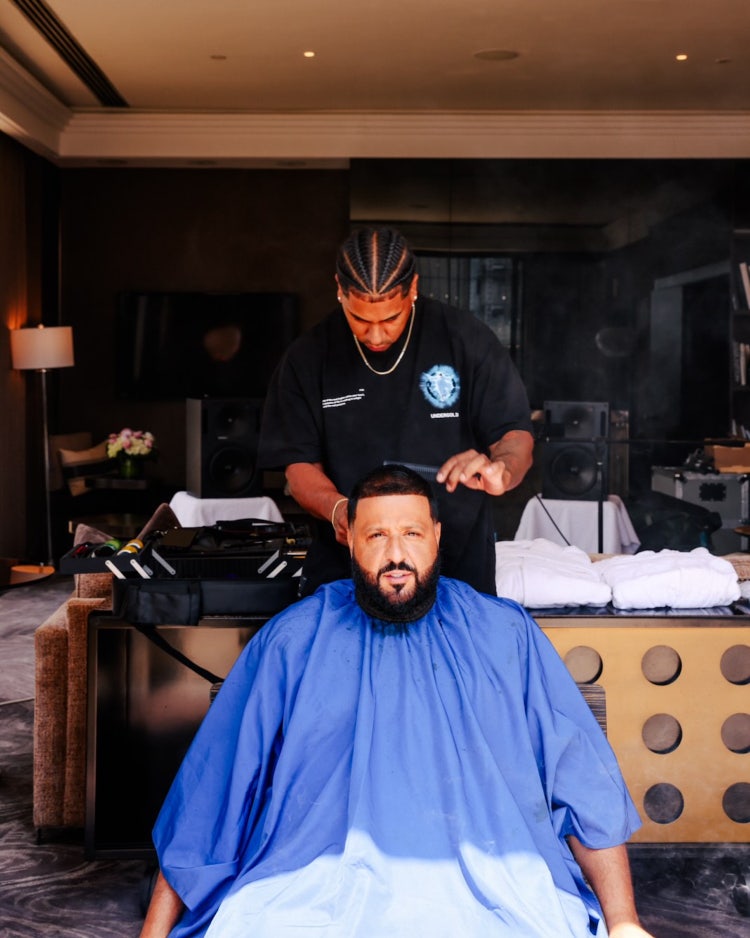
Marrero expressed how he enjoys being around driven people and absorbing how they conduct business, even when he has little to say himself. “The busier the person is, the more I like being around,” he explained. “Even if we don’t speak, just to be able to be a fly on the wall of their meetings and everything like that, for me, that’s everything.”
His own technical identity was taking shape around the same early period of his career.
In 2012, he began using “BlurryFade” as a hashtag for what he describes as an especially detailed fade. As the phrase caught on, he saw an opportunity to build something around it. “You’re taught in school how to do a skin fade, right?” he began. “You’re not taught how to do a detailed fade. You’re not taught how to really get in there with the shears and detail the haircut.”
That distinction became the foundation for his BlurryFade-focused tour. Marrero traveled across the United States, Canada, and Puerto Rico teaching barbers techniques that included his signature detailed fading, enhancements, designs, and portraits. He later expanded the concept into an expo featuring barber competitions, classes, showcases, and vendors. In 2017, the brand moved into a brick-and-mortar business, eventually growing to four shops in Canada.`
For him, the same attention to detail applies when a haircut becomes part of an artist’s larger visual presentation. He sees barbering and Hip Hop as deeply intertwined, pointing back to defining hairstyles of the 1980s and ’90s and the fades, lines, braids, and designs that continue to shape how creatives present themselves. “It gives the artist their identity,” he expressed. “It’s part of the whole identity.”
His work with Lil Baby offers a defining example: The Florida native described creating a look that paired clean lines and a fade with texture on top, allowing the finished style to remain sharp while complementing the rapper’s wardrobe and overall aesthetic.
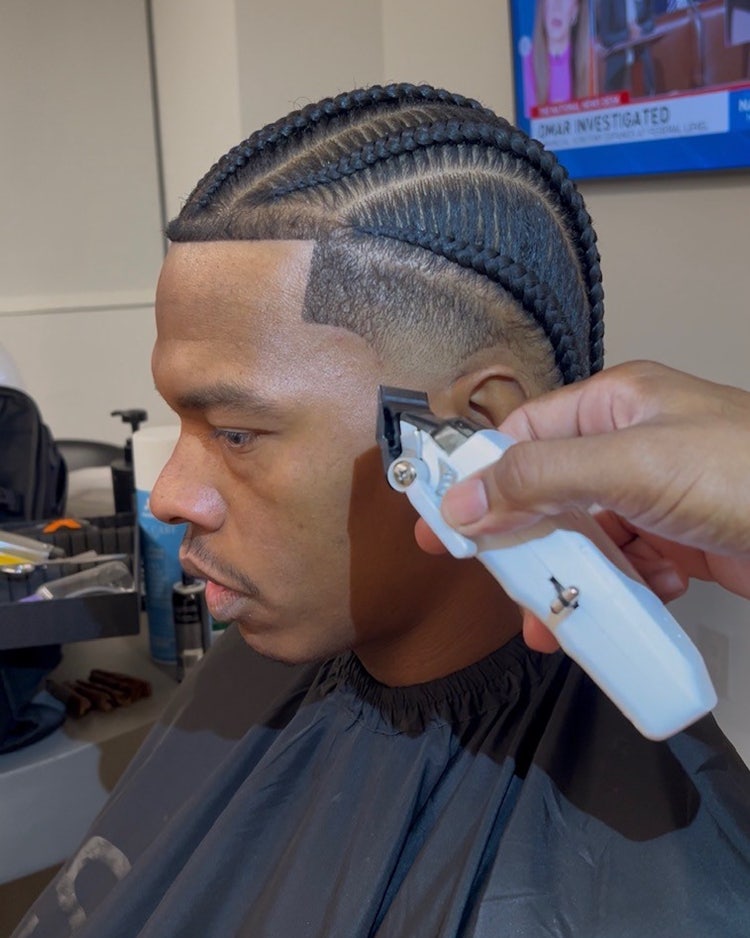
“It starts with what he’s trying to go for,” Marrero explained. From there, he said, the conversation can include the stylist’s plans and what the artist is wearing that day. Face shape also matters, because the finished cut has to work with the person wearing it before anything else.
“I put 20 years into this,” he made clear. “I’m confident. I can say confidently that I can literally do any haircut that anybody requests.” He also emphasized his experience across different hair textures and styles, along with the exclusivity and privacy that come with the service.
He recalled a period when a celebrity haircut could bring in around $100, yet the request might come on a busy Friday or Saturday when leaving his shop meant sacrificing significantly greater earnings from regular clients. “I’m like, all right, it’s not worth it. I got bills,” he recalled. By that point, he felt celebrity clientele already helped him establish his name, causing him to question what else that lane could offer.
By 2020, he started experiencing a larger side of celebrity barbering, one that extended beyond individual appointments and into entertainment productions and proximity to other high-level creatives. “That’s when I got to see the sets, the movies, traveling,” he said.
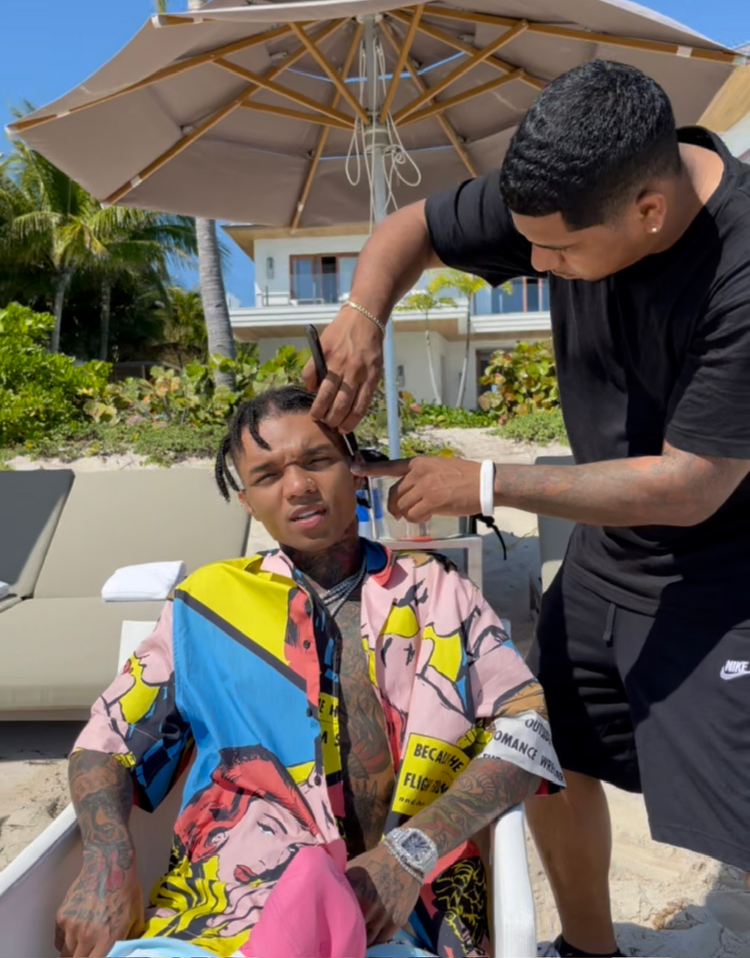
In one instance, he traveled to Marbella, Spain for work connected to Quavo’s “Trance (Walk It Down)” music video. The famed barber spoke fondly about the experience and the scenery, saying the trip left him wanting to return there with his family. The visual became another moment where he could see his work inside another major artist’s broader creative presentation.
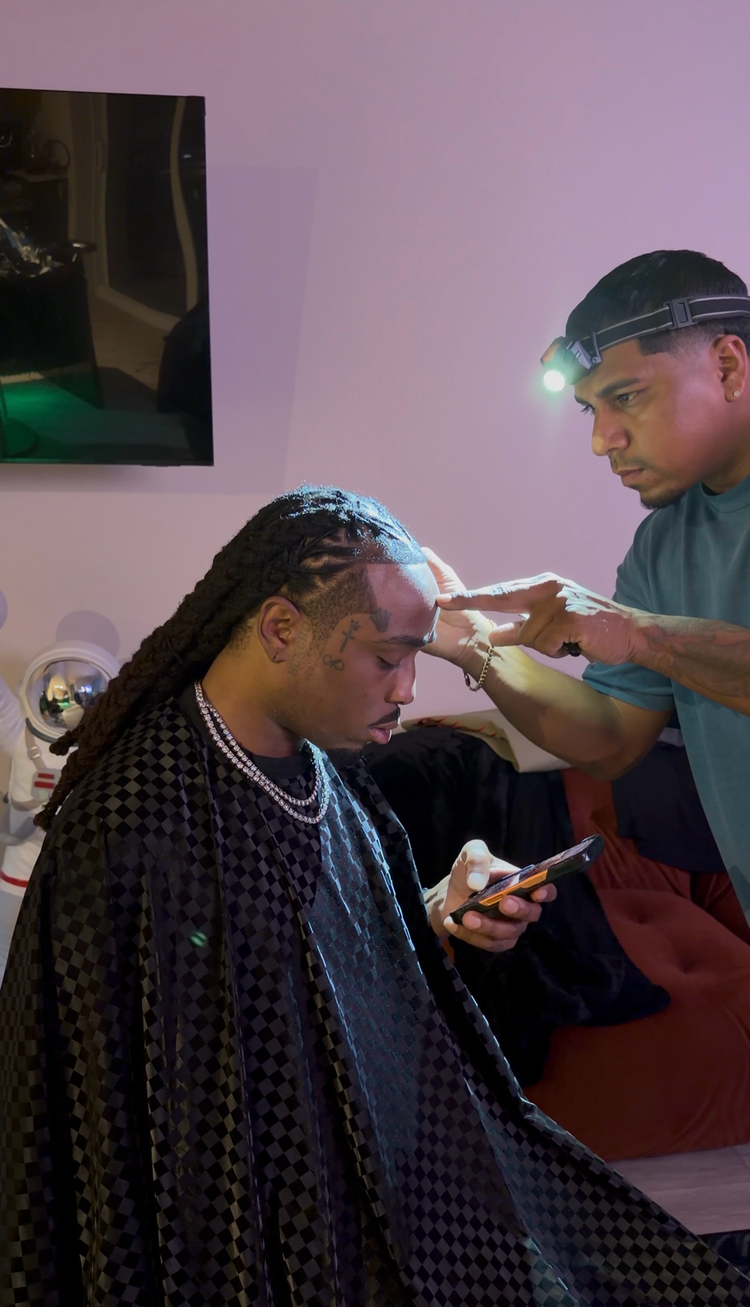
His connection with Key Glock carries a different kind of significance.
The BlurryFade originator said he began cutting the Memphis rapper in early 2026 after already trying to find a way to connect with his team. He reached out to Key Glock’s braider and others around him, only for the eventual introduction to happen in reverse: The rapper’s assistant found Marrero on Instagram and called him. Now, he remarked, Key Glock reaches out when he is in Miami. “He’s actually one of my favorite artists,” he admitted, making the opportunity particularly meaningful.
He also contributed to one of Key Glock’s visuals. For someone who spent years working around recognizable names, the credit still carried the feeling of reaching another milestone. “I got the credits here for the ‘Big 5’ music video. It’s huge for me, man,” he expressed.
When asked to define the legacy he ultimately hopes to leave in barbering, Mark The Barber wasn’t ready to put a final label on it yet. His reaction to the Key Glock opportunity perhaps better captures where he sees himself today: “It’s almost like confirmation... I’m right where I’m supposed to be.”