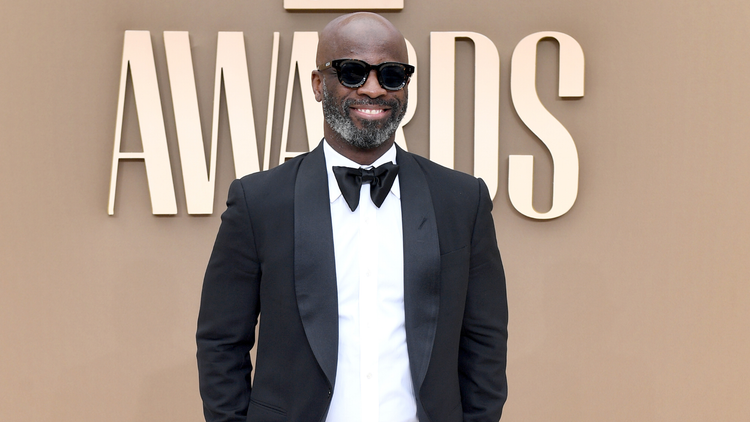
Bryan-Michael Cox’s name may not always be the first one listeners see, but his impact can be heard across some of R&B’s most unforgettable records.
For decades, the Grammy-winning songwriter and producer has helped shape the genre’s sound, creating songs that carried people through love, heartbreak, healing, and everything in between. His catalog speaks for itself. Cox helped craft era-defining records including Usher’s “U Got It Bad,” “Burn,” “Confessions Part I,” and "Confessions Part II," Mariah Carey’s “Shake It Off” and “Don’t Forget About Us,” and Mary J. Blige’s “Be Without You,” which earned him a Grammy Award for Best R&B Song.
His extensive list of collaborators — a few of whom he speaks about in the exclusive chat below — also includes Jagged Edge, Destiny’s Child, Monica, Toni Braxton, Aaliyah, Chris Brown, Tamar Braxton, Justin Bieber, and many more. Those records performed well on the charts and became part of people's lives because of how much they connected with the lyrics. Whether it was a breakup anthem, a late-night confession, or the song somebody played while deciding whether to give love another chance, Cox has always understood how to take a complicated feeling and turn it into something millions of listeners could recognize as their own.
His résumé comes with the accolades to match. The industry veteran has received multiple Grammy nominations, contributed to several award-winning projects, and was inducted into the Georgia Music Hall of Fame in 2009. His longtime creative relationship with Jermaine Dupri also helped produce a run of records that remain essential to the story of 2000s R&B. Still, his legacy cannot be measured by plaques alone. The Florida native's impact lives in the music that continues to be streamed, sampled, debated, and sung word for word years after its release.
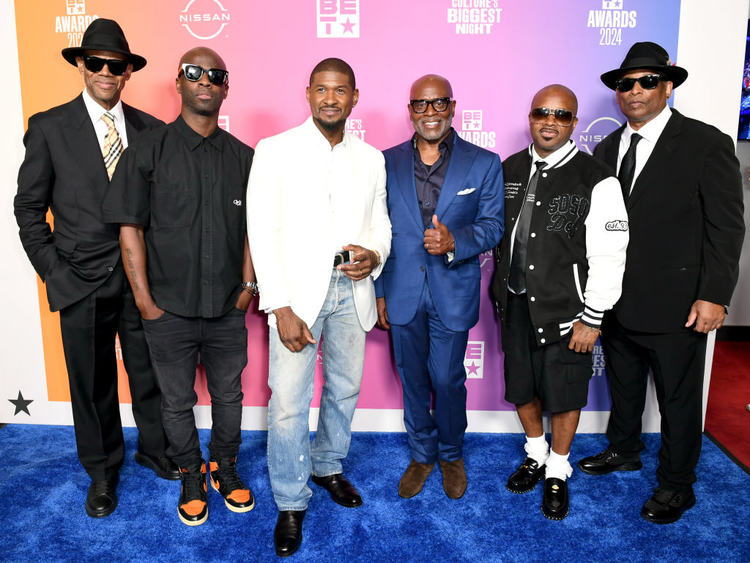
Now, Cox is using that experience to help write the next chapter for another important part of R&B history, and that’s managing the beloved group Day26. His relationship with the group is not new, as Cox worked with Day26 during its original run, contributing to records including “Since You’ve Been Gone,” “Are We in This Together,” and “Stadium Music.” Nearly two decades later, that relationship has come full circle as he steps into a management role and helps guide the group through its second act.
Day26 has signed with Cox’s creative company, Illustrate New Ideas, as the members prepare to reintroduce themselves to longtime supporters while reaching listeners who may be discovering their music for the first time. For the 48-year-old, this chapter is about honoring what made the group special, recognizing what they still have to offer, and giving them the structure to move forward with intention.
During an exclusive conversation with REVOLT, Cox opened up about managing Day26, the group’s evolution, and why he believes their story is nowhere near finished. He also shared several gems from his own journey, including the story of a record originally intended for Whitney Houston that eventually found its way to Tamia. From studio sessions with some of music’s biggest names to never-before-told stories behind records fans already know and love, Cox offered an honest look at the moments, relationships, and decisions that helped build his legacy and the work he is doing now to help shape what comes next.
Read up!
Your history with Destiny’s Child predates the group’s signing to Columbia Records. When you listen back to those recordings, what can you hear in Beyoncé, Kelly Rowland, and the group that the rest of the world had not discovered yet?
So it was a group of kids, and we all kind of knew each other and kind of grew up together. So it was already like, you knew that there was something special about what was happening in this group of kids. For Bey, Kelly, LeToya, LaTavia, and, at the time, Támar Davis — who was in the Girl Tyme inception of the group — they were operating on another level of talent. The girls would never sing at school. They enrolled in our school when I was a senior. They were freshmen, and they enrolled in our school, and they would never sing at school, but we knew who they were. They were incredible as little, little kids. Something happened when they got to high school, and when they went through puberty, their voices got better — their voices sounded like women.
They had just signed with D'wayne Wiggins and made that deal at Columbia, and we started making demos. This is what solidified my decision to really go full-court press with producing and songwriting. I got in the studio with them, and I realized how... far advanced they were. I didn't realize how advanced they were. It was really refreshing to give direction and to hear it one way, and you give it to them, and they sang it back, like, 10 times better than you thought. I'm like, these are children, so how are they hearing this? It really inspired me to really jump all the way into the driver's seat of saying, okay, this is my career path. I want to produce, and I want to write. I’m no star, but I’m in the presence of stars, and I realized that they were stars. It was the first time I ever felt that kind of, like, hold on, these girls are going to make it.
“Another B. Cox joint” became one of the most recognizable producer tags in R&B, but your records also have a musical signature — piano-led arrangements, layered harmonies, and emotionally direct lyrics. What elements must be present before a song truly feels like a Bryan-Michael Cox record?
There's a lot of similarities in my drum patterns. I play piano by trade, so I love to utilize pianos and piano sounds. I have a very signature way of playing piano. I think about songs like “Made For Me” by Muni Long, and there's a composer named Jordan [Orvosh]. When we were working this stuff out, Jordan was like, he was trying to do his best Brian-Michael Cox impression, so I was like, "Whoa." I think it starts with that piano.
You helped create defining records about heartbreak, accountability, and emotional vulnerability for male artists, including “Say Goodbye” for Chris Brown, “Circle” for Marques Houston, “Promise” by Jagged Edge, and “Burn,” “U Got It Bad,” “Confessions Part I,” and "Confessions Part II," for Usher. What did you understand about how men process love that R&B was not articulating at the time?
My first session with Jermaine [Dupri] and Usher, we were writing “U Got It Bad,” and before we did anything, we had what I call now "therapy sessions." Jermaine just asked a question like, "What you got going on?" and then we spoke for 2-3 hours. After questioning why we’re talking so much and how we should get to the song, I realized maybe halfway through the conversation that that's exactly what we were doing. We were getting to the song, you know what I mean?
By the time we got to the end of the conversation, you know, the title had come about, and we started coming up with what it would be musically, and then we started writing it. So I always kept that with me. For the song “Circle,” I was in the studio with Adonis [Shropshire] and my cousin Kendrick, and we were in the studio with Omarion. We did a few records called “Made For TV” and “Can’t Let You Go” that didn’t make his album at the time. We had one more day with Omarion, and Chris Stokes said he had to go to a photo shoot or something like that. He said, why not send Marques [Houston] over there. He came over on the last day of Omarion’s session, and we wrote “Circle” for Omarion before he got there, so he came in, heard it, made some tweaks, and recorded the record.
Is there a similar story where a record intended for one artist went to someone else?
We did a record for Whitney [Houston] called “Still,” and she cut it. During that era, Whitney would come down, and she would cut a record, and then she would go back and then come back and recut it. Like, she was really meticulous about her recording process, right? At the time, she was under the LA Reid version of Arista, and then LA left to go to Def Jam, and it kind of put her in limbo. So that kind of put the project on the shelf and on hold for a second.
Then, we have a session with Tamia, and the idea comes up that we should play the song for Tamia because it fits especially with her being with Grant Hill. We wrote the song initially about Whitney and Bobby and about their relationship and how people didn't think it was gonna last, but they had been together for so long. So, Tamia walks in. She ends up loving the record and then records it. She cut the song twice. She did the original version and then cut a country version of the record years later.
“Be Without You” has outlived its original release cycle and has become a standard within contemporary R&B. While making it, was there a lyric, chord change, or vocal moment that told you the song could have that kind of permanence?
Johntá Austin and I were teenagers in the music industry, so by the time we get to this record, we’re pretty accomplished. This is Usher and Mariah [Carey]. There was still a level of us not getting respect. When you’re young, you’re competitive, and we felt a lot of creatives who hadn’t done what we did were getting better deals. I know I felt like I was not being respected. Our manager Chris Hicks and our boy Damon cooked it up with Kendu Isaacs and Mary [J. Blige]. Then, Chris had already given them a couple of records they liked. We had a conversation with Mary's people, Mary, and with Interscope, so we kind of knew what she wanted to sing about.
We didn't know what we were going to come up with, but we kind of had an idea [of] what she wanted to sing about. Johnta took that, and we started talking about concepts over the phone. We landed on "Be Without You." He was on his way to the studio. I think he listened to it twice, and then he went to the studio and just sang the whole song down. He played his demo on Verzuz. We had no notes, so we sent it off to Kendu, and they cut the vocals for the record. I worked with Ron Fair, who helped me really pull the record together production-wise with the strings and getting her background vocals together to pull the best out of her. They were mixing the song, and they kept sending me passes, and once we were good, it gave me chills.
Signing Day26 to Illustrate New Ideas brings you back together nearly two decades after you helped shape the group’s early sound. What did you hear in them today that convinced you this reunion needed to become a business partnership and not simply a nostalgic collaboration?
Throughout the years, the one consistent thing I would always get is my work with Day26 and Danity Kane amongst millennials. I always tell people [that] what "Making the Band" did for me was putting me in people's houses. The music was really good. No disrespect to anybody before Day26 and Danity Kane, but it felt like that music — even O-Town and Da Band — the music was based on “Making the Band," and they didn't really give them the best music that they could have given them. I felt like Day26 was the group that got away from me.
We were working on their third album, but they were going through a lot of transitions and confusion at the time, alongside things that were happening internally with [Qwanell "Que" Mosley] and so forth. They got themselves together and worked it out internally. When they were touring again, I’d pop up at their shows. Those are my guys. I saw them in Atlanta, and they said we had to put this album out at the time. And the situation came back around, we figured it out, and now we’re doing it. I did a distribution deal with Jive, so their album and also Jack Freeman’s album will be coming out.
Mariah Carey is known for being deeply involved in her songwriting, vocal arrangements, and production. What happens creatively in a room with you, Mariah, and Jermaine Dupri that cannot be replicated with another combination of collaborators?
What I've always appreciated about Mariah, especially Mariah and Jermaine, because they already had a thing as far as creative synergy. So it was easy for me and Johntá [Austin] to fall in line with that energy. I remember the first time I worked with Mariah... We did a song on Rainbow, a song called "How Much." It actually featured Usher, and actually it was my first time working with Usher, also. Me and Jermaine were coming up with the track, and she got there. This was the first time I really liked writing. I didn't know that she was expecting me to write, you know what I'm saying? She had the idea and always carries this notepad. She carries a thesaurus with her, too. She’s very meticulous with it.
I rarely get starstruck, and I think that the first time meeting Mariah Carey, I actually got starstruck. We kept working with each other over the years. We went in and made her Emancipation album, and it had vibes. Mariah is one of the most funny, personable people. Once her guard goes down and she’s comfortable, that’s where the magic happens. We did a series of sessions not too long ago, earlier this summer. We’ve been in and out, working with her for the past 6-8 months working in Los Angeles and Atlanta. We’re getting somewhere. She’s really hands-on, and she’s intricate in the production — what she wants to hear, so it takes a bit more time, but once we get where we are going, it’s a wrap.
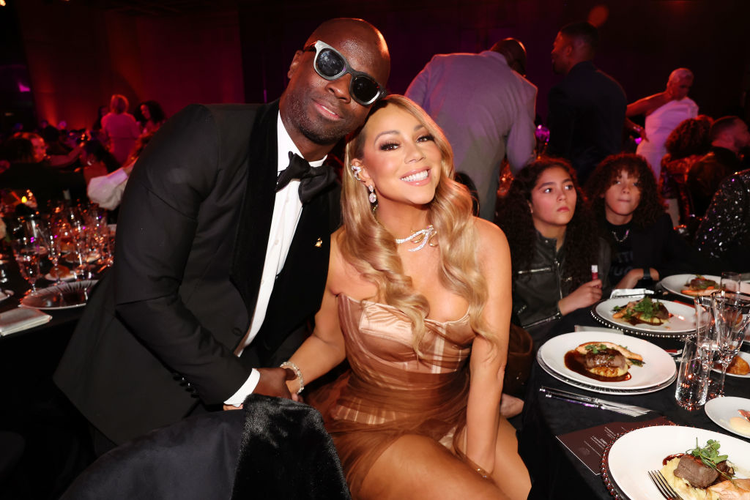
Of all the songs you created with Mariah, is there an album cut, unreleased record, or overlooked composition that you believe deserves the same critical recognition as the major singles?
Her last album on Def Jam, I’d say her record called "Make It Look Good" should've been a single. It’s an [O’Jays] sample with Stevie Wonder playing harmonica on it. There’s another song I’d say on Music Box called "Underneath the Stars." I think they shot a video, but that song is one of her best moments. The amount of depth that Mariah has in her catalog is unmatched. I still think it's ridiculous how we don't celebrate her like we should. I feel like it’s not a big enough moment.
You and Jermaine Dupri have been working with Kelly Rowland, and you have described the music as “crazy.” Kelly has explored everything from traditional R&B to dance and electronic music throughout her solo career, so what side of her artistry are these sessions finally allowing audiences to hear?
Kelly is extremely eclectic when it comes to her musical palette and the things that she really likes. I can say that it's definitely going to be an ode to the '90s R&B dance vibe or late '80s. Without giving it away, I would say more like, we've drawn inspiration from Soul II Soul and drew inspiration from things like that. The records feel amazing, and then this is the first time I've ever gotten The-Dream in a studio with Jermaine [Dupri]. I text Kelly at least once a week about these songs. Like, I can't wait for these songs to come out.
Which unreleased record or records or an abandoned session would most surprise fans if they ever heard it?
I have some early Justin Bieber records that would be interesting. He’s been an R&B artist since [he was] a kid — he’s an R&B artist and always has been. A gang of Usher and Jagged Edge records. I have a few unreleased Mary J. Blige records from The Breakthrough era that didn’t make the album. I did a collaboration with Gwen Stefani during my run at Interscope Records. We did 2-3 things that never got developed. We scratched vocals and demos but never got back to it. This was around her "Hollaback Girl" era.