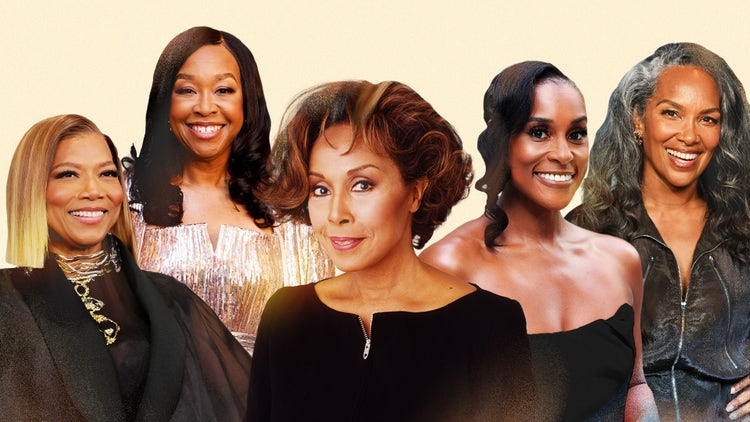
Television did not suddenly become inclusive. It evolved slowly and unevenly, largely because Black women kept pushing against what the medium allowed them to be. The history of Black women in television is not just about firsts, but about persistence, authorship, and power. Long before representation became a trending topic, Black women were negotiating space inside systems that did not see them as leads, love interests, thinkers, or decision-makers. Some fought just to be visible. Others redefined what visibility meant. Over time, each generation expanded what Black women could do on screen and behind the scenes.
This is not a list of the loudest disruptors. It’s a timeline of women who quietly changed television by expanding the emotional, cultural, and professional range of Black womanhood on screen.
1. Hattie McDaniel
Hattie McDaniel was never given the opportunity to fully redefine Black womanhood on television, but she forced the industry to acknowledge Black women as central figures at all. At a time when television was still finding its footing, McDaniel became one of the earliest Black women to headline a series through “Beulah,” first on radio and then on television.
The role itself was rooted in the domestic worker stereotype that defined the era, and that reality can’t be ignored. But within those constraints, McDaniel did something no Black woman had done before and proved that a Black woman could anchor a show, carry an audience, and command national attention. Her impact wasn’t about the character she played, but about access. She cracked open a door that had been sealed shut, establishing Black women as viable leads in a medium that barely acknowledged them as human. Without that first, uncomfortable foothold, television wouldn’t have had to confront what came next.
2. Ethel Waters
Ethel Waters stands as one of the most important bridge figures in Black television history, not because she accepted what was offered, but because she challenged it from the inside.
Before Hattie McDaniel ever appeared in “Beulah,” it was Waters who first stepped into the role.
Unlike many of her contemporaries, the artist was deeply outspoken about her discomfort with how Black people were portrayed in early television and radio. Her disdain for what she viewed as degrading and limiting depictions ultimately led her to step away from the role, a decision that was radical in an era when Black performers were rarely afforded the luxury of refusal. It was only after Waters exited the project that McDaniel took over the role.
Waters’ impact, however, extended far beyond “Beulah.” In 1939, during the earliest days of NBC Television, she hosted “The Ethel Waters Show,” a one-hour variety special that aired on June 14. That broadcast made history as she became the first Black performer, man or woman, to have her own television show.
At a time when television itself was still experimental, Waters was already asserting Black presence in the medium. The actress’ accolades further underscore how far ahead of her time she was.
Waters was the second African American ever nominated for an Academy Award for Best Supporting Actress for her role as Dicey "Granny" Johnson in Pinky. She was also the first African American to star in her own television show and the first African American woman nominated for a Primetime Emmy Award, earning that recognition in 1962 for her guest role as Jenny Henderson in the “Route 66” episode "Good Night, Sweet Blues."
These milestones weren’t simply personal achievements, as they forced the industry to confront Black excellence in spaces it hadn’t yet imagined for Black women.
3. Diahann Carroll
Diahann Carroll changed television by saying no. When she starred in “Julia” in 1968, Carroll became the first Black woman to lead a network television series as a character who was not a servant. She played a widowed nurse who was educated, stylish, and emotionally complex at a time when Black women were rarely allowed dignity onscreen.
Her impact wasn’t just representational, but it was ideological. Carroll refused roles she felt demeaned Black women, forcing the industry to imagine new archetypes. She insisted that Black womanhood could be professional, romantic, and soft without explanation. When she joined “Dynasty” in the 1980s as Dominique Deveraux, she became one of the first Black women on a primetime soap opera to portray a glamorous, wealthy, powerful, and unapologetically ambitious character in a way audiences hadn’t seen before.
Deveraux wasn’t there to serve, struggle, or symbolize progress. She was draped in couture, commanding rooms, entangled in high-stakes drama, and moving through elite spaces as if she belonged because she did. She didn’t just reject stereotypes, but she replaced them with possibilities.
4. Yvette Lee Bowser
Yvette Lee Bowser changed television by centering Black women with each other. As the creator of “Living Single,” Bowser gave TV a fully realized Black woman ensemble that wasn’t filtered through white sensibilities or supporting roles. These women were ambitious, flawed, loving, competitive, and deeply bonded, which reflected the interior lives of Black women rarely seen at the time.
Her work normalized Black women being both the audience and the focus at once. She didn’t write archetypes; she created a community. That decision laid the groundwork for nearly every Black ensemble comedy that followed. Bowser proved that Black women’s friendships were worthy of long-form storytelling.
5. Queen Latifah
Queen Latifah expanded Black representation simply by being seen fully, confidently, and without apology. On “Living Single,” her portrayal of Khadijah James quietly disrupted beauty standards and desirability politics at a time when plus-size actresses were often sidelined or pressured to change. Latifah’s character was respected, loved, desired, and powerful, without her body ever being framed as a problem.
She normalized a fuller spectrum of Black womanhood on television and challenged the industry’s narrow definitions of who gets to be centered, admired, and taken seriously. She went on to showcase how Black plus-size and curvier women can have depth, authority, and range, including her action role in “The Equalizer.”
Sometimes change doesn’t come from a storyline; it comes from presence.
6. Kim Wayans
Kim Wayans expanded television by proving that Black women in comedy could be as versatile, physical, and creatively layered as anyone else on screen.
As a core cast member and contributing writer on “In Living Color,” the veteran wasn’t just part of the show’s success; she helped shape its voice. At a time when sketch comedy often reduced Black women to the background, she moved across characters with ease, building personas that were distinct, memorable, and fully realized. Her work challenged the idea that Black women in comedy had to exist within a single lane. She showed range not just in delivery, but in physicality, timing, and transformation. Whether she was embodying exaggerated characters or grounding a sketch in reality, she carried a level of control that made her presence undeniable.
As part of the Wayans family’s creative ecosystem, her contributions helped redefine what 1990s television comedy could look like. That influence stretched beyond one show, shaping sketch, sitcom, and film culture for years to come. She continued to expand that range on “In the House,” where her physical comedy sharpened even further alongside LL Cool J and Alfonso Ribeiro, allowing her to tap into a more playful, animated style that audiences didn’t always get to see from Black women on television.
Decades later, her return to the screen in Scary Movie 6 marked more than just a reunion, but it’s a reminder of the comedic foundation she helped build, and how that legacy continues to evolve with her family on screen.
7. Mara Brock Akil
Mara Brock Akil reshaped television by giving Black women emotional interiority. From “Girlfriends” to “Being Mary Jane,” Akil wrote Black women talking to each other about identity, ambition, self-worth, and love, not as side conversations, but as the heart of the story. Her characters were allowed to grow, fracture, and evolve over time.
She treated Black women as thinkers and feelers, not just reactors. That emotional realism helped shift television toward deeper, more character-driven storytelling centered on Black womanhood. Akil didn’t just reflect Black women’s lives; she respected them and made sure the world did, too.
8. Shonda Rhimes
Shonda Rhimes changed television by placing Black women at the center of power and never explaining why they belonged there. Through “Grey’s Anatomy,” “Scandal,” and beyond, Rhimes normalized Black women as surgeons, political fixers, professors, and leaders within elite systems. Her characters weren’t symbols of progress; they were fixtures of authority.
She shifted the visual language of television, making Black excellence in high-status spaces feel inevitable rather than exceptional. In doing so, she altered what audiences expect to see and what networks are willing to greenlight.
9. Ava DuVernay
Ava DuVernay expanded television’s capacity for truth. With projects like “Queen Sugar” and “When They See Us,” she brought historical accountability, systemic critique, and emotional depth to prestige television. Importantly, she also transformed the industry behind the scenes, hiring women directors at unprecedented rates.
Her work reframed Black stories as essential to understanding American systems: not niche, not optional. She showed that television could hold grief, legacy, resistance, and care all at once. DuVernay added gravity to the medium.
10. Issa Rae
Issa Rae changed television by refusing to make trauma the price of visibility. With “Insecure,” she centered awkwardness, joy, ambition, and everyday messiness, allowing Black characters to exist without constant suffering as context. Her work normalized everyday Black life.
She proved that relatability didn’t require translation and that humor could coexist with vulnerability. Rae expanded the emotional bandwidth of Black storytelling on television. She made normalcy revolutionary.
11. Robin Thede
Robin Thede quietly changed television by proving that Black women’s humor didn’t need translation, permission, or softening to succeed. Before “A Black Lady Sketch Show,” sketch comedy rarely allowed Black women to be absurd, intellectual, surreal, political, and unserious all at once, especially without centering white audiences. Thede shattered that ceiling by creating a space where Black women weren’t supporting players or cultural explainers, but the entire comedic universe.
The show wasn’t built around stereotypes or relatability metrics; it was rooted in specificity, inside jokes, sharp social commentary, and creative freedom. What made “A Black Lady Sketch Show” revolutionary wasn’t just its all-Black women cast, but the way those women were allowed to be strange, brilliant, flawed, exaggerated, and fully human.
Thede expanded how Black women could be seen on television, moving them beyond respectability politics and into creative autonomy. Comedy didn’t have to make Black women palatable to be successful. It just had to let them lead. In doing so, Thede added a crucial layer to Black television with intellectual, boundary-pushing humor controlled by women themselves. She proved that Black women could run comedy at the highest level, not as novelties, not as exceptions, but as architects.
12. Quinta Brunson
Quinta Brunson represents the modern evolution of Black TV. With “Abbott Elementary,” she revived the traditional sitcom format through warmth, cultural specificity, and care. Her work feels accessible without being diluted, and joyful without being shallow. Brunson shows that Black women can lead network television while honoring community, humor, and heart. She stands on the shoulders of those before her and makes it look effortless.