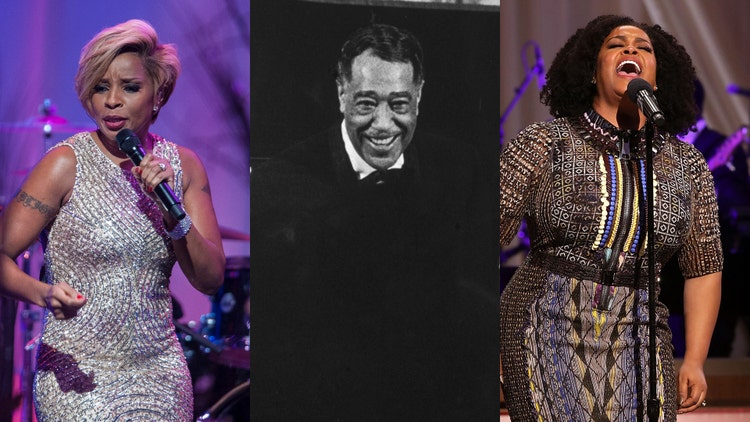
The White House has long served as a stage for some of the most influential Black artists in American history. From the days of slavery through the Civil Rights Movement and into the present day, these performances transcended simple entertainment, marking cultural milestones, breaking barriers, and affirming the significance of Black artistry in shaping the soul of the nation. While early performers like Blind Tom and Marie Selika Williams faced incredible odds to grace the White House stage, their appearances set a precedent for future icons across every genre: Jazz, classical, soul, funk, Hip Hop, gospel, and beyond.
Under President Barack Obama, the tradition expanded into a full celebration of Black music, with events like BET’s “Love and Happiness” concert, poetry jams, and tributes to soul legends and civil rights. Even before that renaissance, Black musicians already left permanent marks under heads of state from Buchanan to Clinton. This listicle honors 25 of those groundbreaking performances — not just for their musical brilliance, but for what they signified about America’s evolving identity, resilience, and rhythm. Each appearance reflects a piece of our shared cultural journey, amplified through the power of song.
1. Thomas “Blind Tom” Wiggins
The first known Black performer at the White House, Blind Tom was an enslaved musical prodigy who astonished audiences with his piano mastery. Invited to play as a child for President James Buchanan, Tom’s repertoire and ability to mimic complex music by ear left audiences in awe. His presence challenged racist assumptions of the era, even as many white spectators wrongly attributed his genius to supernatural possession rather than personal talent.
2. Marie “Selika” Williams
Often cited as the first Black artist to give a formal recital at the White House, Selika Williams performed operatic selections for President Rutherford B. Hayes and guests. At a time when opportunities for Black classical singers were nearly nonexistent, her appearance represented a breakthrough in cultural representation. As a soprano performing in the post-Reconstruction era, her voice carried not only musical range but historical significance.
3. Fisk Jubilee Singers
This Nashville-based choir of formerly enslaved students introduced spirituals to mainstream audiences and helped fund Fisk University through their nationwide tours. Their White House performance reportedly moved President Chester Arthur to tears, especially with their rendition of “Safe in the Arms of Jesus.” As the first Black choir to perform at the White House, they elevated spirituals to a national art form.
4. Sissieretta Jones
Nicknamed “Black Patti” after famed soprano Adelina Patti, Jones performed for three presidents: Harrison, McKinley, and Theodore Roosevelt. Her operatic arias and ballads helped establish the legitimacy of Black classical artists in elite circles and broke ground for future generations. As the daughter of a formerly enslaved man, Jones’ rise to White House stages signified both talent and triumph.
5. Marian Anderson
Though most famous for her historic Lincoln Memorial concert after being barred from Constitution Hall, Anderson also performed privately for President Franklin D. Roosevelt and Eleanor Roosevelt at the White House. Her rendition of “Ave Maria” captivated listeners and cemented her status as a symbol of grace and resistance. She was among the earliest Black women to break into classical music at such a national level.
6. Duke Ellington
The jazz legend was celebrated at the White House on his 70th birthday with a full program in his honor, during which he was awarded the Presidential Medal of Freedom. It was a moment of official recognition for a man whose compositions had already changed the sound of American music. His influence on swing, big band, and orchestral jazz set the stage for generations to come.
7. Ella Fitzgerald
As part of the American Revolution Bicentennial celebrations, Fitzgerald delivered a memorable performance for the diplomatic corps (this was one of multiple performances at the White House for the vocalist). Her presence on that stage confirmed jazz as a central piece of the nation’s musical identity. Her velvety vocals and improvisational skills made her a symbol of American excellence in front of international dignitaries.
8. Dizzy Gillespie and Max Roach
During a special White House jazz concert hosted by President Jimmy Carter, Gillespie and Roach performed “Salt Peanuts” in a set so spirited that Carter himself joined the stage and sang along. The event showcased the improvisational brilliance of jazz and its presidential fans. It remains one of the most iconic musical moments in White House history.
9. Aretha Franklin
The Queen of Soul made her White House performance debut during the Clinton administration and would return several times under President Obama. Whether singing at “Women of Soul” events or delivering show-stopping numbers at state occasions, her presence was always regal. Her voice reverberated through America’s most powerful rooms.
10. Beyoncé
From singing “At Last” during Barack and Michelle Obama’s first dance to gracing state dinners, Beyoncé’s performances embodied modern Black excellence. Her blend of poise, power, and presence perfectly complemented the cultural shift brought by the Obama presidency. She also represented a new generation of global superstardom rooted in Black artistry.
11. Esperanza Spalding
Before her genre-defying Grammy win, Spalding was invited to perform at a White House poetry jam. Her ability to fuse jazz, soul, and classical influences into a seamless live set signaled a new era of artistry rooted in fusion and freedom. She served as a bridge between tradition and experimentation.
12. Jill Scott, John Legend, and Usher
The BET special “Love and Happiness: A Musical Experience” brought an all-star lineup to the White House to celebrate the final years of the Obama presidency. Jill Scott, John Legend, and Usher were among those who brought soul, joy, and resonance to the East Room. Their performances reflected the vitality and emotional depth of modern Black music.
13. Stevie Wonder
A frequent performer at the White House, Stevie Wonder’s contributions have spanned decades and administrations. He played an important role during Barack Obama’s time in office and was honored with the Presidential Medal of Freedom, recognizing not just his music but his activism. Wonder’s music has long served as the soundtrack to Black liberation and unity.
14. Leontyne Price
The opera legend was invited to sing during President Carter’s time in office (and again during the Ronald Reagan era), delivering a televised performance that further bridged the gap between high art and presidential tradition. With her soaring voice and international acclaim, Price brought operatic grandeur to the People’s House.
15. Wynton Marsalis
Marsalis and his band played for President Obama at a private inauguration ceremony and in subsequent events throughout his career, all of which signaled the elevation of jazz as a ceremonial language of national pride. As a composer and bandleader, Marsalis has championed music education and the historical preservation of the genre.
16. Earth, Wind & Fire
This legendary funk group brought their cosmic grooves to multiple White House events, including a state dinner and a Governor's Ball. Their blend of Afrofuturism and classic hits made them ideal celebrants of Black musical legacy. Their timeless energy always lit up the stage.
17. Jennifer Hudson
Whether singing alongside Smokey Robinson or performing Civil Rights-era classics, Hudson’s voice resonated through events meant to honor both history and hope. Her powerhouse delivery and dramatic presence made each performance a moment of impact.
18. Common
In addition to performing “Glory” with John Legend during a major Democratic National Convention, Common also took part in White House events during the Obama presidency that merged poetry, Hip Hop, and activism. His lyrical consciousness brought political weight to the stage.
19. Jamie Foxx
An all-around entertainer, Foxx sang and cracked jokes during Motown tribute nights, using his charisma to connect presidential celebration with pop culture flair. His appearances highlighted the White House’s expanding cultural reach during the Obama years.
20. Patti LaBelle
Patti LaBelle performed during the White House’s “Women of Soul” celebration in the East Room. The concert was part of a PBS performance series and celebrated the impact of soul music on American culture. LaBelle’s voice and energy electrified the room, earning a standing ovation.
21. Mary J. Blige
The Queen of Hip Hop Soul brought heartfelt ballads to White House audiences, notably during state dinners and celebratory events held while Barack Obama was in office. Her performances captured the pain and perseverance woven through the Black American experience.
22. Smokey Robinson
A staple of musical celebrations during Barack Obama’s presidency, Robinson led the Motown tribute and performed duets with various artists, further embedding his legacy in both music and politics. His warm vocals and iconic status added gravitas to every appearance.
23. John Legend
Whether performing solo or with Common, Legend’s politically conscious music and soulful delivery made him a go-to artist for White House programs that emphasized progress and hope. He effortlessly blended elegance with engagement.
24. Bell Biv DeVoe
Surprising some with their inclusion, the R&B trio was part of a celebratory concert during the Obama presidency, reminding audiences that joy and nostalgia are political too. Their lively performance proved that even New Jack Swing had a place at 1600 Pennsylvania Avenue.
25. Trombone Shorty
Representing the new generation of jazz-funk fusion, Trombone Shorty performed as part of celebrations like the All-Star Global Concert hosted during Barack Obama’s presidency. His energetic style brought NOLA soul to the East Room stage. A vibrant symbol of modern Black musical innovation, he closed the night with flair.