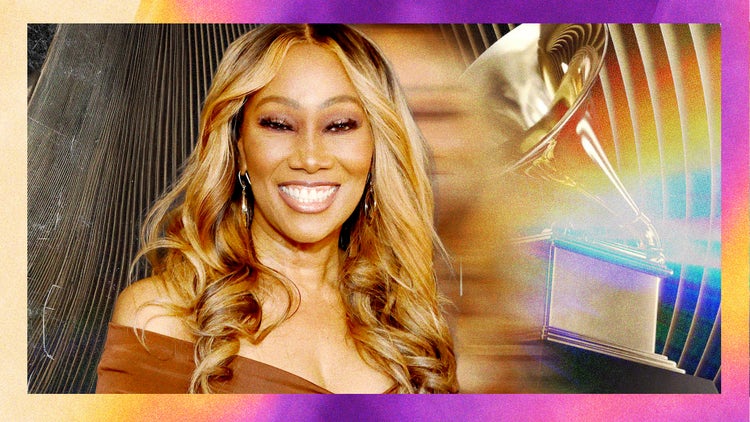
Yolanda Adams’ career didn’t begin with sold-out venues or award show spotlights. It began in a classroom. Before she became one of gospel’s most revered voices, the Houston native was working as a schoolteacher, committed to shaping young minds while quietly nurturing her own calling. Music was always present, but it wasn’t positioned as a fame-driven ambition. It was a ministry. There was a purpose. When she ultimately made the decision to step away from education to pursue singing full-time, it wasn’t about chasing the industry. It was about answering something deeper.
Like many legends, Adams’ foundation started in the background. She spent her early years lending vocals to other artists and church projects, learning the discipline of studio work while sharpening the emotional weight behind her voice. Those years weren’t just training — they were preparation. So, when she stepped forward as a solo artist, she felt ready instead of new.
That balance — evolution without compromise — became a defining part of her artistry. But Adams' impact has never been limited to music.
She has used her platform with intention, speaking on equality, faith, education, and the responsibility that comes with visibility. Her voice carries authority because it’s rooted in service and not performance. Whether she’s inspiring younger artists, participating in philanthropic work, or using interviews as moments of reflection, Adams has always moved with intent. Part of her purpose has been showing up as an ally. Adams has remained vocal about leading with love, including her support of the queer community.
Her allyship doesn’t feel performative or headline-driven. It feels spiritual, grounded in the belief that compassion, dignity, and faith should extend to all people, not just the ones who fit neatly into tradition. That openness is part of why so many artists, across genres, respect her. She’s never positioned herself above the next generation. If anything, she stood beside them.
She’s supported emerging gospel voices, collaborated when called upon, and offered wisdom that only decades of experience can produce. Many of today’s gospel and inspirational artists point to Adams as both influence and blueprint, which is proof that mainstream recognition and spiritual integrity can coexist. Even in industry spaces that sit outside of gospel, her presence still carries weight.
When Adams walks into a room, there’s a reverence that follows — not just because of her voice, but because of what she represents: legacy, longevity, and grace. There’s also something to be said about the way the seasoned artist has navigated longevity. Few artists, let alone gospel artists, manage to remain culturally present across multiple eras without feeling like they’re revisiting past glory. But Adams has done just that by evolving her presence without abandoning her core. She’s hosted radio shows, stepped into acting, appeared on television, and taken stages that extend far beyond Sunday service.
Each move felt intentional, never forced. It was always about expansion, not reinvention. That ability to move fluidly between sacred and mainstream spaces speaks to how universal her voice has become. In 2025, the singer stepped into a space she had long dreamed about but had yet to formally claim. Following the celebrated Tony-winning run of “Hell’s Kitchen” star Kecia Lewis, Adams was tapped to take over the role of Miss Liza Jane in Alicia Keys’ coming-of-age musical at the Shubert Theatre.
“Performing on Broadway has always been a dream of mine,” Adams shared in a statement reported by Playbill when the news was announced. Stepping into Miss Liza Jane’s shoes, she explained, felt deeply personal, as the character reminded her of mentors who had shaped her own life in music and faith. She spoke about Alicia Keys’ storytelling with reverence, calling the production an “amazing story that exemplifies how we are all connected in one way or another.”
To Adams, the musical’s emotional range from its joy, pain, beauty, and tough love, mirrored the same emotional language she’s long carried in gospel. “This show feels like home,” she added, grounding the moment not in spectacle but in spiritual familiarity.
REVOLT caught up with the icon at the Clive Davis Pre-Grammys Dinner, one of music’s most prestigious gatherings, before the 2026 Grammy Awards, where she reflected on Broadway and working with Stevie Wonder.
Clive Davis built careers by trusting instinct. What’s a creative instinct you followed that scared you, but you’re proud you didn’t ignore?
It would be when I did “Hell’s Kitchen” on Broadway. Sometimes, the discipline it takes for Broadway could scare some people, but I took to it. I was like, “When we do it, we have to put our whole heart into it.” I’m so glad I did it.
After accomplishing your goal of being on Broadway, what’s another bucket list goal you have?
I have checked a lot off of my bucket list. Now, we have talked about this, and Stevie [Wonder] and I are going to go to the studio together [soon]. I believe he is three-quarters finished because he has a song done with Take 6 and Kim [Burrell]. We’re all excited about getting on his album.
How has working with Stevie Wonder stretched you as an artist?
So, I listened to him as a kid. As an artist, I was able to get a chance to meet him. Then, upon meeting him, we became such great family members. Whenever you see me, you know it has something to do with the way that I sing and praise, as well as the way I write. To see that he’s still doing it and doing it with excellence. He’s still on tour! I owe a lot to him and people like Richard Smallwood, Tramaine Hawkins, and Shirley Caesar. They all had everything to do with where I am [today].
What’s one thing about success that nobody warned you it would cost?
Time. We know it can cost the sweat and tears and energy, but also time, because you don’t get that back. You have to manage it as well as you can, but you know the rewards are going to come eventually.