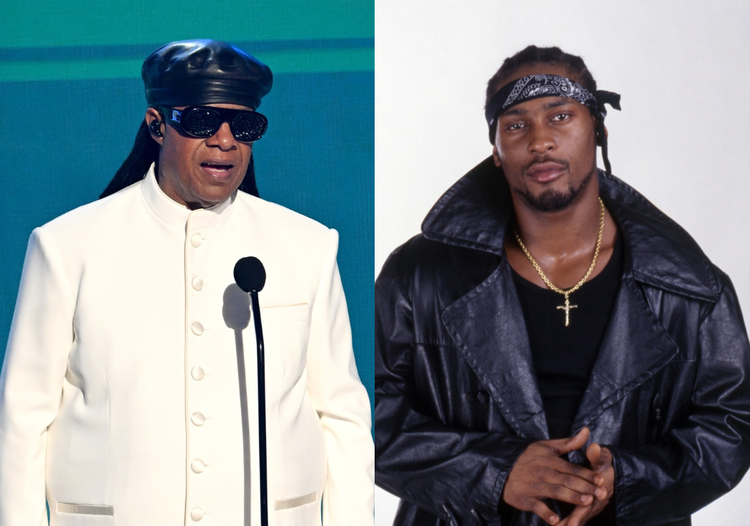
Stevie Wonder speaks onstage during the 2025 BET Awards at Peacock Theater on June 09, 2025 in Los Angeles, California.
D'Angelo at Festival de Montreux in 2000
Key Takeaways
- Stevie Wonder performed “If It’s Magic” and “As” alongside The Soultronics and The Vanguard during the Virginia service.
- Lauryn Hill, DJ Premier, and Questlove were among the artists and friends who gathered to remember D’Angelo.
- Reflections from family and longtime collaborators offered insight into D’Angelo’s creative spirit and influence.
D’Angelo was laid to rest over the weekend with a heartfelt send-off that brought together some of the most revered names in music. The private service took place Saturday (Nov. 1) at Saint Paul’s Baptist Church in Henrico, Virginia, the same state where the soul legend first found his voice.
Among those honoring him was Stevie Wonder, who delivered a moving performance backed by D’Angelo’s former bands, The Soultronics and The Vanguard. Joined by harpist Brandee Younger, the 25-time Grammy winner performed “If It’s Magic,” “The Lord’s Prayer,” and “As.”
The funeral program, shared on Instagram by D’Angelo’s longtime mentor Bill McGee, read: “Through music, love, and light, Michael D’Angelo Archer’s spirit will shine forever.” The family also expressed gratitude for the “overwhelming outpouring of support,” naming close friends like Questlove, Tina Farris, and Dyana Williams among those who helped bring the celebration of life together.
Lauryn Hill, DJ Premier, and others were also in attendance, each representing an era of D’Angelo’s impact — from his Voodoo and Black Messiah days to the genre-blending performances that defined the neo-soul movement. The 51-year-old, born Michael Eugene Archer, died Oct. 14 after a private battle with pancreatic cancer.
His family’s statement to PEOPLE captured the depth of the loss: “The shining star of our family has dimmed his light for us in this life… We are eternally grateful for the legacy of extraordinarily moving music he leaves behind.”
Questlove remembers D’Angelo’s final days
As previously reported by REVOLT, Questlove reflected on the singer’s final months in a Rolling Stone tribute. He recalled that something “felt different” during rehearsals for the 2025 Roots Picnic, writing, “I didn’t realize the medical truth unfolding.”
The Roots’ drummer remembered D’Angelo struggling to play guitar and instead sitting at the keys. “He looked wounded,” he said. “When asked, he said he’d been through something but was on the mend.” He added that their last conversations — often without instruments, just two friends talking — were among their most meaningful. “Since that day back in 1996, talking about our hometowns and high school and our churches and our fathers and how we escaped it all, we hadn’t talked all that deep,” Questlove wrote.