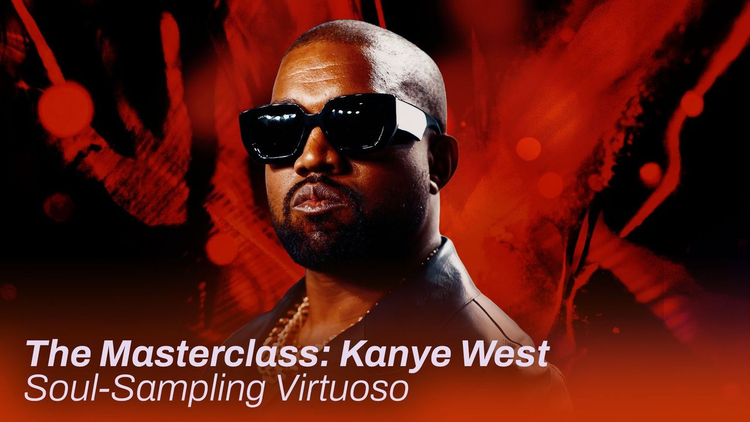
Kanye West (now legally known as Ye) built some of the most recognizable songs in Hip Hop by transforming records that came before him. Through pitched-up soul vocals, gospel choirs, chopped loops and unexpected genre combinations, the Chicago artist helped reshape how rap music sounded in the 2000s and beyond. He also helped popularize "chipmunk soul," a production style built around speeding up and pitching soul vocals higher to create warm, instantly recognizable melodies.
What separated him from many of his peers was his ability to make a sample feel like part of the story instead of just part of the beat. A gospel choir could become a confession. A soul record could become a comeback anthem. An old R&B ballad could turn into a rap hit without losing what made the original special.
Across albums like The College Dropout, Late Registration, My Beautiful Dark Twisted Fantasy, Yeezus and The Life of Pablo, Ye pulled from soul, gospel, R&B and electronic music to create some of the most distinctive records of his catalog. Below are 10 songs that show how the mastermind producer-turned-rapper transformed classic recordings into unforgettable Hip Hop storytelling moments.
1. “Through the Wire”
Original sample:
Chaka Khan’s “Through the Fire”
His spin on it:
West famously sped the sample up into a high-pitched vocal loop that became one of the defining examples of “chipmunk soul,” his signature production style at the time.
The storytelling impact:
The sample became the heart of the song's narrative. Since the "Heartless" artist recorded the track while recovering from a near-fatal car accident and literally rapping through a wired jaw, flipping “Through the Fire” into “Through the Wire” made the production feel deeply personal from the jump.
Cultural influence:
As the breakout single from The College Dropout, “Through the Wire” introduced many listeners to “chipmunk soul,” which is built around sped-up soul vocals and chopped samples. While producers like RZA and Just Blaze had experimented with similar techniques before him, Ye helped bring the sound into the mainstream and made it central to his identity as both a producer and artist. The song also helped establish a more personal style of rap storytelling, proving that records about real-life setbacks and vulnerability could connect with audiences just as strongly as traditional rap braggadocio.
2. “Jesus Walks”
Original sample:
The ARC Choir’s “Walk With Me” and Curtis Mayfield’s “(Don’t Worry) If There’s a Hell Below, We’re All Going to Go”
His spin on it:
The rapper blended marching-band drums, gospel choirs and dramatic layering to create a larger-than-life sound. Instead of treating gospel music as background texture, he placed it front and center. The choir vocals, military-style percussion and soaring arrangement gave the record the scale of an anthem.
The storytelling impact:
The gospel influence gave the record its emotional weight. “Jesus Walks” sounds like an internal battle between faith, fame, fear and survival. The choir vocals made the song feel bigger than a typical rap single, like a testimony unfolding in real time.
Cultural influence:
The record challenged the idea that faith-centered records couldn't succeed in mainstream Hip Hop. It earned Grammy nominations for Song of the Year and Best Rap Song, winning the latter, and later took home Video of the Year at the BET Awards. Beyond the accolades, "Jesus Walks" resonated with listeners who rarely heard faith, doubt and spirituality discussed so openly in rap music. Its success helped prove those conversations could exist alongside radio hits, club records and traditional rap storytelling.
3. “Slow Jamz” with Twista and Jamie Foxx
Original sample:
Luther Vandross’s 1981 cover of Dionne Warwick's “A House Is Not a Home”
His spin on it:
Produced by Mr. West himself, the beat used sped-up vocals, speedy drums and old school R&B textures to make the song feel smooth and nostalgic.
The storytelling impact:
The production gave the single a playful late-night feel that matched the romantic energy of the lyrics. His approach also balanced Twista’s fast-fire delivery with smooth melodies and Jamie Foxx’s vocals, keeping the record grounded in the intimate and slow-jam tradition it celebrated.
Cultural influence:
"Slow Jamz" became another early mainstream example of the Atlanta-born's “chipmunk soul” production style in a rap record that crossed into radio and pop audiences. It also helped introduce a new generation of listeners to Luther Vandross while proving that rap, R&B and soul could coexist in the same record without sacrificing any of their identities. The song's success further established the double-digit Grammy winner as one of the most sought-after producers of the era.
4. “Spaceship”
Original sample:
Marvin Gaye’s “Distant Lover”
His spin on it:
He slowed the sample down and stretched Marvin Gaye's vocals across the beat. The result sounded distant and weary, matching the frustration and restlessness in the lyrics.
The storytelling impact:
The sample gave the song a sense of longing. While Ye rapped about retail jobs, burnout and wanting more out of life, the drawn-out vocals created the feeling that he was already imagining a life beyond the stockroom and time clock. The contrast reinforced the song's central theme of wanting more than the circumstances in front of him.
Cultural influence:
“Spaceship” helped broaden the kinds of stories that could exist in mainstream rap. Instead of focusing on wealth or status, it centered on low-wage work, frustration and ambition, experiences that resonated with listeners navigating similar realities. It remains one of the clearest examples of Ye turning an ordinary life experience into a compelling rap record.
5. “Gold Digger” with Jamie Foxx
Original sample:
Ray Charles’ “I Got a Woman”
His spin on it:
Instead of letting the sample ride smoothly, West chopped it into quick bursts that made the production feel very animated. The stop-and-start rhythm added personality to every line.
The storytelling impact:
The vocal chops worked almost like punchlines between the BET Award winner's verses. Each time the sample returned, it reinforced the song’s humor and chaos, helping turn a relationship story into something that felt conversational rather than preachy.
Cultural influence:
“Gold Digger” became one of Ye's most recognizable songs, built around flipped vocals from Ray Charles’ “I Got a Woman.” The track won a Grammy Award for Best Rap Solo Performance and earned a Record of the Year nomination. Its chorus became part of popular culture, with the phrase “gold digger” taking on a life of its own through memes, social media references and everyday conversations long after the song's release.
6. “Touch the Sky” with Lupe Fiasco
Original sample:
Curtis Mayfield’s “Move On Up”
His spin on it:
He amplified the sample’s energy and optimism until the record sounded larger than life. The beat feels celebratory from the second it starts.
The storytelling impact:
The production matched West's confidence and ambition perfectly. Every musical swell made the song feel motivational, almost like a victory lap before the race was even over.
Cultural influence:
“Touch the Sky” became one of Ye’s most recognizable motivational records, blending triumphant horns, soulful production and confident storytelling into a rap anthem that helped define the sound of mid-2000s Hip Hop. The song also introduced many mainstream listeners to Lupe Fiasco, whose guest verse became one of the track’s standout moments.
7. “Blood on the Leaves”
Original sample:
Nina Simone’s rendition of “Strange Fruit”
His spin on it:
The award-winning artist placed Simone’s haunting vocals over heavy electronic production and aggressive drums, creating a sharp contrast between the source material and the beat. Rather than preserving the sample in its original form, he surrounded it with booming percussion and synthesizers that pushed the song into darker territory.
The storytelling impact:
The presence of “Strange Fruit” immediately adds tension to the record. By pairing Simone’s vocals with lyrics about heartbreak, fame and excess, he created a song that feels uneasy from start to finish, forcing listeners to sit with the contrast between the sample’s history and the story being told.
Cultural influence:
“Blood on the Leaves” is a prime example of how artists can use historically significant samples in modern music. By building a song around the older rendition of “Strange Fruit,” the producer connected a contemporary rap record to one of the most powerful protest songs in American history. The track remains one of the most discussed examples of his willingness to pair challenging source material with unexpected choices.
8. “Father Stretch My Hands”
Original sample:
Pastor T. L. Barrett’s “Father I Stretch My Hands”
His spin on it:
Across both “Pt. 1” and “Pt. 2,” the fashion designer flipped the gospel sample into two completely different moods. “Pt. 1” leaned into floating synths, booming bass and church-inspired vocals from Kid Cudi and Kelly Price, while “Pt. 2” moved into darker trap production with elements of Desiigner’s “Panda.”
The storytelling impact:
The gospel sample created tension between redemption and recklessness throughout both songs. Even when the production became chaotic or bass-heavy, the choir vocals kept pulling the music back toward its church roots.
Cultural influence:
Both songs became standout records from The Life of Pablo for blending gospel samples with modern rap and trap production. “Pt. 1” also became one of the album's most recognizable tracks, while its opening moments helped introduce Metro Boomin's producer tag, “If Young Metro don’t trust you, I’m gon’ shoot you,” to an even wider audience.
9. “Bound 2”
Original sample:
Ponderosa Twins Plus One’s “Bound,” alongside the “uh-huh, honey” and “alright” vocals from Brenda Lee’s “Sweet Nothin’s”
His spin on it:
He kept the production rough and intentionally unpolished, layering sped-up soul vocals with chopped background phrases and warm instrumentation that felt nostalgic but unpredictable.
The storytelling impact:
That messy, unfinished feeling matched the song’s mix of humor, vulnerability and chaos. Even with all the confidence in the lyrics, the production suggested there was still uncertainty beneath the surface.
Cultural influence:
“Bound 2” stood out on Yeezus for bringing back his sample-heavy production style after much of the album leaned toward industrial and aggressive. The song earned Grammy nominations for Best Rap Song and Best Rap/Sung Performance, while its music video featuring him and Kim Kardashian became one of the most talked-about visuals of the era, spawning countless parodies and internet reactions. The track also gave fans some of the album’s most quoted lines, including "One good girl is worth a thousand b**ches" and "Jerome's in the house, watch your mouth," the iconic catchphrase comes from Martin Lawrence.
10. “Otis” with JAY-Z
Original sample:
Otis Redding’s “Try a Little Tenderness”
His spin on it:
The Sunday Service Choir leader chopped and restarted the sample throughout the song, turning Otis Redding’s vocals into something loud, fast and unpredictable instead of smooth and traditional.
The storytelling impact:
The constant interruptions and vocal bursts matched the larger-than-life energy of JAY-Z and West's verses about fame, luxury and excess. The production sounded chaotic in a way that felt intentional and celebratory.
Cultural influence:
“Otis” became one of the defining records from Watch the Throne and was widely praised for its production and chemistry between JAY-Z and Ye. The song earned a Grammy Award for Best Rap Performance, while its Spike Jonze-directed video became one of the album’s most memorable moments. It also served as an introduction to Watch the Throne's blend of luxury rap, sharp lyricism and sample-driven production, helping set the tone for the rest of the collab album.