Image Credit
Apu Gomes/Contributor via Getty Images
Image Alt
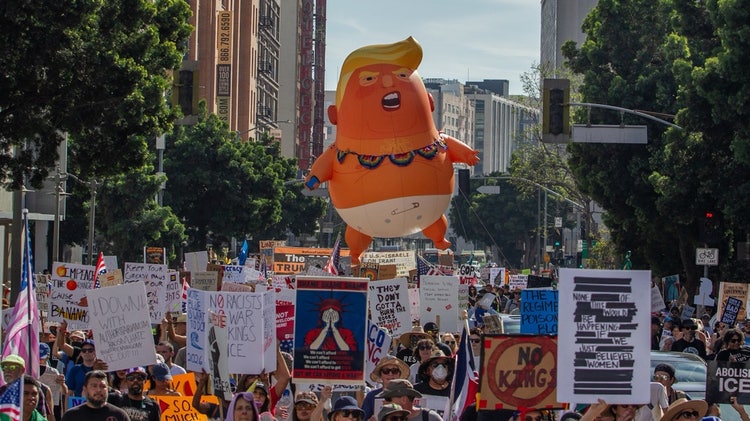
People hold signs followed by a 20-foot-tall helium-filled balloon of Trump wearing a diaper in front of City Hall to protest immigration enforcement and Federal overreach during a national “No Kings” protest in Los Angeles, California. This is the third nationwide "No Kings” protest held against the Trump administration.
Image Size
landscape-medium
Key Takeaways
- More than 3,000 “No Kings” protest events were planned nationwide, with demonstrations reported in all 50 states.
- In downtown Los Angeles, 74 people were arrested after authorities issued a dispersal order near the Metropolitan Detention Center.
- Major rallies drew significant crowds in cities like Boston, New York, Philadelphia, Chicago, and St. Paul, where political and cultural figures appeared.
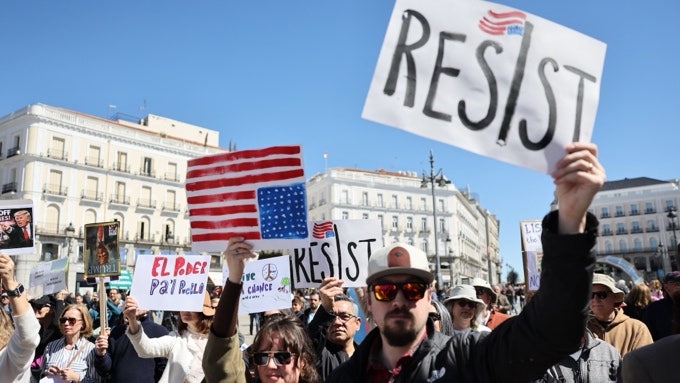
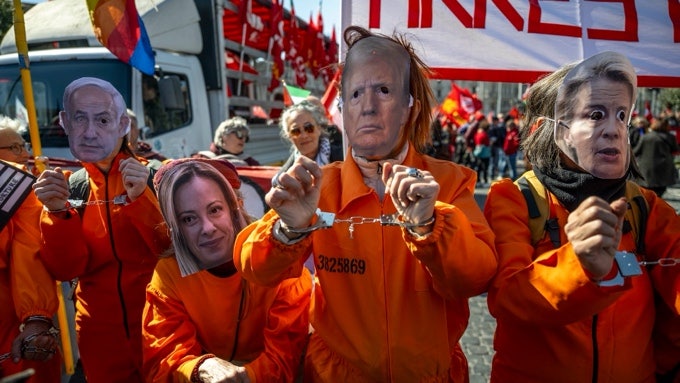
On Saturday (March 28), the “No Kings” protests turned into one of the biggest coordinated demonstrations the country has seen in months, with actions stretching across all 50 states and far beyond the usual major-city hubs. According to Reuters, more than 3,200 events were planned nationwide, while the Associated Press put the number of registered events at more than 3,100. Either way, the scope was hard to miss: What started as another round of opposition to President Donald Trump’s administration became a day of huge turnout in a wealth of major cities, plus a growing presence in smaller communities that organizers said represented a major jump from earlier mobilizations. The movement’s reach even extended beyond the U.S., with related demonstrations in places like Rome and Madrid.
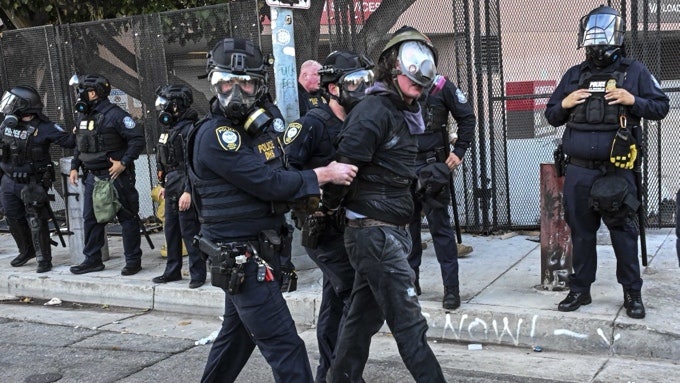
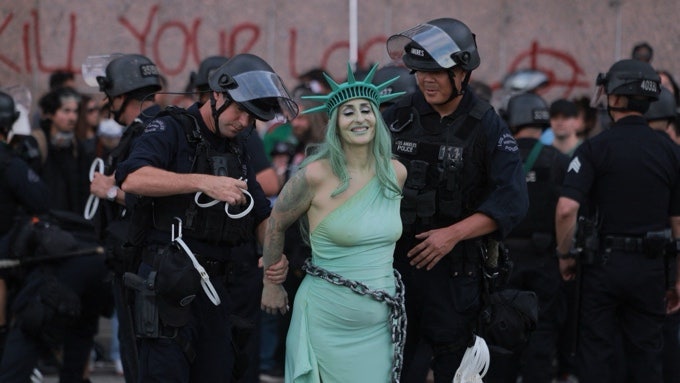
One of the biggest moments happened in LA. It was reported that, after a largely peaceful daytime march, tensions escalated near the Metropolitan Detention Center, where authorities issued a dispersal order and later used tear gas. LAPD said 74 people were arrested for failing to disperse, while one additional person was taken into custody on suspicion of possessing a “dagger.” Additionally, the Department of Homeland Security claimed two officers were injured after being hit with concrete blocks.
Image Credit
Anadolu/Contributor via Getty Images
Image Alt
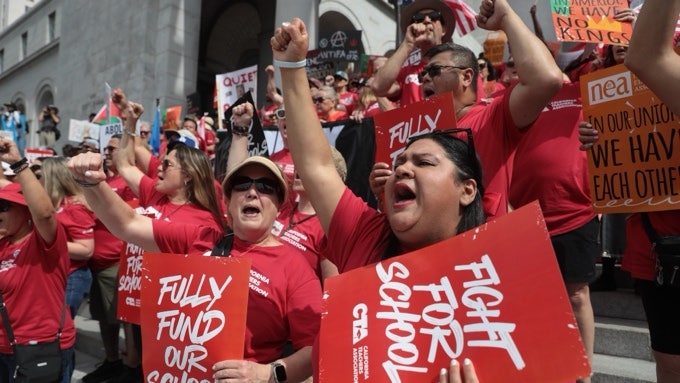
Demonstrators protest on the steps of Los Angeles City Hall during the nationwide “No Kings” protest in Los Angeles, California
Image Size
landscape-xlarge
Image Credit
Anadolu/Contributor via Getty Images
Image Alt
DHS officers arrest a protester outside of the Metropolitan Detention Center in downtown Los Angeles after the “No Kings” rally
Image Size
landscape-xlarge
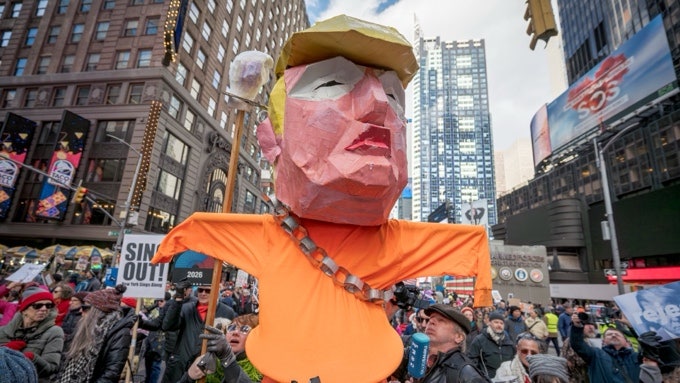
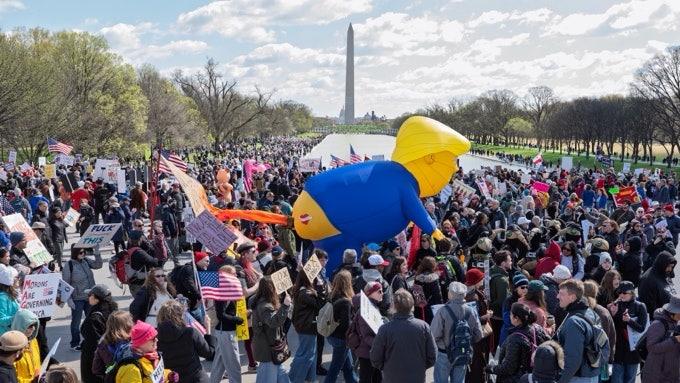
Moving away from the West Coast, large rallies took place in New York, Dallas, Philadelphia, and Washington, D.C., and two-thirds of the day’s events reportedly happened in lesser-known areas. In NY, a police estimate put the crowd at “tens of thousands” stretching more than 10 blocks in Midtown Manhattan, with Robert De Niro among the day’s most visible voices. In Washington, the imagery was especially strong, as marchers moved across Memorial Bridge and around the Lincoln Memorial and National Mall.
Image Credit
Erik McGregor/Contributor via Getty Images
Image Alt
Participants seen holding a Trump puppet. Hundreds of thousands of New Yorkers took to the streets in Midtown Manhattan to stand in defiance against the authoritarian policies of Donald Trump, his administration, and (in their opinion) the rampant corruption in his administration at the “No Kings” Protest, labeled by the Trump administration as the “Antifa” or “The Hate America” rally.
Image Size
landscape-xlarge
Image Credit
Probal Rashid/Contributor via Getty Images
Image Alt
Demonstrators march near the Lincoln Memorial during the "No Kings" protest.
Image Size
landscape-xlarge
Image Credit
Boston Globe/Contributor via Getty Images
Image Alt
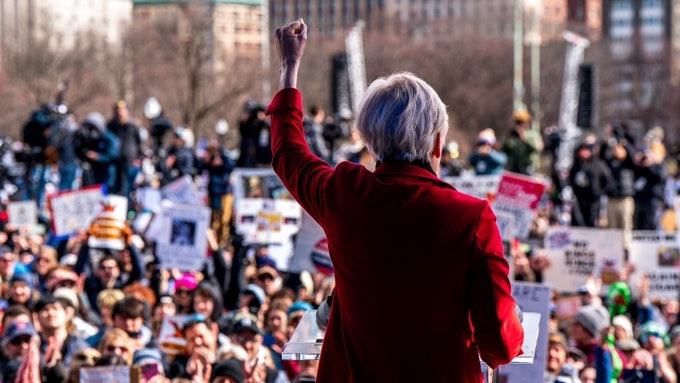
Sen. Elizabeth Warren speaks at a “No Kings” event on the Boston Common
Image Size
landscape-xlarge
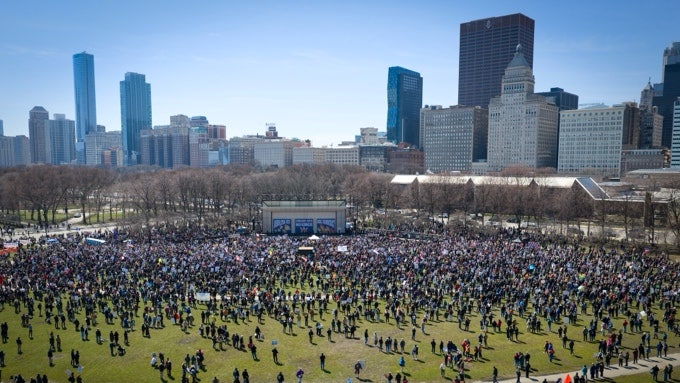
NBC Boston revealed that an estimated 180,000 people (including Sen. Elizabeth Warren) descended on Boston Common after reviewing aerial footage and security team estimates. In Philadelphia, WHYY reported that thousands gathered at City Hall before filling Benjamin Franklin Parkway on the way to a stage at 22nd Street, with organizers estimating about 40,000 participants. Chicago added another layer, as thousands rallied in Grant Park before marching through the Loop, with Mayor Brandon Johnson speaking ahead of the march.
St. Paul became the day’s cultural and political centerpiece
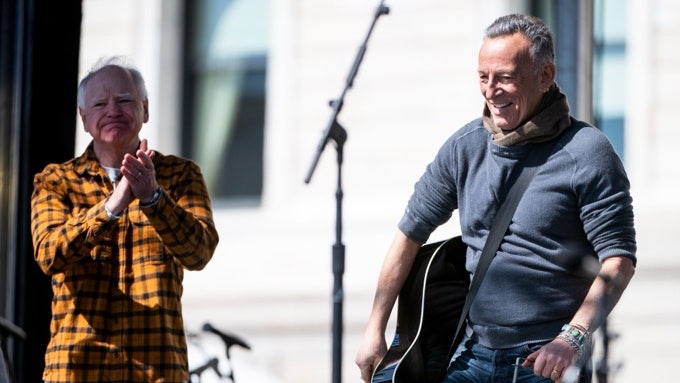
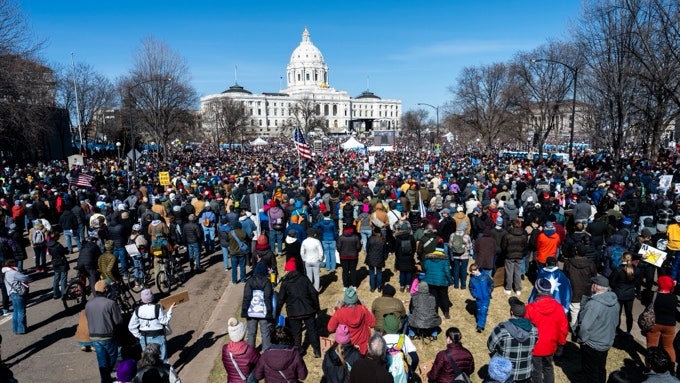
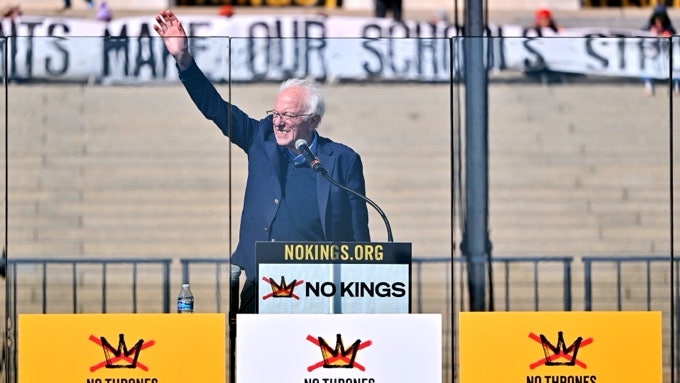
If one city felt like the symbolic center of the movement, it was St. Paul. According to AP, the Minnesota Capitol’s rally became the flagship event, with Bruce Springsteen headlining and performing “Streets of Minneapolis,” the song he wrote in response to the fatal shootings of Renée Good and Alex Pretti by federal agents. Gov. Tim Walz and Sen. Bernie Sanders also addressed the crowd.
For more scenes from the weekend’s demonstrations across the country, you can check out plenty more photos below.
Image Credit
Elijah Nouvelage/Contributor via Getty Images
Image Alt
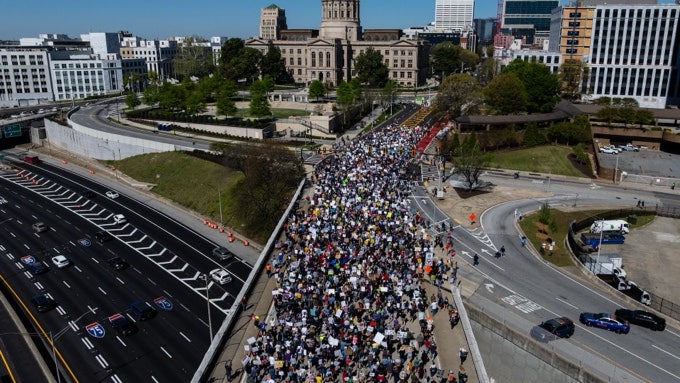
An aerial view shows people marching near the Georgia state Capitol building during the “No Kings” national day of protest in Atlanta, Georgia.
Image Size
landscape-xlarge
Image Credit
Natalie Behring/Contributor via Getty Images
Image Alt
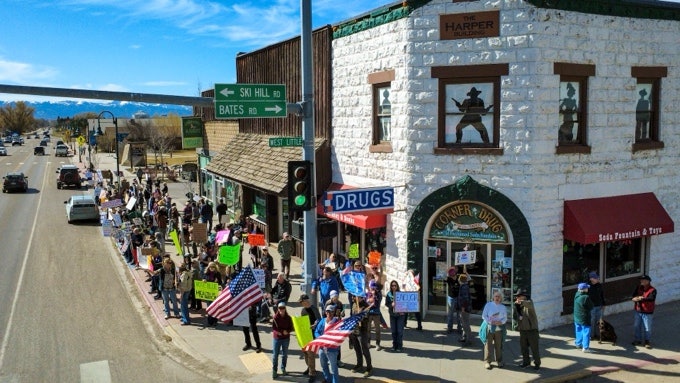
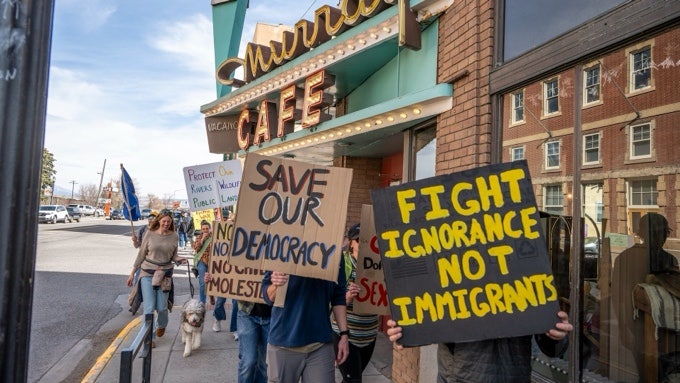
Protesters hold signs and chant slogans while attending a “No Kings” protest in Driggs, Idaho.
Image Size
landscape-xlarge
Image Credit
Stephen Maturen/Contributor via Getty Images
Image Alt
Minnesota Gov. Tim Walz (L) introduces musician Bruce Springsteen during a "No Kings" protest outside the State Capitol building in St. Paul, Minnesota.
Image Size
landscape-xlarge
Image Credit
Jon Cherry/Contributor via Getty Images
Image Alt
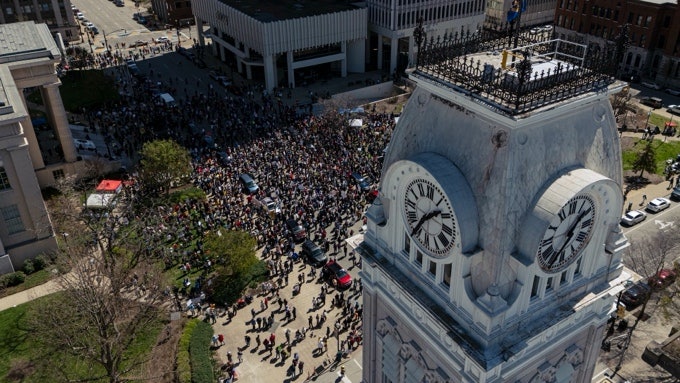
In an aerial view, a crowd is seen during a “No Kings” protest in Louisville, Kentucky.
Image Size
landscape-xlarge
Image Credit
San Francisco Chronicle/Hearst Newspapers/Contributor via Getty Images
Image Alt
Protesters rally during a “No Kings” protest, part of the nationwide protests against President Donald Trump along with the administration's domestic and foreign actions, in San Francisco.
Image Size
landscape-xlarge
Image Credit
William Campbell/Contributor via Getty Images
Image Alt
Residents of Park County, Montana take part in the “No Kings” protest in Livingston, Montana.
Image Size
landscape-xlarge
Image Credit
Thomas Coex/Contributor via Getty Images
Image Alt
Demonstrators holding anti-Donald Trump's policies placards take part in a “No Kings Day” protest in Madrid.
Image Size
landscape-xlarge
Image Credit
Antonio Masiello/Contributor via Getty Images
Image Alt
People wear masks depicting Israel Prime Minister Benjamin Netanyahu, Italian Prime Minister Giorgia Meloni, and U.S President Donald Trump during a national anti-war demonstration called the "No Kings" protest in Rome, Italy.
Image Size
landscape-xlarge
Image Credit
Stephen Maturen/Contributor via Getty Images
Image Alt
People gather for a “No Kings” protest outside the State Capitol building in St. Paul, Minnesota.
Image Size
landscape-xlarge
Image Credit
Etienne Laurent/Contributor via Getty Images
Image Alt
LAPD officers arrest a protester dressed as Lady Liberty in chains following clashes near the Metropolitan Detention Center during the “No Kings” national day of protest in Los Angeles.
Image Size
landscape-xlarge
Image Credit
Tasos Katopodis/Contributor via Getty Images
Image Alt
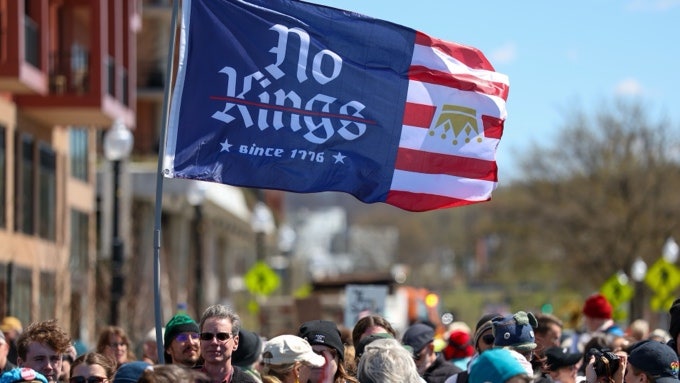
Protesters hold a “No Kings” flag as they gather in Southeast Area and take part in rally and march in Washington, D.C.
Image Size
landscape-xlarge
Image Credit
Scott Olson/Contributor via Getty Images
Image Alt
Demonstrators gather in Grant Park to protest policies of the Trump administration by participating in a “No Kings” rally and march in Chicago, Illinois.
Image Size
landscape-xlarge
Image Credit
Astrida Valigorsky/Contributor via Getty Images
Image Alt
Bernie Sanders speaks during the “No Kings” Rally Concert at the Minnesota State Capitol in Minneapolis, Minnesota.
Image Size
landscape-xlarge