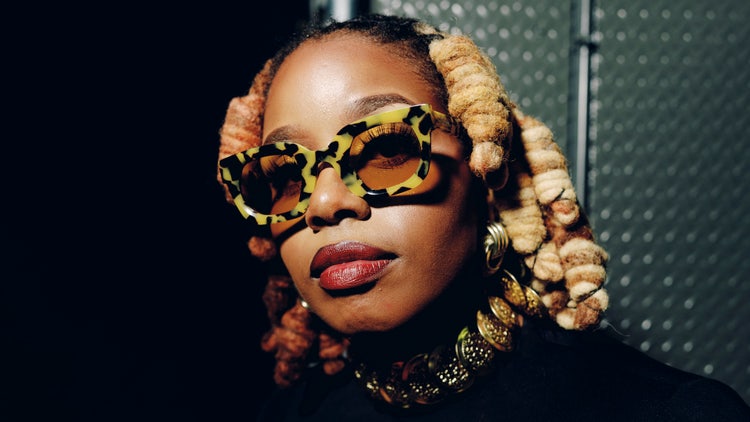
Paris Jones — better known as PJ — spent years helping others bring their musical ideas to life while building a catalog of her own. The singer-songwriter served as a recurring vocalist across both installments of Common’s A Beautiful Revolution, wrote for everyone from Wiz Khalifa to Ty Dolla $ign, and had her tracks featured on shows like "Insecure" and "The Chi." She also introduced herself to arena audiences during J. Cole’s "The Fall-Off Tour."
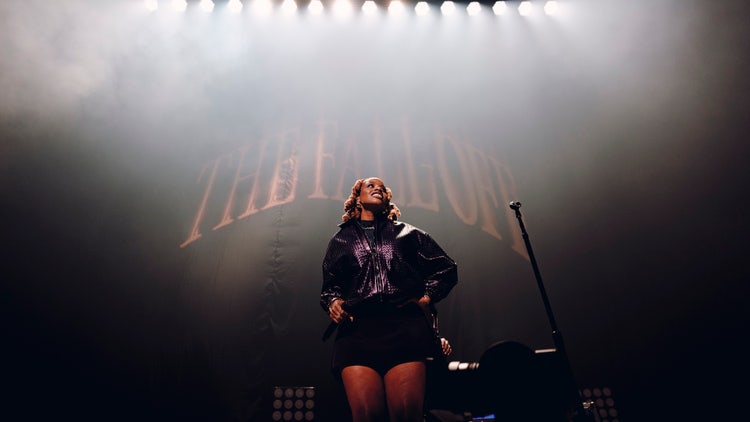
For the 2026 trek, PJ's initial opening set was built around her own music. She later returns during Cole’s headlining performance to sing “Legacy,” their collaboration from The Fall-Off. Speaking on the opportunity to join the North Carolina artist on tour and on stage, she acknowledged what it meant to her. “I always felt like I was doing all this hard work and I felt like a lot of people didn’t know I existed,” PJ told REVOLT. “Just to be put in a position to win like that and be seen... It’s the most amazing thing to happen in my career.”
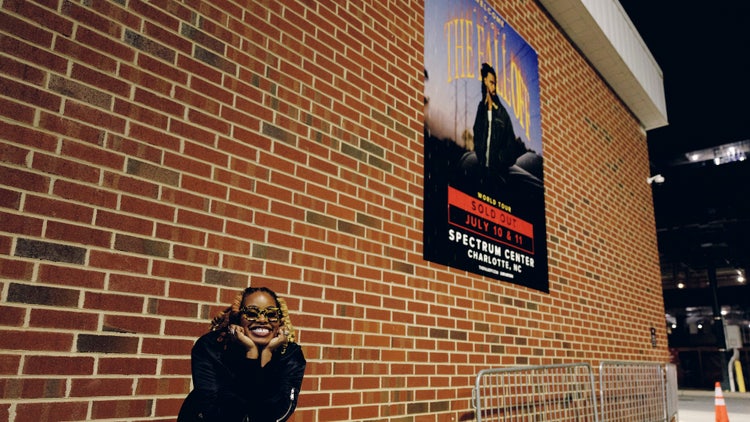
Heading to a tour afterparty in Charlotte, North Carolina, PJ initially assumed fans standing outside were waiting for Cole. Instead, they began calling her name, requesting pictures and handing her items to autograph. “I’m literally watching my life change in real time,” she recalled.
In this installment of “Studio Sessions,” PJ detailed how freestyling led to her contribution on “Legacy,” the six years of emotional processing behind I Hate You, Marcus Johnson, and the difference between writing commercial records and creating freely for herself. Get into the exclusive conversation below!
Most opening acts finish their performance and are done for the night. How did knowing you'll return during Cole’s set affect the way you approach your opening performance?
I think as far as pacing, I just aim to have the best performance overall. But it’s like, for me, if I have any regrets or things I could do better, I’m like, “Oh, okay, I get another shot to come back out there and make another impression.” I wouldn’t say it takes less of the pressure. It just gives me another chance to not harp on something that could have been better and just be like, “Okay, well, there’s one more shot to take.”
How did you first meet J. Cole, and what do you remember about creating “Legacy”?
I met Cole when he was in Atlanta at Tree Sound Studios working on The Fall-Off. It was like this camp, and it was like a bunch of producers and all that. So, that’s where we first met. I actually got invited by Omen. So, that’s how our whole journey started. He played me the song, and he was just like, “If there’s anything you hear...” He pulled up the song, let me hear, and then I just heard this melody because it kind of breaks down at the end.
A lot of things I do, I freestyle. It just kind of came in a moment. A lot of times when I freestyle, I have the mumbles, and I have the melodies. He explained to me what the song was about. He actually explains it every night. It’s just dope to see from the creation of the song to now. Even when I step onstage, people will sing it with me.
Did you know when you joined "The Fall-Off Tour" that “Legacy” would become such a prominent part of Cole’s show?
My manager at the time... we had a feeling because we didn’t know the set list. We didn’t know what songs because there are a lot of songs on The Fall-Off. He actually called me and let me know that I was going to go. I didn’t know we were going to do the “Legacy” thing. I didn’t know I was going to get the spotlight. Just to be on that type of platform... incredible.
I always felt like I was doing all this hard work, and I felt like a lot of people didn’t know I existed. And still, a lot of people don’t know. Just to get used to that amount of visibility and just to be put in a position to win like that and be seen, first of all, I love it. It’s the most amazing thing to happen in my career. But it’s also something that I’m not very much used to.
What moment made you realize that the tour was changing the way people saw you?
The first special moment is definitely my family seeing me because we did the first shows in Charlotte. I’ve been changing forever. For there to be moments to show off and be like, “Oh, this is what I’ve been doing,” like the fruits of my labor. I’ve been successful, but this is different. For the Charlotte show, nobody knew. Nobody knew that he was going to bring me back out and have the spotlight on me. So, just for my family to see me in that type of light.
After the Charlotte show, we were going to this afterparty, and there were people standing outside. My cousin was like, “Oh, they’re trying to get your attention.” I’m like, “No, they’re waiting for Cole. They’re waiting for Cole.” When we get closer, it’s like, “PJ, PJ. Can you sign this? Can you take a picture? Can you sign my tag?” They just wanted me to sign anything. I’m like, “Oh, are we here now?” It’s happening in real time — where I’m literally watching my life change in real time.
You spent years writing for other performers. Do you still hear certain songs in someone else’s voice while you are creating?
That’s a very interesting question. I think early in my career, I would feel like that. Most of my songs I’ve written, I’ve written for more male artists than I have female artists, first and foremost. I think Hip Hop and R&B [are] deeply embedded in my soul. It affects the cadences, which gives me a slightly different lane. If I’m writing for a guy, then it’s like, let me just be this cool individual, pop my s**t, like, "I’m that n**ga." That’s the act.
Ever since I moved to Atlanta and left LA, I have been kind of isolated from the writing situation. I’m out of my publishing deal, which a lot of people don’t get out of their publishing deal, but God got me out of mine. Atlanta’s giving me a bounce and a rawness back that I used to have... I felt like living in LA and doing commercial songwriting kind of took my edginess away. It’s like corporate music making, and you have the rawness of just purely being an artist.
I used to feel like there are certain things I wouldn’t say because of the lane that I tried to sit in, like not cussing n**gas out or not being a certain level of in-your-face-ness. But I’m realizing these are all parts of me. Being a Black woman is not a monolith. Sometimes you’re going to cuss somebody out. Sometimes you’re going to be soft. Sometimes it might be a little angelic, a little majestic. And then sometimes you might need to put your foot up somebody’s a**. But it’s all necessary. Emotions are layered.
Coming out of songwriting has allowed me to look at it less like, “Oh, let me put this hat on,” and more like, “Oh, these are just different layers of myself.”
What led you to title your project 'I Hate You, Marcus Johnson'?
I was thinking about limerence and how you just kind of get stuck on a person and not really love them for real, for real. I used to suffer from extremely low self-esteem, which I feel like is something that I talk about in my music in general because I feel like a lot of people are in situations where you wouldn’t tolerate the bulls**t. Unfortunately for me, I probably tolerated it [for] a good three to six years.
If you can imagine somebody that writes songs every day and has limerence, I’m writing about this man every day. Long story short, all these songs are about this one person. It took me a long time to get past it. I’ve been writing about this man for like six years. So, to me, this is... just buttoning up the whole thing and really being done with it.
I feel like everybody has that one person that was a catalyst for either how they viewed relationships, when they figured it out, or when it just got completely unraveled. That’s what this project is for me. It’s like a f**k you to him too because I’m doing so good. At the time when things were f**ked up, he was mentally, emotionally, spiritually just really draining me.
I think the recovery process that it took me, that is in these songs, is definitely going to help people process their own relationships. But it’s also going to be fun. It took me too long to get over this man. I think sometimes albums feel a lot cleaner, like, “Oh, I had this relationship and then it didn’t work out. And then I wrote a few songs.” I’m like, “No, this was a lot of processing.” And now we’re here.
How does the single “Two Steps” fit into that story?
Sonically, I get excited about “Two Steps” because the way that it comes in, I don’t think you expect to hear my voice. I’m talking my talk. I feel like the way that I approach it is kind of like a mob boss. I’m saying [it] only in tone. I’m just really going off, but from a calm, collected, “Oh, I see what you got going on.”
The song is about when you know you should stop messing around with somebody and literally cut those ties, and you keep doing it. Somebody hits you that you ain’t heard from in a while. Especially if you went weeks without talking to them, you are already on the road to cutting them off. Then they hit you, and you still keep doing this s**t over and over again. It’s two steps forward, three steps back. I feel like it works for anything. Trying to save money, trying to buy a house. Even though I’m talking about that one relationship, I think it applies to every aspect of life.
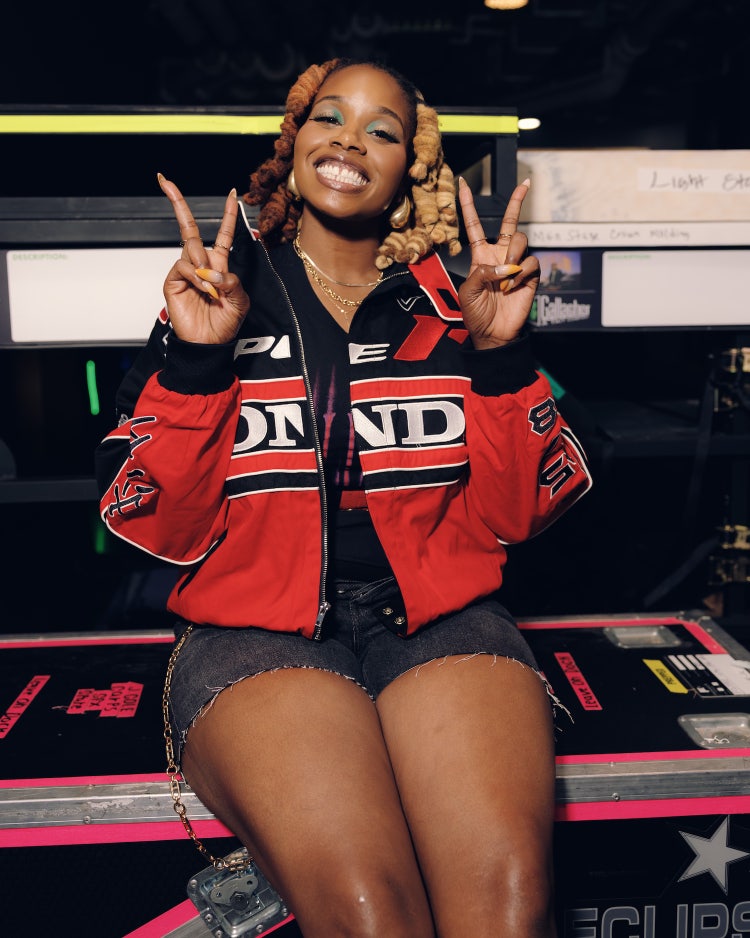
What is the biggest difference between creating music for another performer and creating for yourself?
Right now, I feel like because I’ve been so out of the loop and not making music commercially, I feel like I’m living in my own spaceship. I can do what I want. I can choose what grooves. I can choose what patterns, production-wise. I don’t have to edit myself. When you’re a songwriter, it’s the self-editing process and trying to make a hit record. Trying to make it as catchy as possible. You think about it from a very mathematical process.
For me, I’m already an overthinker. I’ve definitely found my way, but the beauty in being an artist is not having to edit yourself. It’s just the purest form of expression. You get an idea, you record it. Me, I’m used to looking at s**t like a math problem. It’s also benefited me because there are certain tricks of the trade that you learn that help you make a song catchier, which I feel like has only helped my songwriting.
But the biggest thing is I get to create freely and not think about the charts. It took me years to get to this place where it’s like, “Oh, I just create for the fun.” I’m literally just getting here to like, “Oh, I’m creating just for the fun. I’m letting this emotional thing off, and I’m not worried about how catchy it is.” It’s getting back to the purest form of creating. I want people to hear my music. I want them to hear something familiar and be like, “Oh, that kind of reminds me of this or reminds me of that,” but also have enough newness in it to be like, “Oh, what’s going on here?”
What lessons are you learning as your career elevates to new levels? What can others learn from your journey?
Something I’m learning right now, as my star rises, is letting go of certain things and only worrying about what you have control over. Obviously, to [whom] much is given, much is required, but you can’t control everything. I’m going to let those things go, and I’m going to let somebody else handle those so I can be the best artist that I can be.
God’s timeline is the best, most perfect timeline. You will never be able to figure it out, and you never know when your time is coming for real. When it’s your time, it’s your time. There were certain times before I got here in this journey situation where I’m like, “Yo, I’m just waiting for the hammer to swing,” because I’ve been through so much s**t.
It’s learning how to move forward with the best intentions, but also not always waiting for the bad news to be around the corner. Now I’m like, “Okay, it’s up. It’s going to keep going up.” You also get great things from solitude, not being in the mix. It’s okay to not be in the mix. For younger artists, it’s really okay to not be in the mix.
One day, you will meet people or somebody who will understand, and you won’t have to explain stuff. You keep explaining to people, nobody gets it, and then one day you meet people who understand. It makes everything that didn’t work out nothing to talk about because that was just part of the journey. Also, never take the attorney that your manager suggests to you ever in life. Don’t do it.
Before we close, what should listeners know about 'I Hate You, Marcus Johnson'?
My project, I Hate You, Marcus Johnson, will be a classic. It is a classic.