Key Takeaways
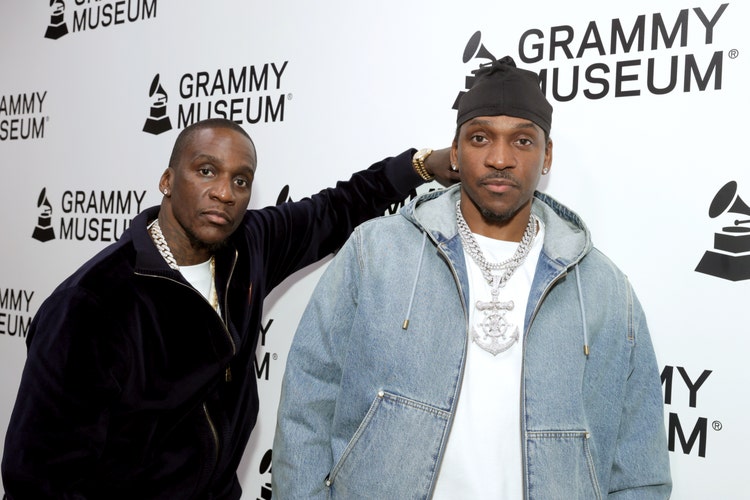
- Clipse’s reunion album, Let God Sort Em Out, earned recognition for its emotional depth and lyrical precision.
- Cardi B’s AM I THE DRAMA? marked a fierce return, blending sharp delivery with personal reflection.
- Several standout albums in 2025 prioritized introspection, patience, and legacy over trend-driven production.
Hip Hop in 2025 didn’t move in a straight line — it expanded, paused, reflected, and, in many cases, recalibrated. Rather than being defined by one dominant sound or culture-consuming headline, the year unfolded through contrast. Veterans returned with sharpened clarity instead of nostalgia. Superstars stepped back into the spotlight under immense pressure. Younger artists tested how far their worlds could stretch before losing shape. Together, the best albums of the year felt less reactive and more intentional.
If 2024 thrived on spectacle — public sparring, viral moments, and the like — 2025 leaned inward. The most rewarding rap albums weren’t racing to win release weekend. They were built for longevity, revealing new layers weeks later through a lyric that suddenly hit harder, a beat that aged beautifully, or a theme that crystallized with time. Many artists embraced patience — either through sprawling tracklists that created full ecosystems or through tightly edited projects that favored focus over flash.
There was also a noticeable shift in perspective. Themes of legacy, grief, self-preservation, faith, and accountability surfaced repeatedly, not as abstract concepts but as lived experiences. For the most part, artists sound more comfortable sitting with discomfort, more willing to acknowledge contradiction, and less interested in flattening their stories for easy consumption.
This ranked list reflects that depth. These albums lingered in conversations, headphones, and memory long after their arrivals. Whether through elite rapping, cohesive world-building, emotional honesty, or undeniable cultural impact, each project below helped define what Hip Hop felt like in 2025.
Honorable Mention: WHAT HAPPENED TO THE STREETS? by 21 Savage
Released in mid-December, 21 Savage’s WHAT HAPPENED TO THE STREETS? arguably moved in a similar manner as Gunna’s The Last Wun, as it seemed less about big switches and more about mood, precision, and records that reward repeat listens from the core base. The opener, “WHERE YOU FROM,” set the tone immediately, and a clean, matching visual for “HA” added to the overall energy. With features including Drake, Latto, Lil Baby, and Young Nudy, the LP balanced big names with a tight, street-level perspective. As with Gunna, more of the same can be positive or negative, depending on the listener.
10. The Last Wun by Gunna
The Last Wun earned its place at No. 10 by doing exactly what Gunna needed to do in 2025: Stay musically consistent and in control. Rather than grandstanding, he leaned into the melodic ease and pocketed flows that made him a staple in the first place, delivering an album built on patience and familiarity.
Tracks like “just say dat” and The Burna Boy-assisted “wgft” glided over polished, bass-heavy production, with Gunna sounding relaxed and assured as he stuck to themes of loyalty, success, and lifestyle. There’s no dramatic pivot here, just a steady reminder of how effective his sound remains when left uncluttered. His voice rode the beats smoothly, never rushing, never forcing a moment.
What ultimately held The Last Wun at the bottom of this list is scope. The album stabilizes Gunna’s footing, but it didn't expand his narrative or firmly push his artistry forward. One of the biggest critiques? Turbo’s production, which spanned the majority of the album, came off repetitious to some listeners. In a year defined by bigger risks and heavier statements from peers, The Last Wun did succeed as a reset for the Georgia favorite.
9. Infinite by Mobb Deep
Infinite was both a welcome return to classic Queensbridge and a carefully assembled, posthumous farewell that leaned on unreleased Prodigy vocals, with Havoc and The Alchemist handling the backbone. Longtime QB collaborators Big Noyd and Nas (who backed the release as part of his and Mass Appeal’s “Legend Has It...” series) paid their respects on wax alongside the likes of Clipse, Jorja Smith, and Wu-Tang's Raekwon and Ghostface Killah.
The opener, “Against The World,” set the tone with that classic Mobb menace, and it hit harder when Prodigy closed it with a raw sign-off to Havoc: “H, good lookin’, n**ga. I love you. See you on the other side, my n**ga.” From there, the sequencing did a solid job of sounding like the iconic duo in better times and not a stitched-together cash-in, a pitfall a lot of posthumous releases can’t avoid.
Even at its best, Infinite can’t fully escape the limits of its format, as it was more of a legacy piece, or a closing chapter, than a forward-looking statement. Still, it protected Mobb Deep’s aura and gave Prodigy a respectful last spotlight.
8. CAN’T RUSH GREATNESS by Central Cee
By the time Can’t Rush Greatness arrived, Central Cee was no longer fighting for attention in his hometown. If anything, he was maintaining his position as an arguable U.K. drill/rap frontrunner. Like other heavyweights before him, this was a massive push into international waters — especially the United States. In many ways, he certainly landed: The Lil Baby-assisted “BAND4BAND” hit harder than concrete both critically and commercially, while fellow Atlanta mainstay (by way of London) 21 Savage provided a big assist on “GBP.”
The cross-Atlantic collabs weren’t the only standouts by a long shot. “CRG,” the album’s thesis track, saw frequent collaborator Dave joining Cench to reflect on patience and pressure without turning it into a sermon. Elsewhere, songs like “Top Freestyle” and “Limitless” maintained a balanced, yet impressive tone, emphasizing clarity over chaos and confidence without bravado. There’s a noticeable absence of filler: No forced hooks, no overstretched ideas, no reach for viral shortcuts.
What ultimately kept Can’t Rush Greatness from ranking higher was that it prioritized refinement over risk. Central Cee sharpened what already worked instead of truly challenging himself in new directions. That makes the album steady, assured, and replayable... just not transformative. As a statement of maturity, though, it earned its spot comfortably.
7. everything is a lot. by Wale
Wale’s everything is a lot. earned its No. 7 placement because it played like a long exhale from an artist who finally sounds unburdened by expectations, even when he’s wrestling with them head-on. This isn’t a comeback album in the traditional sense; it’s more reflective than defiant, and that choice defined both its strengths and its ceiling.
Infectious promotional drops like “Blanco” and “Mirroronnabenz” aside, one immediate standout was “Power and Problems,” where Wale laid out his emotions with a level of clarity few others could achieve: “I’m talkin’ to God less, my misery ain’t important / My tears watered the flowers for thousands who need a garden.” It’s a moment that captured the album’s core tension — personal pain weighed against public responsibility. Songs like “Belly” and “Watching Us” balanced that vulnerability with warmth, pairing soulful samples and melodic restraint with writing that rewards close listening.
The album also benefited from Wale leaning into layers and depth rather than singles-first urgency. Nigerian influences, understated hooks, and patient sequencing gave the project cohesion, even across its longer runtime. Features are used sparingly and purposefully, never overpowering the point of view.
With that, everything is a lot. rarely demands attention in the way top-tier albums do. And as one of Wale’s most honest and carefully considered bodies of work, its placement is more than earned.
6. Live Laugh Love by Earl Sweatshirt
While presumably not perfect, things seem better mentally for thee Earl Sweatshirt. These days, he finds time in between his prolific touring schedule to hop on the grill and build with his growing family. You hear this on Live Laugh Love, which landed at No. 6 because it’s one of the year’s most emotionally precise rap albums. Earl isn’t interested in accessibility here; he’s documenting his inner workings, grief, and endurance in real time, trusting the listener to meet him where he is.
That intention came through most on the closer, “Exhaust,” where he quietly delivered one of the album’s most affecting lines: “Lining silver on the nimbus cloud, I get it now / The heart breaks itself… At the end of the day / It’s really just you and whatever you think.” The writing felt stripped down but deliberate, echoing across songs like “Gamma (need the <3)” and the pleasantly more melodic “TOURMALINE.” Ultimately, Earl’s cadence sounds conversational yet weighed down by lived experience.
Production across the album stayed sparse and slightly uneasy, giving his words room to linger rather than compete for attention. Few albums of the year felt as honest, or as locked into their own emotional logic, as Earl’s.
5. God Does Like Ugly by JID
JID didn't really ease into God Does Like Ugly. Even before the album dropped, he framed the whole process as messy but necessary. “Starting this new journey coming off The Forever Story has been a very strange, productive, yet tedious process,” he wrote. “This is the first step into a new world that I control. And it’s f**kin’ UGLY.” That mindset showed up in the music: Restless, high-level rapping, and a tracklist that keeps changing shape.
On tracks like “Glory” and “WRK,” he sounded laser-focused, rapping like he’s trying to outrun the pressure. “Community,” with Clipse, was pure rap-head food, as JID traded energy with two masters who don’t let anybody coast. Then he flipped the pacing entirely. “Of Blue” carried real weight, and “For Keeps” landed as a personal reveal that reframed the album’s intensity.
The ambition sometimes crowded the clarity. God Does Like Ugly had huge moments and elite performances, but it wasn’t always as cleanly focused as the albums that ranked above it. Still, in terms of pure skill and urgency, few projects in 2025 hit this hard.
4. MUSIC by Playboi Carti
A four-year wait, months of rumor-mill chaos, then Carti actually delivered a 30-track (!) album that sounded like it was engineered to melt group chats and raves alike. The admittedly polarizing MUSIC was the rare blockbuster rap release that moved like an event and backed it up with moments that came off as instantly referential. The kind of songs people point to when explaining how rap this year actually sounded.
The proof is in how much of this project became a conversation all at once. The album debuted at No. 1 on the Billboard 200, and all 30 tracks hit the Hot 100 — a ridiculous feat for a record this loud, weird, and maximal. That “too much” energy is the point — DJ Swamp Izzo barking through the sequencing like a chaotic ring announcer, the production bouncing from menacing trap to warped, almost psychedelic vibes, and Carti switching voices like he’s flicking channels mid-verse.
And then there’s Kendrick Lamar stepping into Carti’s world (three times, no less) with “GOOD CREDIT” as the most talked-about collision. Those features didn't “smooth” Carti out, either; instead, they solidified how strong his universe-building is when a lyricist of Lamar’s caliber is willing to play inside it.
3. Life Is Beautiful by Larry June, 2 Chainz, and The Alchemist
Life Is Beautiful earned its placement because it executed a very specific idea with near-perfect discipline, and it never once overreached. This isn’t a “surprise trio” album built on novelty. It’s a project rooted in chemistry, clarity, and restraint, with The Alchemist providing a luxurious, rich backdrop that allowed Larry June and 2 Chainz to sound completely at home.
June glided through the album in his comfort zone, turning routine into ritual. His talk of ownership, patience, and self-belief felt less like flexing and more like documentation. 2 Chainz, meanwhile, sounded sharp, rejuvenated, and purposeful, reminding listeners that his veteran presence still carries weight when paired with the right production. FOMO-inducing cuts like “I Been,” “Munyon Canyon,” and the title track balanced laid-back confidence with lived-in wisdom, never rushing a moment just to chase energy.
What elevated the album is how well it understood its audience. There’s no filler, no forced singles, no need to reinvent the wheel. Instead, it leaned into maturity, consistency, and replay value. It doesn’t aim to dominate the conversation (even though it did), and it earned longevity. In a circus year full of wackiness, Life Is Beautiful won by staying grounded.
2. AM I THE DRAMA? by Cardi B
Cardi B’s ranking comes down to one thing: She actually raps like she has something to prove (even when she doesn’t), and she does so without sanding down her personality. The album opened like a warning shot, then tightened the screws as it went. On “Magnet,” she’s in scorched-earth mode, and on “Pretty & Petty,” she kept that same energy aimed at BIA, turning what could’ve been a one-liner moment into a full-on onslaught, “Ether”-style — and notably, that wasn’t the only target who got hit throughout Cardi’s aggressive sophomore LP. When she wanted to pivot, she did: “Shower Tears” gave the project real emotional weight, and “Outside” was the kind of record that sounded built for maximum volume and endless social media captions.
The features helped, too. Kehlani added a clean emotional counterbalance on “Safe,” and utilizing the iconic Janet Jackson on “Principal” was the kind of look that read like legacy and confidence at the same time.
1. Let God Sort Em Out by Clipse
Was there really any other choice? Let God Sort Em Out took the top spot because it did something most (if not all) reunion albums aren’t able to pull off: It felt necessary, not nostalgic. Pusha T and Malice don’t sound like brothers revisiting old roles. They sound like artists who’ve lived full, complicated lives and came back sharper, calmer, and more deliberate. The raps are still surgical (extra emphasis on those from the older Thornton, which the younger would agree), but the perspective has shifted.
That balance really hit home on “The Birds Don’t Sing,” a quietly devastating tribute to their late parents. It’s bittersweet in the truest sense, pairing restraint with emotional gravity in a way Clipse never attempted in their early years. Elsewhere, the album leaned into what Clipse has always done best. Songs like the Tyler, The Creator-assisted “P.O.V.,” “F.I.C.O.” with Stove God Cooks, the Kendrick Lamar-backed “Chains & Whips,” and the lead-off “Ace Trumpets” were controlled menace, with boastful and hilariously disrespectful lines that landed harder the longer you sat with them. Malice’s presence throughout the album was especially important here as a grounding force that added reflection to Pusha’s precision.
The production, courtesy of one Pharrell Williams, stayed focused and intentional, never distracting from the words or the weight behind them. There were no chasing trends, and every feature was carefully aligned to a duo trusting their chemistry and history. In a year full of big swings and loud moments, Clipse flat-out delivered the most complete rap statement of 2025.