Key Takeaways
- Zohran Mamdani’s early music as Young Cardamom reflected a blend of Kampala and Queens influences, rooted in multilingual rap.
- His songs explored themes of migration, identity, and diaspora life through a global Hip Hop lens.
- The creative discipline and storytelling in his music informed his later work in politics and community organizing.
Before Zohran Mamdani became a prominent left-wing politician and, eventually, New York City’s mayor, he was building a very different kind of platform as a rapper. Working under the aliases of Young Cardamom and later Mr. Cardamom, Mamdani used music to explore identity, migration, and city life from Kampala to Queens. His compact catalog, from Ugandan street anthems to South Asian diaspora rap, traces a clear throughline between cultural work and the political storytelling he eventually became known for.
Mamdani’s entry point was a duo formed with his best friend, Ugandan emcee HAB (Abdul Bar Hussein), who has roots in South Sudan. Their debut track, “Kanda (Chap Chap)”, uses chapati – an Indian flatbread that has become a Ugandan staple – as a metaphor for being Ugandan with origins elsewhere. In an essay about the song, Mamdani explained that they rap in Nubi, Luganda, Swahili, and English to push back on the idea that people with South Sudanese or Indian backgrounds are not fully Ugandan.
That single set up their 2016 EP, Sidda Mukyaalo, a six-track project whose title translates roughly to “no going back to the village.” Released digitally, that EP featured songs like “Wabula Naawe” and “P.S.V.,” alongside “Shuruwat,” “Chotti Bahu,” “Askari,” and “Obulamu.” The duo performed material from Sidda Mukyaalo at Uganda’s Nyege Nyege Festival and were nominated for “Rookie of the Year” at the inaugural UG Hip Hop Awards later that year. Across the project, they blended local slang, multilingual flows, and references to Kampala nightlife to build a proudly Ugandan rap language rather than copying U.S. radio rap.
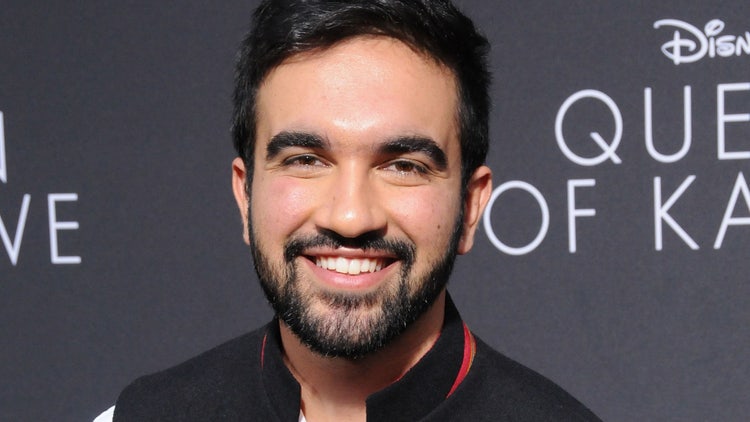
Mamdani’s music soon intersected with his family’s film world. For his mother Mira Nair’s 2016 Disney film Queen of Katwe, he curated and produced the official soundtrack, working as music supervisor alongside Linda Cohen. Under the Young Cardamom & HAB banner, he co-wrote “#1 Spice”, which appears on the soundtrack and in the film itself. He is also credited as an assistant director and appears briefly on screen.
After releasing the song “Salaam” under his middle name (Zohran Kwame) in 2017, Mamdani shifted his focus back to New York and adopted the stage name Mr. Cardamom. In April 2019, he put out “Nani,” a single dedicated to his grandmother. The video, shot partly on the Astoria Boulevard subway platform and around South Asian neighborhoods in the city, stars legendary actor and food writer Madhur Jaffrey as a sharp-tongued grandmother who transforms into a swaggering local icon. British and U.S. coverage highlighted how the clip doubles as a tribute to New York’s South Asian culture, with scenes in South Asian restaurants and community spaces.
Even as he moved toward organizing and electoral politics, Mamdani kept drawing on lessons from this period. In a profile with The Washington Post, he described his time as a “C-list rapper” trying to promote his music as directly connected to how he later approached canvassing – both required meeting people where they actually are, outside traditional venues. By the time he ran for the New York State Assembly in 2020, and later won the 2025 election to become New York City’s first Muslim and South Asian mayor-elect, his rap work as Young Cardamom (or Mr. Cardamom) already gave him years of practice communicating complex ideas through accessible, culturally specific stories.
Ultimately, the catalog traces Mamdani’s route from Kampala street food stalls to Queens subway platforms, and from playful, multilingual rap experiments to the broader political storytelling that now defines his public life. You can check out more from that period below.