Key Takeaways
- Victor Wembanyama’s early training in France gave him a unique foundation for NBA success.
- His multilingual background and global mindset set him apart from other rookies.
- After a health scare, he returned with renewed focus on long-term goals.
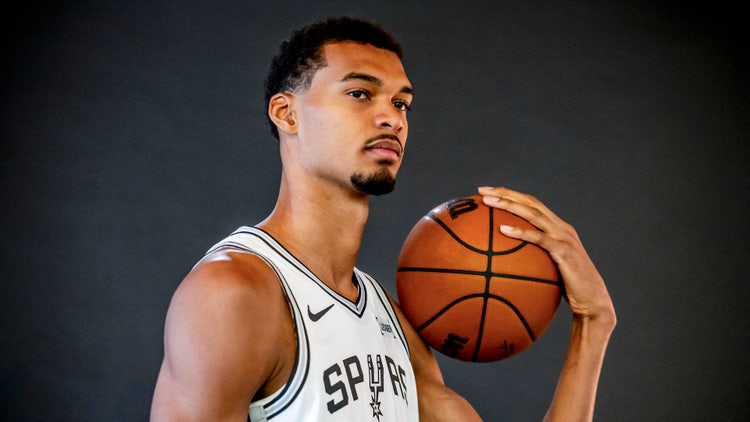
On a rainy morning in New York City, Victor Wembanyama did not disappear into a private gym or a back hallway. He went to Washington Square Park, sat at a chess table, and played whoever showed up. After it was over, he summed up the day with the kind of honesty that keeps popping up around him: “So, I lost against two pros, but I won against my brother, so that’s worth it.”
It was a fun celebrity detour, but it also works as a clean entry point into his profile. Wembanyama is famous for the obvious stuff, the height, the reach, the way he blocks shots that look safe, then turns around and handles the ball like a wing. What is easier to miss is the pattern behind the talent. Again and again, the story points back to the same traits of planning early, asking questions, and refusing to let anyone decide what he is allowed to become.
Where the plan started early in the Paris suburbs
Wembanyama grew up in Le Chesnay, a suburb near Versailles. Years before he heard his name called first in the NBA Draft, he was already living with the reality that his path would look different. ESPN reported that he moved out of his suburban home at 14 to focus on basketball, an early sign that his development was not left to chance.
That focus also showed up in small, practical decisions. In other reporting on his long-term preparation, Wembanyama explained why he prioritized the advancement of his language skills as a teenager: “Knowing I would play in the NBA later, I was really interested in English… Basketball people speak English.” He has also been surrounded by people who understood sport at a high level. Covering the San Antonio Spurs’ “Play Paris” initiative, NBA.com noted that his mother, Élodie de Fautereau, was a standout player who became a coach.
There’s also a childhood anecdote that sticks because it captures the “Wembanyama effect” before it had a name. A youth coach in France once saw the unusually tall kid sitting on the bench and assumed he was an assistant coach, only to realize it was a player.
Before basketball became the full-time lane, he also played soccer (or, as it is known outside of the United States, football). When the Spurs were stuck in a long losing streak early in his rookie season, he reached for that memory to explain how new “learning to lose” felt for him: “My worst losing record was probably when I played football,” he expressed, per Le Monde. “I was a goalkeeper, but it wasn’t my fault, really.”
Being a goalkeeper is a revealing detail for a player like him. You live in angles and timing. You make decisions fast. You accept that one mistake can be loud. Even now, a lot of Wemby’s defense feels like that position translated into basketball, with more length and more chaos.
Why Wembanyama refuses to be placed in a box
One of the cleanest statements Wembanyama ever made about himself came before his first NBA season. He told the Spurs, “The best way for me to help is to not put me in a box,” then added, “We know we are going to make something original, something special.”
That quote effectively explains the tension the league has been wrestling with since he arrived. People want him to simplify. They want him to play one way because it is easier to predict, easier to scout, and easier to debate. He keeps pushing back, not with speeches, but with choices. Some nights he looks like a rim-running big. Other nights, he looks like a shot-creating forward. The point is not to show off. The point is to keep his ceiling open.
His competitive edge comes out in direct lines, too. During a 2024 press moment about Defensive Player of the Year, he gave a now-famous answer that doubled as a warning (per veteran sportswriter Tom Orsborn):
Just further proof that he thinks years ahead. He talks like someone who expects to be in the middle of the sport’s biggest conversations for a long time, and who is willing to work through the awkward early steps to get there.
By the end of his rookie season, he was openly calling his growth incomplete. He informed Le Monde that he’s “currently at 15% of [his] capabilities,” which may or may not be a wild thing to say after a historic first season, but it fits the profile.
He also talks about gratitude in a way that sounds practical and not performative: “Before 95% of the games, I try to realize how lucky I am to be on the court,” he also stated to the French publication, describing how he tries to reset even when the schedule and fatigue hit hard.
The NBA pressure test: losing, patience, and the long view
If you want to understand why Wembanyama’s temperament keeps getting praised, rewind to the Spurs’ roughest stretch early in his first season, when the losses piled up, and the spotlight stayed hot. After one particular loss in Houston, he described the situation plainly. “Of course it’s not easy, but we don’t have a choice,” he said. “Keep going, keep grinding. The good thing is nobody doubts that in the long run we’re going to be the winners... I hate losing, but I stay focused on the long-run goal.”
Arguably, the chess scene in New York landed the same way. It’s not just that he plays. It’s that he treats it like real competition, then speaks about it without image management. In addition to being a bit humorous, going 2–2 in the rain with a smile signals comfort with imperfection.
The health scare and the return
In February 2025, the Spurs announced Wembanyama would miss the rest of the season after doctors found a blood clot, described as deep vein thrombosis, in his right shoulder. It was a reminder that even the biggest talents are still human bodies operating under stress.
Months later, the tone shifted from uncertainty to relief. In July 2025, he told L’Équipe, “I’m officially cleared to return,” adding, “Phew, I’ll finally be able to play a bit of basketball again.” In that same stretch, he also said, “I know I’m over with this problem.”
Early in his NBA story, Wemby made his intentions clear. He asked for room to become “something original,” and he was willing to be patient without being passive. He admitted, “It’s tough,” then told you he’s staying locked on the “long-run goal.” He can say he’s at “15%,” and you get the sense he meant it.
And if you ever forget that he’s a born competitor, he might remind you by pulling up to a chess table in the rain, taking a couple losses, and walking away grinning anyway.