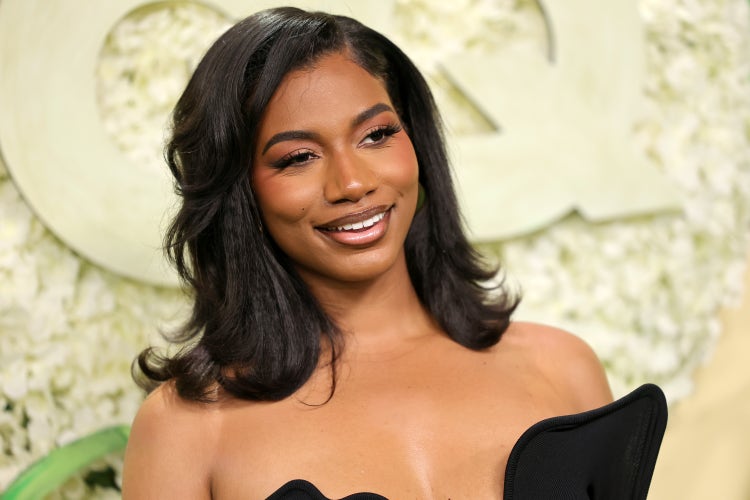
Taylor Rooks has always known how to command a room. Whether she’s reporting from the sidelines at NBA games or hosting powerful, unfiltered conversations with superstars, the Emmy Award-nominated journalist and producer has built a career rooted in trust, curiosity, and an undeniable presence.
Now, she’s stepping into a new chapter that further reflects both her heart and her purpose.
On July 19, 2025, Rooks tied the knot with her longtime partner, Shane Fowler, in an intimate ceremony in New York City. Around the same time, she announced the launch of the Taylor Rooks Foundation, a nonprofit focused on expanding access to education, healthcare, and opportunity for underserved communities.
Inspired by her own journey and the people she’s met along the way, the foundation began its work with a donation to the Lower Eastside Girls Club, where Rooks has spent time connecting with young girls through conversation, laughter and more. As she continues to use her platform to amplify underrepresented voices, Rooks isn’t just reporting on the culture; she’s shaping it.
In this exclusive chat with REVOLT, the renowned journalist spoke about privacy in her marriage, hopes for her relationship, what the Taylor Rooks Foundation means to her, and so much more. Read up!
You tied the knot -- congratulations! In a world where so much is shared, what guided your decision to keep your relationship private, and how has that privacy shaped your sense of peace or power?
Oh, what a good question. I am a firm believer in creating a life that belongs to you. I was writing about this in my newsletter actually, that the world will always take what you give it. You want to be mindful of what you give the world, and it’s important you hold the close things in your life close to you. It's very important to me to always do what feels great to me. I think that we live in a time where it's very easy to be persuaded by what's popular or you have to be instantly visible all the time to feel relevant. I just think it's important to show up as yourself. It also helped that everyone respected the decision, whether I knew them or not. For years, everyone has respected the choices me and my husband have made. It was a really beautiful time. I’m still floating from the night.
What are you looking forward to most when it comes to marriage? Can we expect a baby Rooks soon?
(Laughs) I am excited to continue building our lives together in all the ways that, that may look like. I'm sure it'll give us many twists and turns, celebrations, and we will forever maintain just that sort of privacy that we have cultivated. We will continue to love each other, be happy, and continue to be a team. I will say that’s what I’m looking for most.
One of your besties, Coco Jones, was in attendance and she recently got engaged. Is there any advice you have... or any advice that you shared with her as she gears up for her wedding day?
I have no advice, not anything like that. That is their story to tell. I love Donovan and Coco, and they are a wonderful couple as well as incredibly fun wedding guests.
The Taylor Rooks Foundation is such a powerful extension of your voice and values. What was the moment that made you say, “It’s time to build this”?
I have really wanted to create a vehicle to give back for a really long time. I felt I was doing so many things that I wanted to wait until the time when I had the bandwidth to do this exactly the way I wanted to do it. This past year and a half, we've really been thinking about what that looks like and how we can do that. It just felt like the right time to embark on this journey. Throughout my career, in different aspects, I would say I have employed different elements of what the foundation does -- like speaking to young journalists. It’s really important for me to mentor and pass along experiences, lessons, and advice that I have garnered in my career.
When I was in New York, I did a lot of work with the Lower Eastside Girls Club, so when it was time to start my own foundation, I knew immediately I wanted to give back to that organization first. I probably can't tell you exactly when I knew it was time because I've always felt like it was time, but it certainly started to feel like the right time in the past year.
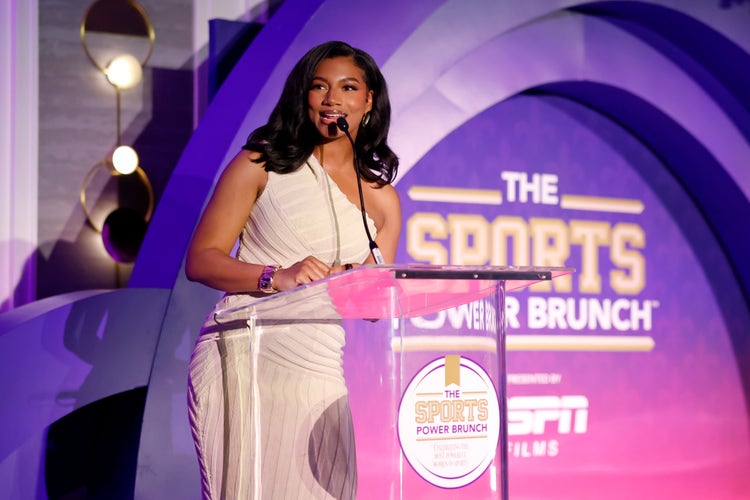
You’ve covered some of the most memorable moments in sports and culture, but what’s been the biggest surprise of your career so far... something that caught even you off guard?
Such a good question I’ve never thought about. I don't know if I ever thought I was going to watch a father and son play in an NBA game together, and I got to cover LeBron [James] and his son, Bronny [James], and their season opener this past year. I was the sideline reporter for the Lakers’ home opener, which, of course, was a big sports and culture moment. I feel super blessed that I have been able to be a part of really significant moments in sports.
Drake name-dropped you on “Supermax”! Where were you when you first heard it, and how did it feel?
I love music so much, so to hear your name dropped in a song is crazy. I have been so lucky and blessed to have been in a few records from artists like Chuck D and Wale to now, of course, Drake and Jack Harlow who has put [it] in a few of his videos. Harlow is one of my best friends, actually. Drake is a good friend of mine, so to be in his song was really cool. The song you’re referring to is an unreleased song I believe – I assume it will come out. He's doing his Iceman streams and he previewed it on that.
If you could be name-dropped by anyone in a song, who would make you feel the most flattered?
Oh my goodness – I mean, how much would it be to be name-dropped by Beyoncé? (laughs). I would say GloRilla. I love GloRilla.
You’re known for getting athletes to open up in a way few can. Who is a non-sports-related dream guest you’d love to interview and why?
I love Denzel [Washington] and every Denzel interview that I watch, he says something that I cling on to. So I would say someone like Denzel. Also, maybe someone like Esther Perel, who has this brilliant podcast called “Where Do We Go From Here?” ... She’s just a brilliant person. So both of them, and of course, separately (laughs).
You often amplify others’ stories. When was the last time you felt truly seen in a person’s storytelling?
I’m not saying this because we’re on this call together, but I appreciate when you receive questions that you've never received before -- and I’ve received questions I’ve never received before, so I always feel seen in that way because people don’t always understand that asking questions is a skill. If you’re going to interview someone, there's no point in regurgitating information ... I always feel seen when people take the time to care about the conversation you're going to have, the questions that they ask, and asking them in really interesting ways. Plus, you’re phenomenal, Ty.
I would say another time I felt seen was when I did this piece on TNT. It was me, Pam Oliver, Jayne Kennedy Overton and Stephanie Reddy. I got to sit down with trailblazers in the media space and I’ve never cried during an interview, but we all were just balling tears. I think it's because we just all felt so seen and the conversations we were having, we realized we had so many similar experiences as Black women and Black women in the media space. It just felt so communal and that was a really beautiful moment.
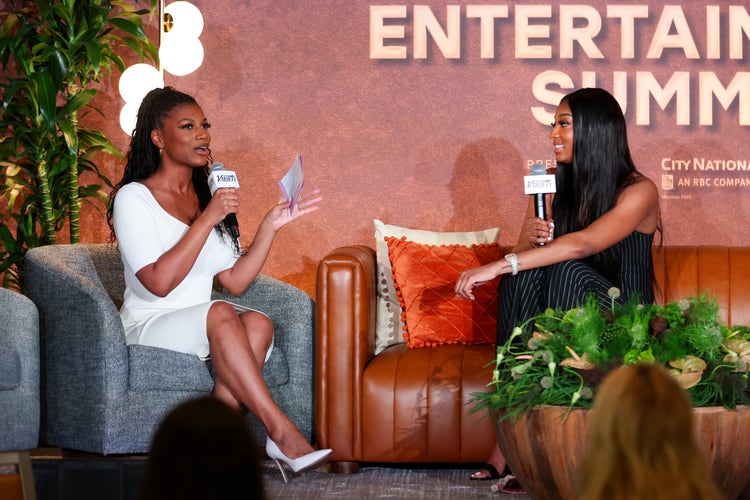
What’s a cultural conversation or headline you think would’ve played out differently had a Black woman been at the center of telling it?
Oh, another good question. It’s not like it’s an instance where this has happened, but I would really love to see more Black women telling the story of Angel Reese. I love Angel. She’s incredibly talented, but she also has endured so much as an athlete and an individual so early in her career. I think if she's in spaces where she can be understood, where she can be herself, where she can feel seen and feel heard, and speaking to a person who has had similar experiences as you like a Black woman ... I just think that it allows her story to probably feel more true and less diluted by these opinions from people that are committed to misunderstanding her.
With legacy shows like “E! News” getting canceled, what do you think this signals about the future of journalism and where do you see space for reinvention that actually reflects today’s audience?
I think it is really cool that people are taking their careers in their own hands and having their own production companies, moving to digital. I think streaming and digital are like the future of what media is. I also think it is incredibly important for everybody to realize how vital it is to have real journalism and real voices. You do a disservice to the audience, the consumer, and the listener when you are stripping that away from them. Sometimes it may feel like quality and thoughtful discourse and nuance and context are actually being sacrificed for things like entertainment, but there has to be a way where we do both.
You think about just some of the journalists and shows that no longer exists. We had incredibly important institutions that were canceled ... People were really learning things from watching these great thinkers and journalists. Creation and ownership is great. Everybody should strive for what that is.