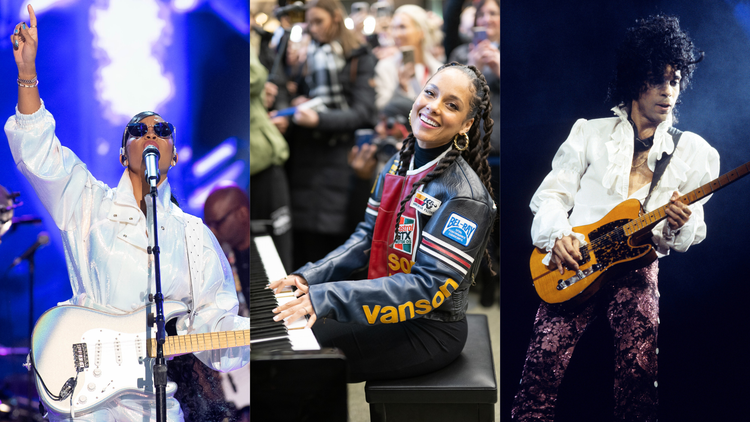
In Hip Hop and R&B, superstardom often goes beyond vocals. Many artists shape their sound by playing instruments — from piano and guitar to drums and flute — using them for arrangement, experimentation, and sonic exploration. Multi-genre performers like H.E.R., Anderson .Paak, and Tyler, The Creator apply that knowledge when building sound from the ground up, crafting tracks with structure and texture in mind.
Learning an instrument sharpens musical awareness. It trains the ear to notice detail — how chords move, how rhythms interact, and how melodies sit in the mix. That kind of skill deeply influences how artists approach songwriting and production. It also enables clearer collaboration in the studio, allowing them to guide sessions and make more informed decisions to maintain creative control.
For vocalists like Alicia Keys and Leon Thomas, instrumentation is key to how they express emotion and identity. They create original arrangements that reflect their vision. Composing on keys or layering guitar tones brings intention to the music in a way that feels personal and precise.
On stage, that skill changes the energy of a performance. When artists move between singing and playing, it adds dimension. Audiences respond to that level of control and connection — it becomes a live interpretation of the music in motion.
Playing an instrument also supports long-term growth. Artists with that foundation often transition between genres and eras with more ease and fluidity. From icons like Prince, Ray Charles, and Lauryn Hill to newer voices like D Smoke and Masego, playing instruments creates more possibilities for reinvention and exploration over time.
Instrumental skills contribute to career longevity. Ultimately, they remind us that music is a complete art form. It’s a combination of sound, feeling, and storytelling, where every part works together to leave a lasting impact. Here are 17 artists who rock the mic — and the band.
1. Stevie Wonder
A virtuoso multi-instrumentalist, Stevie Wonder is celebrated for his skills on piano, harmonica, and drums. He famously played most of the instruments on his landmark albums like Music of My Mind and Innervisions. His harmonica playing remains one of the most recognizable sounds in modern music.
2. H.E.R.
Known for her musicianship as much as her vocals, H.E.R. plays guitar (acoustic and electric), bass, drums, and piano. She often performs live with her electric guitar, combining R&B with bluesy, rock-inspired elements. Her ability to command both instruments and the stage sets her apart in contemporary music.
3. Marvin Gaye
Before becoming a Motown legend, Marvin Gaye contributed as a session drummer and pianist, including playing drums and co-writing the hit "Dancing in the Street" by Martha and the Vandellas. His musicianship shaped the layered, intricate sound of his later solo work. Gaye’s skills behind the drum kit and keys were foundational to his artistry.
4. Michael Jackson
Though primarily celebrated for his voice and groundbreaking performances, Michael Jackson also had a working knowledge of piano and percussion. He was hands-on in the studio with producers, using melody and rhythm ideas to help shape arrangements. His sharp musical instincts contributed to the innovative sound of many of his recordings.
5. Nina Simone
A classically trained pianist, Nina Simone’s fusion of jazz, classical, blues, and gospel was rooted in her virtuosity on the keys. She often performed seated at the piano, seamlessly weaving her playing and singing. Originally, she aspired to become the first Black classical concert pianist.
6. Frank Ocean
In the studio, Frank Ocean often records his own instrumentation, playing both keyboards and guitar. He’s been seen in sessions working through melodies on keys and strings, crafting the sparse, layered soundscapes that define his work. His musicianship deeply informs his genre-bending style.
7. Jimi Hendrix
Universally regarded as one of the greatest electric guitarists in history, Hendrix revolutionized how the instrument was played through feedback, distortion, and improvisation. Beyond guitar, he also played bass and experimented with drums during studio sessions. His innovation expanded the language of rock.
8. Lauryn Hill
Whether strumming guitar or sitting at a piano, Lauryn Hill uses her musicianship as a key tool in her songwriting. Her “MTV Unplugged No. 2.0” performance famously showcased her acoustic guitar playing alongside raw, heartfelt vocals. Hill’s live shows often highlight this side of her artistry.
9. Ray Charles
Blind since childhood, Ray Charles became a master pianist whose work blended gospel, blues, jazz, and country. He also played alto saxophone throughout his career. Leading bands from the keys, Charles’s musicianship was central to his dynamic and genre-defying performances.
10. Alicia Keys
Trained classically from a young age, Alicia Keys has always placed piano at the heart of her music. She writes, arranges, and performs with the instrument as her foundation. Her debut album, Songs in A Minor, showcased her deep connection to the keys.
11. Aretha Franklin
Aretha Franklin’s command of the piano gave her greater control over her music’s arrangements, both live and in the studio. Her skills behind the keys shaped the sound of soul and gospel-infused pop. Franklin frequently played during performances, underscoring her status as a true musician.
12. Lizzo
With a background in classical music, Lizzo is a trained flautist and brings the flute center stage during her performances. Her viral alter ego, "Sasha Flute," has become a staple in her shows. Lizzo’s musicianship bridges her classical roots with modern pop and Hip Hop.
13. Lenny Kravitz
A true multi-instrumentalist, Lenny Kravitz often plays guitar, drums, bass, and keys on his recordings. On albums like Let Love Rule, he handled nearly every instrumental part himself. His musicianship drives his genre-crossing sound, blending rock, funk, and soul.
14. Bruno Mars
Bruno Mars is as skilled behind the instruments as he is with a mic, playing drums, guitar, bass, and keyboards. His live performances often showcase his ability to move seamlessly between singing and musicianship. Mars’ work is heavily shaped by his hands-on approach to arranging and producing.
15. Jamie Foxx
Before fame in comedy and acting, Jamie Foxx studied classical piano at university. He frequently incorporates live piano into his performances, whether during concerts or award shows. Foxx’s musicianship complements his Grammy-winning work in R&B.
16. Beyoncé
Behind the scenes, Beyoncé uses the piano to communicate her musical ideas during rehearsals and recording sessions. While she rarely performs with instruments live, her understanding of music theory and arrangement shapes her creative direction. Her musicianship is an often-overlooked element of her artistry.
17. Prince
Few artists rival Prince’s range as a multi-instrumentalist — he played at least 27 instruments, including guitar, bass, drums, keyboards, and more, often recording full albums solo. His live shows spotlighted both his virtuosic guitar work and his command of the keys. Prince’s musicianship remains one of the most versatile and revered in music history.