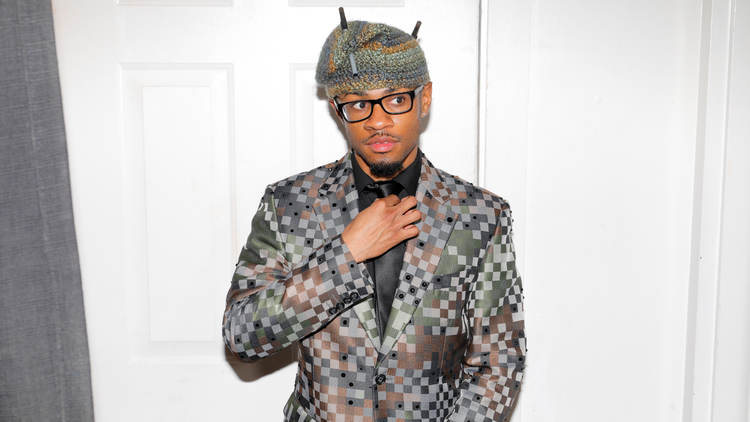
Hip Hop started out booming in basement parties in the Bronx back in the ‘70s and grew into resistance personified. And then, by 2017, Hip Hop/R&B reportedly became the most listened to genre in the U.S. But what many people don’t know is that another community also spent decades brewing across the way in Harlem, also running on resistance after being ostracized since its inception. This culture eventually grew to be known as ballroom.
What is ballroom culture?
Ballroom is a community started by Black queer and trans folks where people compete in different competition categories. From fashion to dancing to other forms of performance, the ballroom community hosts exclusive competitions or “balls” where different houses — which are often more like families — come together to compete.
Multihyphenate artist, Justen Ross — known on stage as Jus10 and in ballroom as Atlanta Godfather Domino Unbothered Cartier Balenciaga — was introduced to the ballroom scene in 2021 during a birthday trip to New York. He was turning 21 and hadn’t quite found his footing.
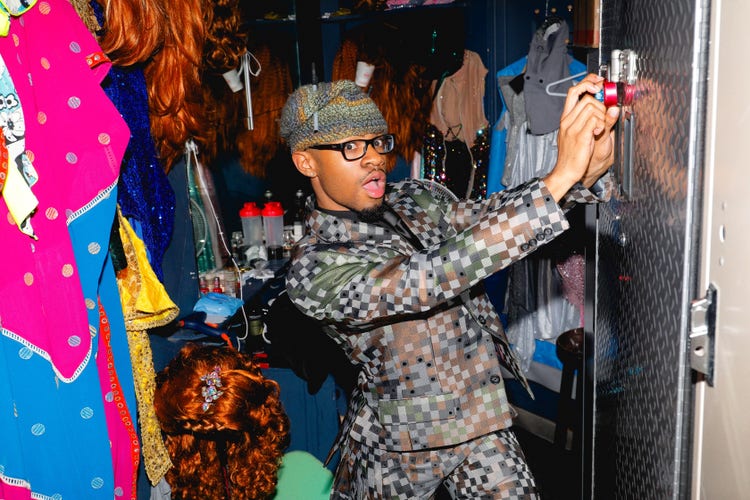
“I didn’t feel like I had found my authentic voice or group of people,” he remembers.
But that’s the story of what led many souls to houses and the ballroom scene. Luckily, it’s always been a place of solidarity for those who felt othered by the world around them. Ballroom was built in the name of safety through community and defying the oppression that Black and Brown queer and trans people face.
And since its start, just like Hip Hop, ballroom has grown into a full entity rooted in pride and performance for the world to see, as long as it’s on the terms of whoever's creating it.
Ballroom and Hip Hop: Closer than you may think
Despite how different they may feel at first glance, ballroom and Hip Hop are two very interconnected cultures. “They’re so violently similar. And I say ‘violently’ for a reason, because the only reason we aren’t seeing these similarities is because we’ve been erased,” Jus10 says. “Regardless, these are two cultures that stem from the same root intention: theater for the powerless. These people were sharing space, whether you knew it or not.”
The music, the energy, the want for better — all of these factors had Black and Brown communities across all of New York witnessing Hip Hop and ballroom continue to bloom. And although sometimes these communities feel widely divided, their core elements tie them together.
Afrika Bambaataa, a legendary Bronx DJ, is often credited as a pioneer of defining what qualifies something as being Hip Hop. “He says the five elements of Hip Hop are DJing, MCing, breakdancing, graffiti, and knowledge. Ballroom has all these things,” the Atlanta native explains. “They were just alchemized in a different way.”
You won’t find a ball that’s missing a DJ. And MCs like Ross are lyrical savants, but they also lead the crowd through the ballroom experience. The same technique used to break down a beat in breakdancing can be seen in vogue performances at a ball. And Jus10 likens graffiti in Hip Hop to fashion and effects in ballroom.
As for knowledge, the same way he spent time building his Hip Hop foundation with music from 9th Wonder, A Tribe Called Quest, J Dilla, and The Alchemist, the actor/rapper had to learn the legacies that exist in ballroom as well.
“It’s all about history. Legacy is important. In ballroom, it’s not just about taking. It’s about what you add on. And you can only add on if you know what’s already been here,” he says. Overall, the pillars that hold these two styles of performance up show that these two groups are birds of a feather.
Building bridges across countercultures
Even deeper than the performance elements that rule both cultures, what’s clear when you look at the history between these two is that they are much more alike than they are different. So, how can we bring those connections to light, and why is it important to do so? The Class President artist hopes that the rising visibility of ballroom, although the mainstream attention presents new challenges as well, is the solution.
“I think history demands justice,” he explains. “Hopefully people are interested to learn about how this language of liberation developed.”
The Atlanta native also believes in the tradition of storytelling on both sides, as well as the humanity that can be found in these stories. “I think sometimes it takes stories for some people to empathize with you and see that you’re valuable,” he says.
Empathy should come naturally between two communities that have faced rejection and criminalization and used those experiences to build thriving cultures. They both have the same righteous defiance that gives way for an artist like Ross to give themselves permission to pull equally and unabashedly from both styles.
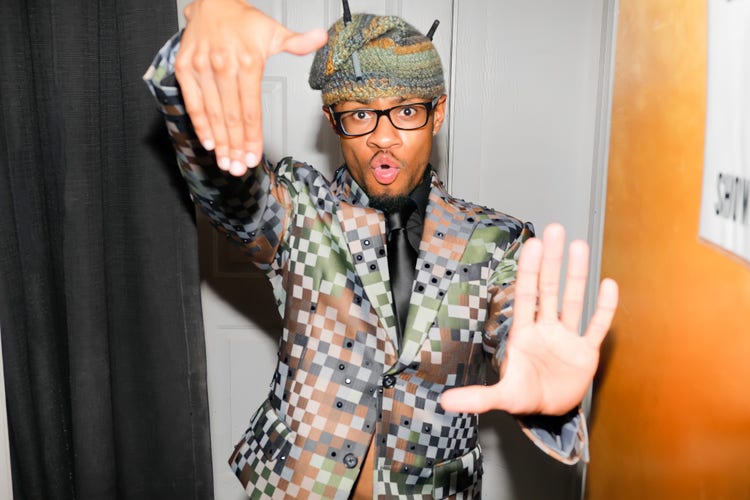
“I love both, so I experiment. I trust my taste,” he declares.
The multi-talented entertainer grew up freestyling and dancing to Chicago house music. And in the same way traditional Hip Hop gets him moving, so does the style of music he found in ballroom. So, he allows room for himself to be a living example of how these two cultures merge, and he is ready to take that truth right to the top.
“That’s how I carve my space out — by being unapologetically honest,” he says. “I’m a student. I study. I have the respect and literacy to be the leader of the new school in this movement.” The confidence Ross speaks with is also the perfect embodiment of the two schools of artistry he operates in.
There’s a connective tissue on both sides: an undying will to be seen, heard, and remembered. And that purpose could create a bridge between Hip Hop and ballroom that honors their common roots and spaces they’ve created and shared with each other from the beginning.
“That’s the intention behind all this: so that Black people see we’re all in this together. If we can see some alignments, then maybe we can bridge some gaps,” the “Somebody Somewhere” actor says.
To learn more about Jus10 and the ballroom scene, you can find him and his flows on his social media.