Key Takeaways
- Don Lemon pleaded not guilty to federal civil rights charges tied to a St. Paul, Minnesota church protest.
- He maintains he was present as a journalist, not a protester.
- The case highlights legal tensions between press freedom and protest activity.
After being arraigned on Friday (Feb. 13), Don Lemon has pleaded not guilty to federal civil rights charges related to a protest at a church in St. Paul, Minnesota, last month.
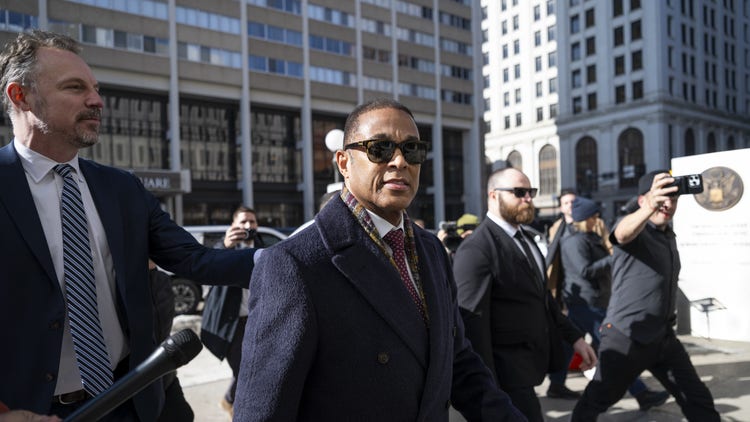
While Lemon didn’t talk to reporters as he entered the courthouse, AP News noted that there were “roughly two dozen protesters” gathered outside, chanting phrases such as “Protect the press.” During the procedural hearing itself, Magistrate Judge Douglas L. Micko reminded the former CNN anchor of his constitutional rights and said he would be allowed to travel, provided he doesn’t violate any state or federal laws.
At one point, one of Lemon’s attorneys, Abbe Lowell, requested the return of a phone seized during his arrest in Los Angeles. However, as prosecutors explained, the device is in the custody of the Department of Homeland Security and can't be returned “until the search process is completed.”
It’s also worth noting that four more people pleaded not guilty in the case on Friday, with several others to be arraigned next week. In the meantime, see footage from outside the courthouse below.
More info on Don Lemon’s charges and what you should know
For those unfamiliar with the case, Lemon was charged with conspiring to violate someone’s constitutional rights, as well as violating the FACE Act. The latter prohibits the use of force or threats to deliberately interfere with someone’s First Amendment right to practice their religion.
However, according to the independent journalist, he was there solely to cover the Jan. 18 event for his livestream, not to participate in the protest at St. Paul’s Cities Church, where an Immigration and Customs Enforcement (ICE) official allegedly served as a pastor.
“Don has been a journalist for 30 years, and his constitutionally protected work in Minneapolis was no different than what he has always done,” Lowell said in a statement shared via Lemon’s Instagram after his arrest. “The First Amendment exists to protect journalists whose role it is to shine light on the truth and hold those in power accountable. There is no more important time for people like Don to be doing this work.”
Don Lemon on the importance of journalistic independence
Speaking with REVOLT last month, Lemon explained why having our own platforms matters now more than ever, even as journalists face increasing pressure. “It means freedom. It means autonomy,” he said. “People often try to tell our stories, and they tell it, or they just don't tell our stories, or when they do try to tell it, it's often the wrong way.”