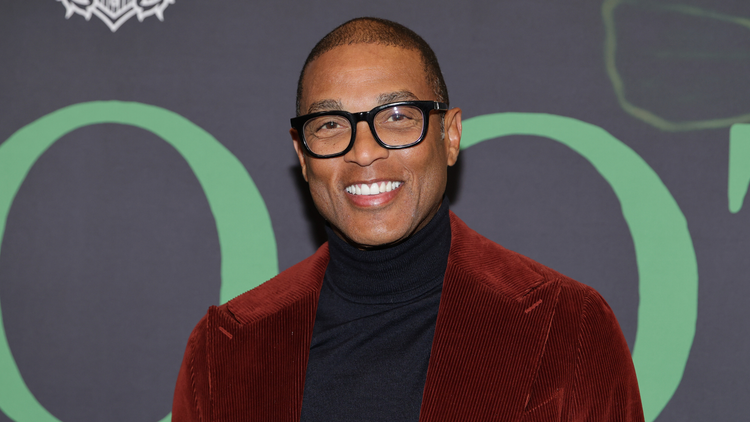
Don Lemon has always understood the power of the moment and the responsibility that comes with it.
For decades, the journalist, anchor, and cultural commentator has been one of the most recognizable faces in American media, trusted by millions to help make sense of a rapidly shifting world. But what has defined Lemon’s career isn’t just longevity, but it’s his willingness to evolve, even when that evolution may come at a personal or professional cost.
As a 2025 honoree on The Root 100 list, Lemon was celebrated not simply for his decades in journalism but for his impact on the national conversation itself. At The Root 100 Gala, the room buzzed with leaders across media, politics, business, and culture, all gathered to recognize those who continue to push progress forward. Lemon’s presence felt especially resonant at the event.
Before cable news stardom, the Baton Rouge native earned his stripes the traditional way: local newsrooms, long hours, and an unshakable commitment to reporting with integrity. That foundation ultimately led him to CNN, where he spent about a decade becoming one of the network’s most visible and influential anchors. From breaking news and presidential elections to moments of national reckoning around race, policing, and democracy, Lemon was often at the center of conversations many networks once avoided.
What distinguished the on-air personality during his tenure wasn’t just access or airtime, but it was his candor. As one of the most prominent Black, openly gay journalists in mainstream television, he brought lived experience into spaces that rarely allowed for it. The Brooklyn College graduate asked difficult questions, challenged narratives, and, at times, became part of the story himself. In an industry that often prioritizes neutrality over nuance, he insisted on humanity.
After parting ways with CNN, Lemon made the bold decision to step out on his own, choosing independence over institutional familiarity. Rather than fading quietly or reshaping himself to fit another corporate mold, the Edward R. Murrow Award recipient embraced the moment as an opportunity to build something entirely his own. In doing so, Lemon joined a growing wave of journalists redefining what credibility and influence look like in a digital-first era.
The result was transformative. He launched his own platform, connecting directly with audiences without filters, time limits, or network constraints. His voice, which remains incisive and curious, now lives in a space that allows for longer conversations, real-time engagement, and deeper exploration. That independence has resonated with over one million subscribers to “The Don Lemon Show” on YouTube — a testament not only to his relevance, but to the trust he has built over time.
At The Root 100 Gala, he spoke with clarity about this chapter of his career. There was no bitterness, no sense of retreat, only confidence and the courage to not be silent. Independence, for him, isn’t about separation from the industry, but it’s about alignment with his values. The renowned journalist views this era not as a reinvention, but as a continuation of proving that journalism can be done without compromise and can have dialogue without restriction.
That perspective feels especially timely, as audiences grow increasingly skeptical of traditional media institutions. But voices like Lemon’s are finding renewed power through ownership and direct access. He understands that influence today isn’t measured solely by ratings or network logos, but by connection, credibility, and consistency.
In many ways, his journey mirrors the evolution of media itself, shifting from centralized gatekeeping to community-driven discourse. Being honored at The Root 100 Gala was as much about his present as it was his past. In a room filled with leaders shaping what’s next, his recognition underscored the importance of adaptability — and the courage it takes to choose autonomy.
Lemon stands as proof that stepping away from legacy systems doesn’t have to diminish one’s voice; it can amplify it. The questions he asks are meant to challenge ideas about power, accountability, and truth. This is the type of truth-seeking that has guided his career all along, but the difference now is the freedom to ask them fully, without limitation. As the media landscape continues to shift, Lemon’s journey offers a powerful reminder that legacy isn’t just about where you’ve been — it’s about how willing you are to evolve.
In a conversation with REVOLT, the successful public figure remains thoughtful, candid, and deeply engaged with the world around him as he opens up about journalistic freedom, his platform, and more.
Having left traditional network TV and built your platform as an independent journalist, what’s one story or issue that only this way of storytelling lets you tackle, and why wouldn’t you have touched it before?
Well, I mean, there’s not only one. I would have touched a lot of stuff, but there's some things that I couldn’t because it didn't fit into the news narrative or the news cycle that day. I don't have to do that anymore. The last thing that I covered, that I saw nobody else covering, was how Black women are treated in emergency rooms or in the medical care system. Did you see the [videos] of those women who were giving birth, and they were turned away? I did an entire segment on it with a Black woman doctor. And at the network, they'd be like, “Oh, we gotta cover Charlie Kirk today or Pete Hegseth or Epstein.” No, I'm covering Black women and the disparagement and treatment that they get [from] American health systems.
You underwent some backlash when it came to your comments about Megyn Kelly and her appearance. How do you reflect on the balance between sharing your opinion and also being cautious when it comes to wording and delivery?
I don't know any backlash from that. No one asked me for an apology, and nobody tried to cancel me. People know my commitment to the community. The second part of it is that you can always be clearer about what you meant or what you said, but if there's ever a time when I feel like I went or stepped too far or said something wrong, then I'll address it or apologize. But for that, I don't feel like it. I think that they felt it was the right thing to hit me on because, number one, they're obsessed with trans people, they're obsessed with me, and they don't see that Megyn Kelly, who talks s**t about everybody, including women, [the] trans community, Black people all the time, including Michelle Obama’s hair, and you’re going to think to turn on me? No, it's about that ugly b**ch, not about Don Lemon. So that's how I feel about that.
As press freedoms face increasing pressure, especially for outspoken voices, what does journalistic independence mean to you, and how do you think audiences can help protect it?
It means freedom. It means autonomy. We have to own our own platforms in order for our stories to be told. People often try to tell our stories, and they tell it, or they just don't tell our stories, or when they do try to tell it, it's often the wrong way. The person who writes the story writes the first draft of history, and that's the draft that gets sent out for everyone. So, it's important that we do that — important that we have these platforms where we can do that... I mean, being here, I can't help but reflect on our ancestors and the people who came before us, and that’s who I’d like to pay homage to. It's great to be celebrated, but I'm thinking about celebrating the people who came before.