Key Takeaways
- The festival featured over 250 artists performing across 14 stages in Riyadh’s Banban district.
- Cardi B, Young Thug, and Post Malone were among the most talked-about performers of the weekend.
- MDLBEAST’s updated layout and cross-genre programming emphasized the event’s global ambition.
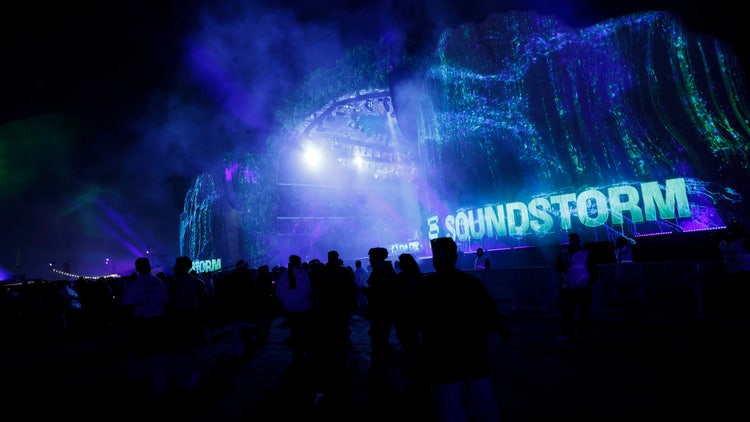
Soundstorm 2025 turned Riyadh’s Banban into a three-night collision of rap, pop, and electronic music — and the numbers more than matched the ambition. MDLBEAST, the groundbreaking entity behind the event, confirmed that about 500,000 fans came through across the Thursday (Dec. 11) through Saturday (Dec. 13) run, as the festival spread more than 250 artists across 14 stages built to function like a temporary city. Between the Big Beast main stage (designed for 65,000), a fully enclosed Tunnel space, and a Downtown district packed with side stages, activations, and food, Soundstorm leaned into scale while tightening the experience.
That “city” framing came through in how the site moved. MDLBEAST Chief Creative Officer Baloo described the new district approach and the strategy behind it: “This whole district thing that we did with the site is new... We’re tightening things up. It’s 40% smaller [than last year].” He laughed at how the redesign still turns into a marathon once the music starts. “I think FOMO… [has people] running around from stage to stage,” he explained. “Once they’re done with their cardio tour, they find their stage and they hang out.”
Baloo’s perspective sits at the intersection of executive planning and DJ instinct, and he’s not shy about where his taste was built. When asked about his connection to Washington, D.C., he credited the city as part of his foundation. “I grew up going there, really learning house music in D.C.” He rattled off classic spots like Club Red, 18th Street Lounge, and State of the Union, describing that run as his “musical upbringing” and noting that his brother helped shape his ear long before MDLBEAST became a global brand.
Soundstorm opened with crossover energy. Don Toliver brought his hook-heavy catalog to a prime slot, delivering the kind of melodic rap set that hit harder in open air with a crowd ready to move. Elsewhere on the smaller Park setup, Lil Yachty, Tyla, and KAYTRANADA had the bass to the maximum (ear plugs quickly became fan favorites as a result). Post Malone later touched the stage and used live instrumentation to bridge his more Hip Hop-inspired roots with pop and rock vibes, all without losing any bounce.
The second day kept the energy concentrated around big-stage moments and rap-friendly chaos. Pitbull delivered a hit-stacked set engineered for mass singalongs. In the middle of the night’s Big Beast action, Metro Boomin performed solo in between other sets, giving fans a moment that played like a victory lap for his and his peers’ era-defining production.
Arguably the biggest standout that evening was the genre-bending DJ Snake, who leaned hard into Hip Hop with plenty of EDM thrown in for good measure. Producer Roger Beat stayed beside him throughout, handling mic duties and keeping the crowd locked as the “U Are My High” talent moved between his own hits and other high-energy bangers.
Soundstorm’s final night brought forth some of its most direct star power back-to-back. Young Thug brought unpredictability and presence that reminded the crowd how his voice still tilts the culture — even as he seemed to struggle with an earpiece throughout. The Kid LAROI followed nearby with a melodic, singalong-heavy performance that kept the momentum moving.
And then there’s Cardi B. After pretty much taking over the city with social media drops and a viral mall visit, her official Saudi Arabia debut was truly the a statement of the weekend. Avoiding profanity, she ran through a crowd-pleasing mix that balanced newer AM I THE DRAMA? cuts with the records that turned her into a festival cheat code in the first place. It was a set built for big choreography, big personality, and even bigger crowd response, especially when she left the stage to hang with the attendees. Cardi gave them a “closer” (celebrations did continue following her set) that effectively became a global moment.
Beyond the headliners: HoneyLuv, DJ culture, and “genre-fluid” design
Soundstorm’s buildout made room for more than rap headliners. HoneyLuv, a Cleveland-born, DMV-raised Black woman pushing real momentum in dance music, was a major factor in the festival’s forward-facing EDM lane. Emphasis on several genres across the other stages, the women-focused HER viewing zones, and the district-based layout added different entry points for how people experienced the weekend.
Baloo also framed how Soundstorm blended global headliners with local and regional sound without forcing it. “It’s music. It’s about programming. It’s about the right spaces,” he said, pointing to stages dedicated to regional audiences that stayed active all night. “You look at the Turkish stage, the Arabic stage, that stage never clears out... Saudi music is all about tribal drums. It’s really funky.” Instead of separating scenes, the point was to let them run simultaneously, then collide.
Asked about outside skepticism toward Saudi entertainment growth, Baloo addressed it head-on: “I think everyone looks at whatever we do and thinks it’s music washing... If you walk around here, you realize that we don’t really have time for music washing... It’s just really about us creating joy, making space for people to have fun, to dance, to listen to music, to play music.” When asked what comes next, he kept it simple: “I always say next is more... More music, more dancing.”
Soundstorm 2025 moved exactly like that. It was bigger, sharper, and increasingly confident about how rap, EDM, and regional programming can share the same city.