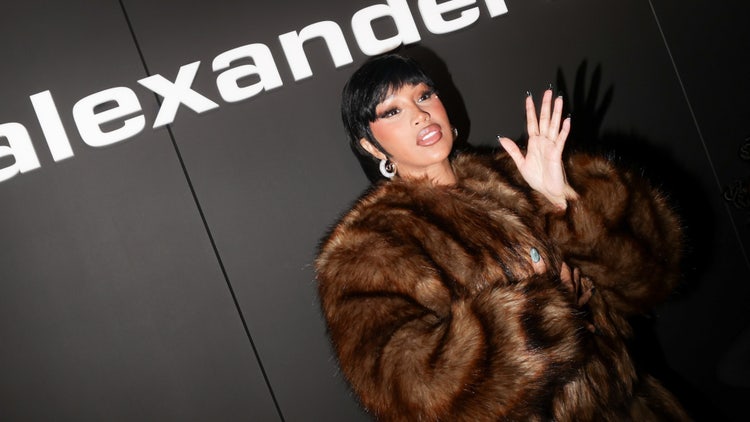
Cardi B’s long-awaited sophomore album, AM I THE DRAMA?, is anything but subtle. Across 23 tracks, she unleashed an unfiltered mix of disses, heartbreak confessions, Bronx pride, and genre-blurring collaborations. Seven years after her debut, Invasion of Privacy, Cardi B returned with an explosive mix of bravado and vulnerability that reclaims her place at the center of the Hip Hop conversation.
She called out rivals by name, revisited the highs and lows of her relationship with Offset, and flexed her Latina and Bronx identity on global stages. With features from the likes of Summer Walker, Kehlani, Selena Gomez, and Lizzo, Cardi demonstrated range while keeping her bite. The overarching message is clear: She’s not here to blend in. She’s here to disrupt, provoke, and remind everyone why she remains one of rap’s most compelling figures.
Check out the biggest takeaways from AM I THE DRAMA? below.
1. Cardi embraces her villain era
From the opening track, the Summer Walker-assisted “Dead,” Cardi frames herself as the menace, snarling, “I’m collecting body bags like they purses.” Later, on “Killin You H**s,” she doubled down with chest-out declarations that her enemies won’t make it through the night. The villain role isn’t something she hides from — it’s something she relishes. The takeaway? Cardi is at her most powerful when she weaponizes her reputation against those who doubt her.
2. The disses come nonstop
This album is one long clapback. On “Pretty & Petty,” she went straight at a certain East Coast counterpart: “Name five BIA songs, gun pointin’ to your head, bow, I’m dead.” On “Magnet,” she ripped into fake friends as “Brenda’s baby-a** b**ch” and “still ain’t get no feature-a** b**ch.” Even “Better Than You” and “Killin You H**s” followed that theme. Instead of just scattering subliminals, she essentially declared open war on competitors. Expect plenty of responses in return.
3. Offset’s shadow looms large
Without naming him, Offset’s presence is undeniable. “Man of Your Word” reflected on vows, regret, and forgiveness, while “What’s Goin’ On” with Lizzo found Cardi venting about distance and infidelity. On “Shower Tears,” she asked, “What is love? What’s the reason? What’s the meaning? What the f**k?” Even “Outside” echoed independence after disorder. These tracks revealed an artist still processing heartbreak and betrayal, making personal turmoil a central thread of the album.
4. Survival is her ultimate flex
Cardi tied her success to resilience. On “Dead,” she bragged about getting “knocked down 9 times, still get up 10.” “Hello” continued the energy, celebrating her return with party chants and fashion boasts. On “ErrTime” and “Trophies,” she leaned into her record of overcoming setbacks to remain dominant. The lesson for listeners is simple: Surviving the blows is what makes the wins sweeter, and Cardi’s career is proof.
5. Love redefined: Safety over status
On “Safe,” Cardi and Kehlani rejected materialism in favor of protection and peace: “I don’t need a rich n**ga, just somebody that can make me feel safe.” It’s a striking evolution from the bling-heavy love stories of her past. “Man of Your Word” and the Janet Jackson-backed “Principal” echoed the same sentiment — trust and consistency matter more than wealth. Cardi later confirmed that her post-Offset relationship with Stefon Diggs was a central focus throughout.
6. Bronx pride and Latina roots are front and center
“Bodega Baddie” celebrated her bilingual swagger, rapping “dame más gasolina” while mixing reggaetón and trap. On “Imaginary Playerz,” she called herself the “Brimcess” and reminded listeners she was the first rap star on the cover of Vogue. Even “Outside” and “Salute” reference her Bronx toughness. These moments keep Cardi grounded and cement her blended identity as her global weapon.
7. Cardi crowns herself a tastemaker
Style and dress were recurring motifs, but on “Imaginary Playerz,” she planted her flag: “I’m the one who showed these girls what fashion could be.” Elsewhere on “Salute” and “Nice Guy,” she asserted herself as the blueprint others imitate. All in all, Cardi doesn’t just follow trends; she dictates them.
8. Vulnerability balances the bravado
For every venomous diss, there’s a moment of softness. “Shower Tears” captured late-night fights and breakdowns. On “Man of Your Word,” she admitted, “As a wife, I should’ve realized when you was hurt, but instead, I put my music first.” Even “What’s Goin’ On” paired its sing-song hook with raw betrayal. This balance of hardness and heartache made AM I THE DRAMA? more textured than a diss record.
9. The comeback is fully on her terms
Across the 23 tracks, Cardi experimented without apology. “Pick It Up” with Gomez gave her a pop-radio hit, while “Safe” and “What’s Goin’ On” pulled R&B and interpolation into the mix. “Dead,” “ErrTime,” and “Killin You H**s” leaned heavily into street and trap elements. By spanning genres while maintaining her Bronx bite, Cardi made it clear that she’s not bending to trends or critics. This comeback was messy, loud, and entirely hers.