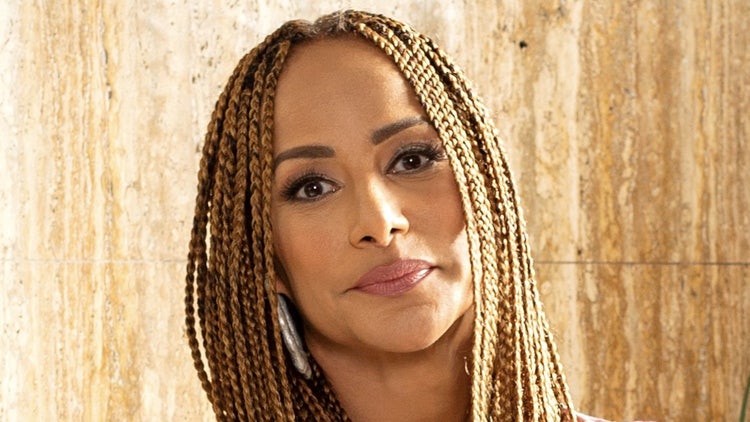
Amy DuBois Barnett helped shape how Black people, style, and culture were represented in media through senior roles at major entities like EBONY, Harper’s Bazaar, Teen People, and Paramount. She knows what it means to move through powerful rooms, make hard editorial calls, and carry the weight that comes with being a Black woman in those spaces. She also understands that publishing a novel requires an alternate set of skills. Early in our conversation with the executive, Barnett spoke candidly about that shift, calling it “a whole different experience” after so many years in media and describing herself, in this era, as “just a debut novelist hoping people like her book, baby.”
That energy carries into “If I Ruled the World,” which pulls readers into late-’90s New York through Nikki Rose, a young Black editor navigating fashion, Hip Hop, access, and more. In our exclusive interview, she kept bringing the conversation back to what sat underneath the glamour: The “price of ambition,” the pressure of power, the danger women have to navigate, and the reputational stakes that came with one wrong move. The Chicago native also got into the magazine business mechanics that made that era feel so intense, from covers and newsstand sales to the challenge of keeping a publication alive.
Beyond the novel, Barnett spoke about protecting its soul in Hulu’s adaptation of it, working with Flatiron Books again, pushing back against narrow ideas of authentic Blackness, and revisiting “Get Yours!: How to Have Everything You Ever Dreamed of and More.” Get into it below.
You’ve held some really powerful positions at major publications. When Nikki Rose finally got authority at Sugar, what did you most want people to know about the gap between wanting power and actually having to wield it?
One of the major themes of “If I Ruled the World” was the price of ambition, what it costs to be ambitious, especially as a woman, but really for anybody. I wanted to explore what it’s like to go for a huge dream and who you have to be in that process.
Part of that is, who are you okay with being? That’s part of the journey of becoming a leader... who are you willing to become? What it feels like to finally get power or to finally achieve a dream that you wanted for a long time — to finally have a little bit of access, a little bit of influence. Who are you in that space, though? Who do you become in that space? How do you hold onto your soul?
What was one magazine world detail or decision-making habit you were determined to get exactly right? I feel like outsiders typically misunderstand what really goes on behind the scenes.
This is a work of fiction. Even though there are obvious structural similarities between myself and the protagonist... some people are reading this book like it’s a memoir. This is not my story. I mean, I’ve made a lot of mistakes over the course of my career and life. I just didn’t make these mistakes. It is inspired by my experience as editor-in-chief and in media over all those years. And it’s set in a world that I know really well because I lived through it.
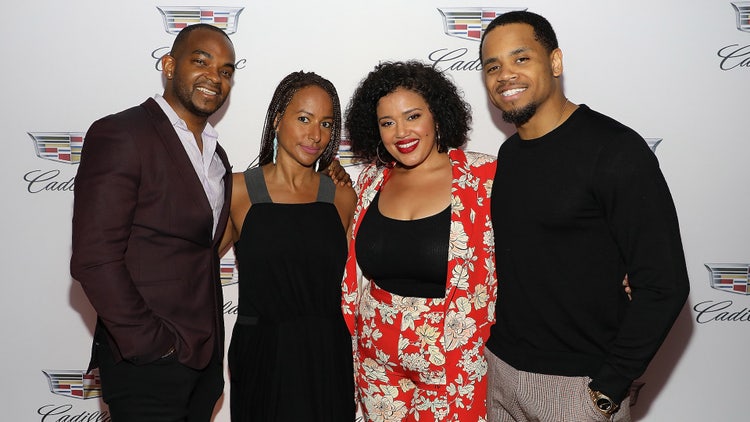
I did want to convey that because this book is set in New York City in the late ‘90s, at the golden era of Hip Hop, when Hip Hop was at its zenith of power, but also at the heyday of magazines. So, I wanted to convey what it felt like to work in these environments where so much was at stake because there was so much power.
Covers could make or break artists... I wanted folks to understand how hard it is or how challenging it is to find the right cover subject, somebody who’s going to be instantly recognizable to people just casually passing a newsstand who have enough star power and interest — or scandal — to make somebody stop and pick up this product.
You touch on a culture of silence around male characters, like the villainous Alonzo Griffin and Sliq Bishopp. Why was it important for you to show how people and institutions helped protect that kind of power?
I really wanted to talk about this era from the perspective of a smart, ambitious woman. And I want to show her navigating [that] culture. [The] misogyny that was threaded in the music business and the culture at large was very much accepted, you know? There was really no recourse for women at that time. Who [were we] going to go talk to if a music executive cornered us in a limo, wouldn’t let us leave until we X, Y, and Z...? It was a very, very particular time for women, and it was nuanced.
We knew that it helped in this culture to be smart, strategic, ambitious, well-liked, charismatic, and hardworking. Nothing replaces that. It also helps to be attractive because that was the nuance of the era. It was such a complicated time, you know, and the best most of us could do was keep strict boundaries.
I wanted to kind of write a love letter, not just to the era, not just to magazines, not just to Hip Hop, [but also] to the women in this era, not all of whom came out as unscathed as I did. I was very, very fortunate. I came out stronger. I came out more strategic. I came out with my career, and my soul, and my life intact, and not everybody was so fortunate.
A lot of people romanticize that era. What did you want readers to understand about the late ’90s and early 2000s beyond the easy nostalgia?
It’s weird ‘cause there are two very different sides of the way people are representing the '90s right now. On one side, folks are like, you know, it was just a nonstop party, and the fashion was great, and the music was great. All of which is absolutely true. It was an absolute party. I was absolutely dancing on tables, two hands in the air, wearing adorable s**t. And the music was fire.
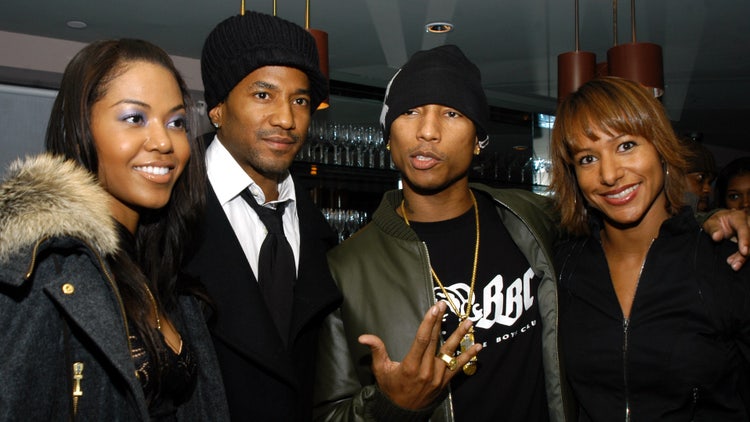
But that’s also kind of reductive. On [the other] side, folks are like, “Oh my God, how’d you even go out? Everybody was a predator.” Now, in the same way that not every day was a party, not everybody was a monster... It’s just very interesting because there’s very little middle ground. I guess what I was trying to portray in my novel was a more nuanced picture of the era where folks could really understand that it’s true. It was a blast.
You previously wrote “Get Yours!: How to Have Everything You Ever Dreamed of and More,” a really detailed guide on building the life you want. Looking at “Get Yours!” and “If I Ruled the World” side by side, what ideas about ambition, power, and choice might connect them?
I actually pulled the rights back from Random House, so now I own the rights [to “Get Yours!”] again. I’m going to update it and re-release it. I was thinking about how I would update it... I have to say that the philosophical tenets that I talk about in “Get Yours!” are ones that I really live by today. Without exaggeration, I learned a lot of lessons very early in my life. My mom passed away when I was 22, and many things happened, so I developed a fairly insightful perspective at a younger age than most people do. That’s why I wrote that book at the time that I did.
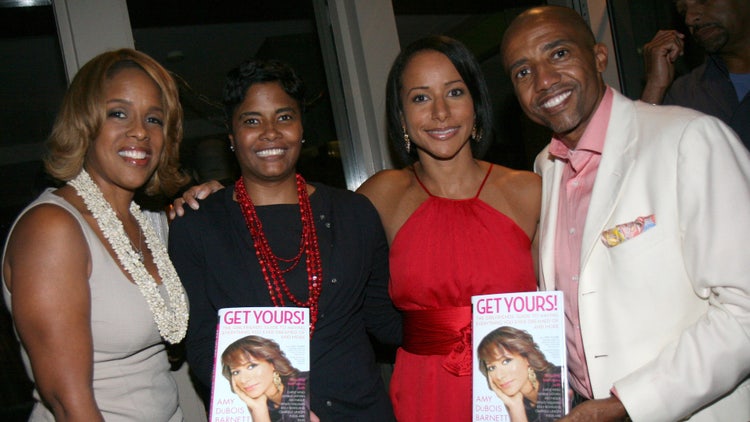
When I look at “If I Ruled the World” and Nikki Rose, my protagonist on her journey to success, you see somebody who’s very fallible. The book starts off with her [in] a very compromised position. This is not somebody who easily climbed up the ladder of success. That doesn’t even exist... I thought that that was important and inspiring to show, and reflective of the life lessons in my own personal journey on a certain level, and the life lessons that I put forth in “Get Yours!”
Did writing fiction make you think differently about how easily people, particularly within our culture, can be simplified, misread, or stripped of their full story?
I can’t say that it was writing fiction that gave me that revelation because you have to remember, I’ve been representing Black folks now for over 25 years, you know what I mean? I have watched the way that we’re portrayed in mainstream media. The way our community is portrayed, and the reductive way folks like to write Black characters or think about Black folks. When we do hit the news, I’ve always — throughout my career, throughout my life — just railed against that.
But I also don’t like, from an internal perspective, the way in which our community views authentic Blackness, right? I’ve also pushed outside of that, too. Throughout my career, in addition to fighting mainstream stereotypes, I’ve also fought to have Black folks expand their notion of what is Black. You probably saw that in the book, but that was also what I was trying to do. I was trying to sort of push against mainstream stereotypes of Black folks and Black folks’ stereotypes of Black folks.
You landed a development deal for the television adaptation of “If I Ruled the World” with Lee Daniels at Hulu. What part of Nikki Rose's story might be the hardest to properly translate to the screen?
I’ve been thinking about that quite a bit because when you adapt a book, it really is a separate creative project. And you’re trying to figure out what you’re going to retain, what you’re going to maybe lose, what you’re going to condense, and what you’re going to expand. How do you keep the soul of the original [intellectual property] of the book while still making it screen-friendly?
What we have to maintain — and I swear to God, I stay up at night thinking about this — is the authenticity of the era, because if we get that wrong, [everything else] is dead. I’m so clear on that. I think that understanding the power dynamic that existed at that time, you know, largely in the music industry... Even though she’s in the publishing industry, and that is kind of what the core of the book is about, it’s really about the music industry.
Anything else you’d like to share with the fans? What more do you want to pursue in your career?
First of all, I have been very grateful for all of the support that this book received. I’ve represented our community for so long, and to see the love and support come back to me is very, very meaningful. I’m at a stage now of publishing where keeping the momentum going with the book is really up to me. And so I’m so grateful for everybody who’s buying my book, and if you love my book, please recommend it to friends, recommend it to book clubs, leave me a review on Amazon and/or Goodreads, because that helps the algorithm, you put my book in front of more folks.
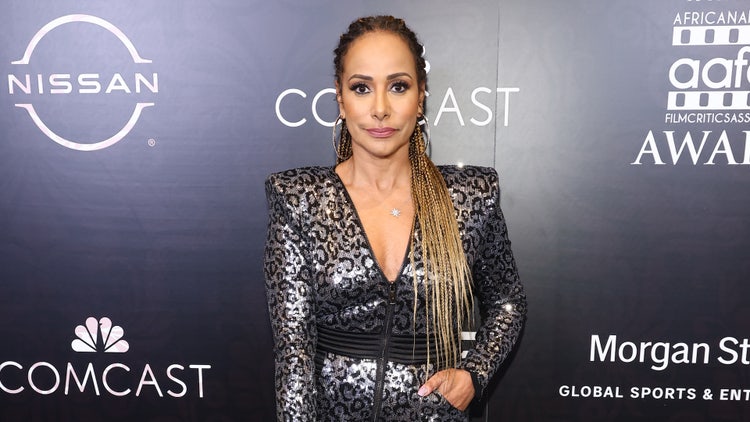
I’m working on getting the adaptation to screen so that the series takes off at Hulu. And I also have a two-book deal at my wonderful publisher, Flatiron. I’m working on a second book right now that I’m really excited about.
Pick up your copy of Amy DuBois Barnett’s “If I Ruled the World” here.