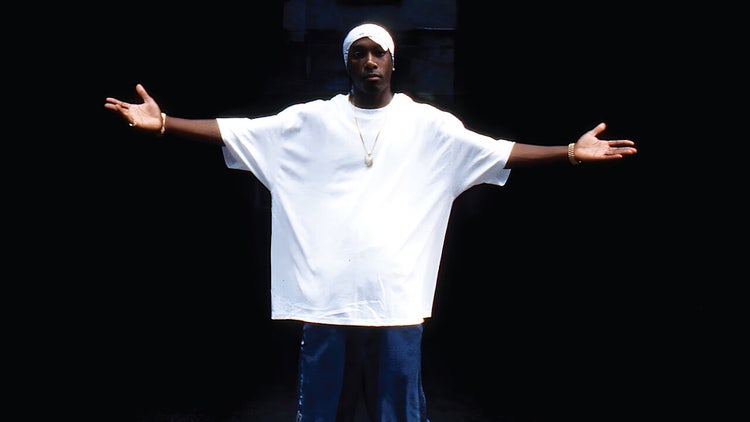
More than two decades after his passing, Big L’s voice cuts through again with purpose and care from his family and longtime peers. Released through Mass Appeal as part of Nas’ “Legend Has It...” series, Harlem’s Finest: Return of the King marks one of the most highly anticipated projects in a rollout devoted to preserving golden era icons. The album, built from remastered verses, rare freestyles, and a few powerful surprises, was guided by the late rapper’s family and longtime collaborators to ensure every bar reflected the Harlem emcee’s original edge.
Across its tight 35-minute runtime, the project balanced archival detail with Harlem edge and meticulous restoration. An unexpected Detroit veteran served as executive producer, guiding a lineup that spanned eras and showcased how far Big L’s influence continues to reach. Overall, the album reinforced the late talent’s legacy by presenting his catalog in the sharpest and most cohesive form possible. Below lies what stood out most.
1. Big L and Nas finally traded verses — 26 years in the making
Nas once admitted Big L “scared me to death” after hearing his Apollo Theater freestyle. That energy resurfaced on “u aint gotta chance,” their long-awaited first collaboration. Nas added a fresh verse while L’s ‘90s bars crashed against new production from G Koop, 2one2, Al Hug, and Mike Heron (“Cash, I got plenty, microphonеs, rock many, everything I touch is in the top 20”). The song bridges Harlem and Queens, realizing a collaboration that never came to life while Big L was here.
2. Harlem pride that never fades
The spirit of 139th and Lenox is everywhere. On “Harlem Universal,” L’s razor wit — “Y'all know where the f**k I’m from” — landed atop modernized production. Tracks like “RHN (Real Harlem N**gas)” and “Fred Samuel Playground” felt alive with the block’s pulse: Corner philosophy, sharp slang, and a loyalty that still defines Harlem storytelling.
3. Mac Miller helped “Forever” bridge generations and hearts
“Forever” might be the album’s emotional anchor. Featuring Mac Miller and Pale Jay, it unites two artists who never met but shared a deep creative lineage. The verse, drawn from vocals cleared by Mac Miller’s estate, glided beside L’s and echoed the respect he once voiced for Harlem’s wordsmith. When Pale Jay crooned “I’ll remember you forever and ever,” it landed like a tender moment of dialogue across decades.
4. Royce da 5′9″ led with precision, not polish
Royce da 5′9″ oversaw Harlem’s Finest with care rarely seen in posthumous rap releases. He assembled a mix of names — Lord Finesse, EZ Elpee, Malay, Beat Butcha, and others — who honored the analog crackle and cypher-ready warmth that defined Big L’s sound. Instead of cleaning history, Royce curated it. Every mix respected the pauses, breathwork, and rhythm that made L such a technician.
5. The estate steered the narrative, not the label
After years of mishandled bootlegs and unauthorized drops, Big L’s family and estate took full control of Harlem’s Finest, enlisting Shady Records A&R Mike Herard to guide rights management and clear every sample. The team’s goal was transparency — proper credits, accurate mixes, and full control over L’s likeness. It’s a masterclass in legacy protection, showing Harlem’s commitment to getting its story right.
6. Big L remains rap’s eternal study guide
Big L’s verses have always been study material for aspiring emcees: His “compounding” rhyme patterns and surgical punchlines influenced everyone from JAY-Z (whose iconic back-and-forth with L was revived on “7 Minute Freestyle”) to Joey BADA$$, who appeared in full effect on “Grants Tomb ‘97 (Jazzmobile).” Harlem’s Finest sharpened that legacy, presenting his words in their clearest form.
7. A closing chapter that feels intentional, not reconstructed
Harlem’s Finest honored legacy through focus, not flash. At under 40 minutes, it struck a careful balance between reverence and restraint. The closing skit, “Don and Sacha @ Inwood Hill Park,” faded out quietly, leaving room for reflection (although the bonus track, “Put The Mic Down,” gave listeners a dope encore). It’s the kind of ending Big L deserved: Harlem-centered, family-protected, and sealed with the care of those who knew what he built — and what he left unfinished.