Key Takeaways
- Hip Hop and R&B songs rarely win Song of the Year, making each victory a major moment for songwriting recognition.
- These Grammy wins reflect how songwriting in these genres has shaped conversations around love, identity, and justice.
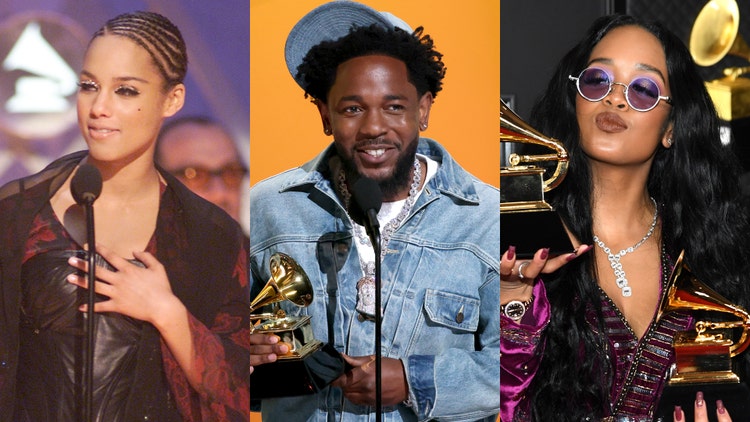
- The list spans decades, showing how artists from Alicia Keys to Kendrick Lamar have pushed lyrical boundaries and earned top honors.
Song of the Year is the Grammys’ songwriting prize. It goes to the people who built the song itself, meaning the lyrics and melody, not the performance choices or the studio polish. That matters for Hip Hop and R&B because both genres often get celebrated for vocals, production, or cultural impact first. Winning here is different. It’s the Recording Academy saying the writing alone was the year’s strongest work.
It also explains why this list is short. For decades, Song of the Year leaned heavily toward pop, rock, country, and adult contemporary styles, even in years when urban music was driving the wider culture. So, when an R&B ballad or a rap record finally takes this award, it lands like a statement, not just a trophy. These wins usually come from songs that do more than sound good. They capture a feeling, a demand, or a shift in public mood in a way people can repeat, quote, and carry.
Below lies a list of Hip Hop and R&B songs that have actually won Grammy Song of the Year, shared in no particular order.
1. H.E.R. — “I Can’t Breathe” (63rd Grammy Awards)
“I Can’t Breathe” works as protest music and a personal gut-check at the same time, tying its title to a phrase that became globally recognized through police brutality cases. The Grammys rewarded the writing from H.E.R., Tiara Thomas, and Dernst “D’Mile” Emile II, and H.E.R. used her moment to push the message beyond the stage: “We are the change that we wish to see… keep that same energy.”
2. Roberta Flack — “Killing Me Softly with His Song” (16th Grammy Awards)
This win recognizes a songwriter’s gift for turning emotional overwhelm into plainspoken lines you can’t shake. Written by Charles Fox and Norman Gimbel, “Killing Me Softly with His Song” became a defining soul standard because it makes vulnerability feel precise instead of messy. Flack’s performance helped cement it as a timeless R&B number, even as the award itself went to the composition.
3. Kendrick Lamar — “Not Like Us” (67th Grammy Awards)
A diss track rarely gets treated as the year’s best-written song, which is exactly why this win stands out. “Not Like Us” turned a rap battle into a wider cultural event, built for arenas, clubs, and quote culture all at once. The Recording Academy credited Kendrick Lamar’s writing with the category’s top prize at the 2025 ceremony.
4. Alicia Keys — “Fallin’” (44th Grammy Awards)
“Fallin’” announced Alicia Keys as a real songwriter first, star second. The hook is simple, but the writing sells the contradiction at the center of the song: Devotion and frustration living in the same room. Keys won Song of the Year as the credited writer, and the record’s blend of piano-driven soul helped set the tone for mainstream R&B in the early 2000s.
5. Bruno Mars — “That’s What I Like” (60th Grammy Awards)
This is glossy, confident R&B writing that understands what people actually replay: Clear images, a sticky chorus, and a verse that stays out of its own way. “That’s What I Like” won Song of the Year at the 60th Grammys, rewarding the team of writers behind Bruno Mars’ easy-to-sing flex record, and it’s a good example of pop-friendly songwriting that still keeps R&B rhythm and attitude at the center.
6. Beyoncé — “Single Ladies (Put a Ring on It)” (52nd Grammy Awards)
“Single Ladies” is direct on purpose and delivered with enough bounce to make it feel like celebration instead of ultimatum. Beyoncé (who was unable to hit the stage to accept the award at that moment), The-Dream, Tricky Stewart, and Thaddis Harrell earned Song of the Year for a record that became an era-defining statement on commitment, autonomy, and standards, with choreography and catchphrases that kept the writing in the public eye for years.
7. Silk Sonic — “Leave the Door Open” (64th Grammy Awards)
Silk Sonic wrote a modern single that moves like classic soul with patient setup, big emotions, and a chorus that feels like a slow dance invitation. The song won Song of the Year for its writers, which includes Bruno Mars, Anderson .Paak, and D'Mile, the last of whom used the win to honor his late mother. Mars showed love to all other contributors and supporters while .Paak brought a bit of humor.
8. Luther Vandross — “Dance with My Father” (46th Grammy Awards)
Some songs don’t need metaphor. “Dance with My Father” is exactly what it sounds like: A grown man missing his dad and wishing for one more ordinary moment. Vandross co-wrote it with Richard Marx, and the Song of the Year win rewarded that plain, devastating clarity. Due to health issues, Vandross provided the ceremony with a videotaped speech.
9. Childish Gambino — “This Is America” (61st Grammy Awards)
“This Is America” won because its writing builds tension with playful melodies and hard turns that mirror the chaos it points at. Donald Glover (who did not attend the taping), Ludwig Göransson (who did take the stage for his Record of the Year win), and an absent Young Thug received the Song of the Year honor for a track (and visual) that pushed conversations about violence and Black life.
10. Roberta Flack — “The First Time Ever I Saw Your Face” (15th Grammy Awards)
A love song can win Song of the Year when the writing earns it line by line. Credited to Ewan MacColl, “The First Time Ever I Saw Your Face” is slow, devotional, and unflashy, which is part of its power. Flack’s recording helped turn it into a soul landmark, and the Grammy recognized the underlying composition as the year’s strongest piece of songwriting.