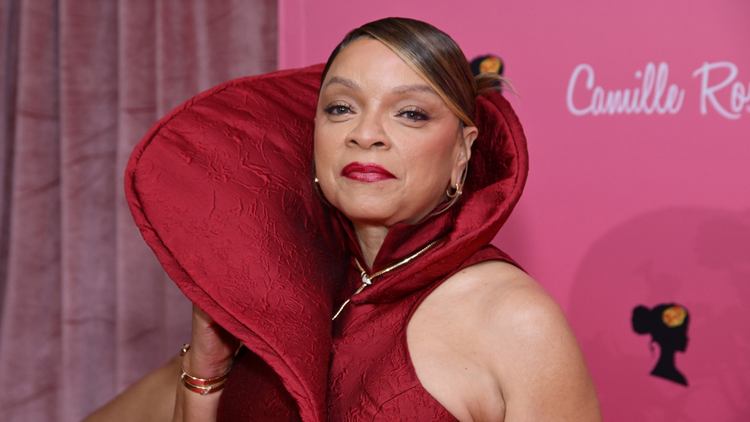
Ruth E. Carter has never simply designed costumes. Her work would be better described as constructing cultural memories. For decades, Carter’s work has lived at the intersection of storytelling, heritage, and visual anthropology, building worlds through fabric, silhouette, texture, and historical reference. From the moment her name began circulating through Hollywood’s elite design circles, it was clear she possessed a rare gift: the ability to make clothing speak before a character ever uttered a word.
Her costumes don’t just dress actors, but they contextualize them, rooting performances in lineage, geography, and emotional truth. In a career that has already reshaped the visual language of Black cinema, the costume design legend added yet another historic milestone to her legacy.
With her work on Sinners, she secured her fifth Academy Award nomination for Best Costume Design, officially becoming the most-nominated Black woman in Oscars history. It is a distinction that feels both overdue and poetic, and a culmination of years spent elevating narratives that mainstream Hollywood once overlooked.
Sinners emerged as an undeniable cinematic powerhouse after its 2025 release, racking up 16 Academy Award nominations and becoming the most-nominated film of the awards season. In many ways, the film’s visual identity, from its emotional tone and period authenticity to its spiritual and cultural layering, rests heavily on Carter’s shoulders. Her designs move beyond aesthetics as they function as narrative devices, signaling transformation, duality, morality, and inner conflict without relying on exposition. Each piece had been handcrafted with intricate details in mind. It’s the kind of work Carter has mastered throughout her career.
Long before Wakanda became a global symbol of Black futurism, she was already building visual ecosystems across film and television. She understood early that costume design, particularly within Black storytelling, carried a different weight. It wasn’t just about fashion — it was about reclamation. Whether pulling from African tribal symbology, post-civil rights movement tailoring, or contemporary street language, she approached each project with the rigor of a historian and the imagination of a futurist.
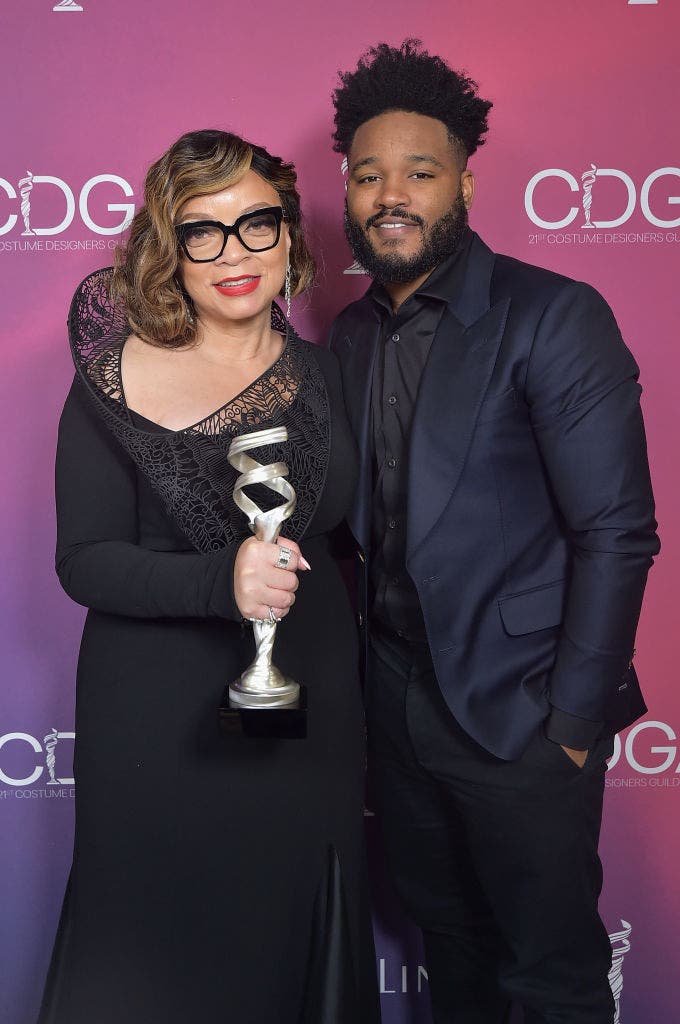
That philosophy finds one of its most powerful modern expressions in her creative partnership with director Ryan Coogler, which is a collaboration that, at this point, feels less like professional alignment and more like cinematic destiny. From Black Panther and its sequel, Black Panther: Wakanda Forever, to Sinners, Carter and Coogler have cultivated a visual-directorial synergy that industry insiders often describe as lightning in a bottle.
Where Coogler builds emotional worlds through character and political subtext, Carter clothes those worlds in visual authority. His frames give her canvas; her costumes give his frames cultural permanence. Together, they operate like a match made in heaven, where we see a director and designer who instinctively understand each other’s storytelling rhythms. Coogler’s commitment to honoring the diaspora is mirrored in Carter’s extensive research and layered design language.
Carter’s designs navigate themes of morality, redemption, dual identity, and generational trauma, all while grounding the film in a tactile realism that prevents it from drifting into abstraction. Every stitch is purposeful. Each fabric choice signals status, transformation, or psychological tension, and it’s that kind of costuming that invites audiences to look closer, to decode symbolism in color palettes, tailoring, and historical references. That level of detail is precisely why the Academy continues to recognize her, but awards alone cannot quantify Carter’s impact.
Her legacy lives in the doors she has opened for emerging Black designers, in the museum exhibitions that archive her work as fine art, and in the way audiences now expect cultural specificity and not generic costuming when watching Black stories unfold onscreen. She has redefined industry standards, proving that authenticity resonates commercially as much as it does critically. More importantly, she has expanded the imagination of what costume design can accomplish narratively. In Carter’s hands, the wardrobe becomes dialogue and becomes subtext. It becomes a bridge between past, present, and speculative futures.
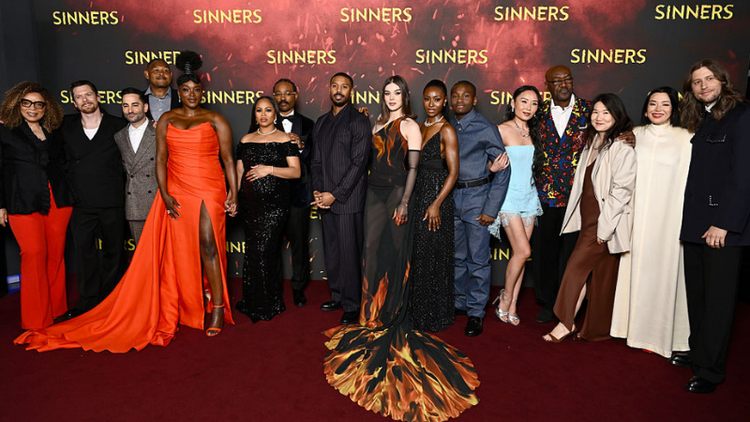
Her fifth Oscar nomination is not simply recognition of one film — it is acknowledgment of a career spent reshaping cinematic language. As Sinners set the tone for a new generation of Black storytelling, Carter stands at the center of its momentum with her needle, thread, and vision in hand, continuing to do what she has always done best: tell a story through her visual creativity.
Your fifth Oscar nomination for 'Sinners' arrived at a moment when your influence on Black visual storytelling was already undeniable. How do you personally measure success at this point in your career?
Thank you for asking that question. I think, in many ways, I was groomed differently from how I viewed success. It started with Spike Lee, when he called me and asked me to work on Malcolm X with him. He said, “Don't think about winning awards or an Oscar... Just do a good job.” I never forgot that he said that to me. I believe that when I start a film, my focus is to be as authentic as possible and bring Black history to life. To see my ancestors, to embody the storytelling, and to be the best artist that I can.
I measure my success by questioning did I succeed in my purpose? I have been nominated four times in the past. This is my fifth. There's a success story there in dedication to the craft, and for the Academy to acknowledge all of our dedication to the craft with 16 nominations, and — especially with my five — that is a true measure of success and what it means to the culture.
Thrillers and horror films are rarely embraced by awards ceremonies, and yet ‘Sinners’ earned 16 Oscar nominations with a predominantly Black cast. What did it mean to see a genre and a community that’s often overlooked finally be recognized at this scale?
I think that we can say it's a horror film, but I think we want to put it there because of the horror, and it also says to me we're diminishing its value a little bit. When we think of horror films, we think of those cheesy films with the girl screaming. Cheesy and low budget, and that’s when we say it’s a horror film, but this is so much more. Don’t forget it's a story about the blues, or a story about people migrating and reverse migration. It's a Jim Crow-era tale, and sometimes we forget [about] the metaphors that are built into what the horror represents. When you do metaphorically speak about Sinners, I don't think you think of it as a horror film anymore.
Black history is often expected to look a certain way to be taken seriously. With ‘Sinners,’ how did you push back against that idea through costume?
I have to go back to the way I came into this film business. We were trying to do things differently than what was being portrayed. We were trying to write the story with a little bit more authenticity. So, when we think of the way that Black history has been portrayed, I don't really think that we have any realistic models out there. I remember seeing a film called Sankofa, and I loved it so much. It just showed the African diaspora in a way that I had never seen before. When I look at films like Lady Sings the Blues with Billie Holiday, which is one of my favorite films, she sounded so different when I did my research on her, and her story was different. Also, the man she fell in love with in the film looked so much different, too. The film is one of the reasons why I wanted to be a costume designer. Those kinds of films showed me that I could be more authentic with my approach. When I got called for Sinners or even for the Malcolm X film, I went into it with a feeling that I wanted to show this in its realness.
You’ve always been exceptional at costuming not just bodies, but inner worlds. For ‘Sinners,’ what emotional truths were you most intentional about threading into the garments and things the audience might feel before they consciously see?
Let’s start with Smoke and Stack. The obvious is the red and blue hats, but the not-so-obvious is how Smoke has a detachable collar that's put on his shirt. It harkens to his past that he doesn't want to let go because it's a collar that went out of style by the late ‘20s, but he's wearing this stiff, detachable collar. Stack, in the red with his soft collar, started to come into fashion, and he has an attached soft collar. When I look at that, I say one's a little low fashion and a little bit stuck in the past, and the other one is wanting to go forward, wanting to move on. So, when we go into the juke, and he's like, “What's this plantation money?” It helps move the story a bit because it shows a sense of not letting go and letting fashion kind of ebb and flow, and using pieces from the past.
Also, when you get a character like Annie, and she's a practicing hoodoo, you can think of things that have representation. She wears a little narrow feather headband, and feathers from birds signify different things [in] the hoodoo practice. She also wears a little ostrich feather in her hair, and it blends in so much that you can’t see it. She wears the eleke beads from the Yoruba traditions, and they're stuck inside of her dress. That wasn’t a mistake because they are blessed and not to be touched. They have protection involved in them. It wasn't as much adornment as it was spiritual protection. So, those are the things that I added to have some deeper meaning and to also kind of give you a sense of there's something here.
Your collaborations with Ryan Coogler carry a deep creative shorthand. What’s something about the way he trusts costume design that allows you to push further than most directors would?
Ryan likes costumes, and he likes fashion. I don’t know what event he was at, but he was in a Thom Browne poncho, and I looked at it and said, “That is definitely Ryan Coogler.” He’s playful, he’s open, and he likes fashion. He’s always asking me for my pitch, and I love that because I might show him something he wasn’t expecting. I’m hardly ever asked that question when working on films. I think there’s a lot of misinformation that circulates around directors and that they’re supposed to automatically say yes or no to things, and there’s pressure on them to feel like they have to have all the answers. Some directors don’t know anything about fashion or clothes, and some of them will admit that. When you can ask for the pitch, you’re signaling, “Okay, you’re open,” and you’re expecting to hear a story. I build costumes from storytelling.
So many designers cite you as the reason they believed this career was possible for them. How conscious are you of mentoring through example, and what do you hope the next generation changes?
It’s never been my quest to be a five-time nominated Black costume designer. I've always just wanted to be a great costume designer. I looked at costumes as a way of me elevating out of a single-parent household and into a profession that's artful. I looked far and wide for mentorship, and it came to me in the forms of, like, many people, not just African American directors like Spike Lee, but it was other theater designers that I knew, opera designers that I watched and saw how they approached their work, how they sketched and, you know, I wanted to paint like them. I wanted to be a visionary. What I would say to the next generation is to understand that there's no black and white, and there's no boundaries to this. It's limitless. If you don't see yourself, paint yourself and know that the door is open for you.
For young Black designers watching a thriller with a predominantly Black cast earn 16 Oscar nominations, what do you hope this moment unlocks, not just creatively, but systemically, for the future of film?
We have to create generational wealth, and generational wealth is built from the ground up. Ryan has been an example of that. The film winning 16 nominations has been an example of excellence. I really hope and pray this film is here forever as not only an example of great filmmaking and creativity and inspiration, but by design, it has a writer who's African American, a director who's African American, a costume designer, production designer, a DP, and numerous people who emerged together and created something that was very different and groundbreaking. Ryan made a wonderful deal, where, after 25 years, the ownership of the film goes back to him. I think it was for his children. We as a culture don't have many of those kinds of things. I hate to put this conversation in such a Black race context, because I think this happens a lot with maybe other cultures too, but we have a reputation of reaching down and pulling up the next generation and not really sharing the wealth. We kind of want to die with it. So, it's a testament to building, and I hope that this building just continues. I hope that answers the question, because that question was profound.