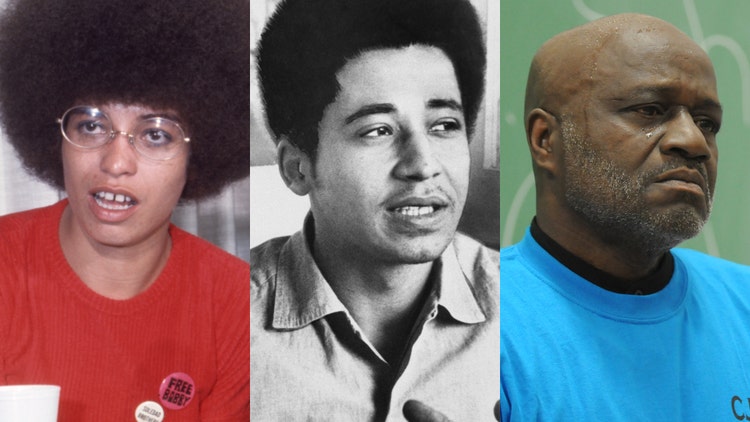
Black August began in 1979 inside California’s prison system, with San Quentin at the center of its early observance. Incarcerated Black organizers were said to have designated August as a period of remembrance, political education, and discipline rooted in the Black prison movement of the '60s and '70s. A contemporary August 1979 issue of Arm the Spirit described Black August as “a month of organizing and education” initiated by Black prisoners.
August already carried painful significance for that movement, as Jonathan Jackson was killed during the Marin County courthouse takeover on Aug. 7, 1970. His older brother, author and activist George Jackson, was shot and killed by a San Quentin guard on Aug. 21, 1971. Khatari Gaulden died at San Quentin on Aug. 1, 1978, after suffering a head injury and not receiving timely medical attention. Early participants marked the month through practices that included studying revolutionary works, fasting, exercise, wearing black armbands, and abstaining from drugs and alcohol.
The scope also reached beyond the people and events that directly produced Black August. Organizers connected their prison struggle to a longer history of Black rebellion, including rebellions against slavery, the Underground Railroad, Pan-Africanism, and later campaigns involving political prisoners and exiles.
This list is not a ranking or an exhaustive account of everyone worthy of study. Figures like Huey P. Newton, Bobby Seale, Elaine Brown, Kwame Ture, Queen Mother Audley Moore, Sundiata Acoli, Jalil Muntaqim, and Russell “Maroon” Shoatz also occupy important places in Black liberation and the struggle behind bars. The selections below instead prioritize those with especially direct ties to Black August’s origins and original honorees, its political prisoner tradition, or the wider history that organizers have explicitly incorporated into the observance. Black August itself encourages continued study of resistance and liberation “past and present,” meaning no finite list can encompass the tradition.
1. George Jackson
George Jackson is central to Black August’s origin story. While incarcerated at California’s Soledad Prison, he became an influential writer and organizer whose letters were published as "Soledad Brother." In 1970, Jackson, Fleeta Drumgo, and John Wesley Clutchette were indicted for the murder of prison guard John V. Mills and became known as the Soledad Brothers. Jackson was killed by a guard at San Quentin on Aug. 21, 1971, before the case went to trial; Drumgo and Clutchette were later acquitted. Jackson’s life, death, and writings became foundational to Black August’s early remembrance and study tradition.
2. Jonathan Jackson
At 17 years old, Jonathan Jackson entered the Marin County courthouse on Aug. 7, 1970, and armed three incarcerated men in an effort tied to freeing the Soledad Brothers. Jackson, prisoners James McClain and William Christmas, and Judge Harold Haley were killed as the group attempted to leave with hostages. The event became one of the dates most closely associated with Black August and helps explain August’s importance to the observance.
3. Khatari Gaulden
Jeffrey “Khatari” Gaulden was a politically active prisoner at San Quentin whose death became another catalyst for Black August. On Aug. 1, 1978, Gaulden suffered a serious head injury during a football game on the prison yard. Historian Dan Berger documented that prisoners called for medical attention as guards cleared and searched the yard. Gaulden passed away before receiving adequate help, and his death was memorialized by the organizers who established Black August the following year.
4. W.L. Nolen
W.L. Nolen was part of the California prison movement that preceded Black August. He was killed by a guard at Soledad Prison on Jan. 13, 1970, along with Alvin Miller and Cleveland Edwards. Soon afterward, George Jackson, Fleeta Drumgo, and John Clutchette were charged with killing a prison guard and became known as the Soledad Brothers. Black August histories identify Nolen among the imprisoned freedom fighters the original tradition sought to honor.
5. Shujaa Graham
Shujaa Graham became involved in the Black Prison Movement while incarcerated in California and later landed on San Quentin’s death row after being convicted of murdering a correctional officer. His first trial ended without a verdict, while a second resulted in a 1976 conviction and death sentence. The California Supreme Court overturned that conviction after finding prosecutors improperly excluded prospective Black jurors; a third trial ended with another hung jury, and Graham was acquitted at a fourth trial in 1981. While incarcerated at San Quentin, Graham also helped establish Black August, explaining that its founders wanted to commemorate people they believed would otherwise be overlooked during Black History Month.
6. Ruchell Magee
Ruchell Magee was the only member of the armed group to survive the Aug. 7, 1970, Marin County courthouse takeover. A jailhouse lawyer, Magee joined Jonathan Jackson, James McClain, and William Christmas during the attempt to take hostages and demand the Soledad Brothers’ release. His survival, prosecution, and decades of incarceration made him an enduring figure in Black August’s political prisoner tradition.
7. Malcolm X
Malcolm X died in 1965, 14 years before Black August was formally created, but his inclusion is not a retrospective editorial choice. His name appears alongside George Jackson, Jonathan Jackson, and Khatari Gaulden on a Black August solidarity notice published in August 1979. His advocacy for Black self-determination and international human rights also influenced political traditions studied by later Black liberation movements.
8. Angela Davis
Angela Davis campaigned for the Soledad Brothers and was closely connected to the Jackson brothers. Guns registered to her were used in Jonathan Jackson’s 1970 courthouse takeover, leading to charges of murder, kidnapping, and conspiracy. A jury acquitted her of all charges in 1972. Davis later became a prominent scholar and advocate on prisons and abolition, giving her a direct connection to both Black August’s history and its continuing emphasis on incarceration.
9. Assata Shakur
Assata Shakur, godmother to Tupac Shakur, became one of the best-known figures in the later political prisoner and exile tradition associated with Black August. A former Black Panther Party and Black Liberation Army member, she was convicted in 1977 of murdering New Jersey State Trooper Werner Foerster after a 1973 shootout. Assata maintained that she did not shoot him, escaped prison in 1979, and later received asylum in Cuba. She passed away there in 2025. Common vividly told her story on the Like Water For Chocolate standout, "A Song For Assata."
10. Mutulu Shakur
The imprisonment of New Afrikan organizer and acupuncturist Mutulu Shakur, also Tupac Shakur’s stepfather, became a focus of Black August advocacy. He was convicted on racketeering and other federal charges connected to the deadly 1981 Brink’s robbery and spent decades in federal prison. Even after his death, Mutulu remains among the most important political prisoners of the movement, and his Aug. 8 birthday is part of the month’s commemorative chronology.
11. Nehanda Abiodun
Nehanda Abiodun is vital to understanding Hip Hop's connection to the movement. While living in Cuba, she became an influential mentor within Havana’s rap community and is often credited with inspiring activists to create Black August Hip Hop benefit concerts. Simply put, her role connects Black August’s prison roots directly to the culture.
12. Harriet Tubman
Of course, Harriet Tubman died decades before Black August existed, but organizers explicitly placed her liberation work within the resistance history the month was meant to study. Best known for repeatedly returning to Maryland to guide enslaved people to freedom through the Underground Railroad, Tubman later worked for the Union during the Civil War as a nurse, scout, and intelligence operative.
13. Gabriel
Gabriel, an enslaved Virginia blacksmith, organized a large uprising planned for Aug. 30, 1800. Severe weather disrupted the plan, and informants exposed it before the rebels could carry it out. Gabriel and others were later executed. Black August organizers incorporated the planned rebellion into the month’s historical chronology, making his story one of the clearest examples of an earlier resistance struggle connected to August by the observance itself.
14. Nat Turner
Nat Turner led an uprising of enslaved people in Southampton County, Virginia, beginning Aug. 21, 1831. Turner and his followers killed 55 white people before authorities suppressed the rebellion, followed by violent reprisals against Black residents across the region. Black August organizers explicitly commemorate Turner’s rebellion, linking the date to the observance’s broader study of resistance to slavery and the consequences that followed it. Catch his story in the film The Birth of a Nation.
15. Marcus Garvey
Marcus Garvey's legacy of Pan-Africanism and mass Black political organizing aligns closely with the Black August study tradition. Born in Jamaica in 1887, he built the Universal Negro Improvement Association (UNIA) into a massive international movement that promoted Black nationalism, economic independence, and African self-determination. Garvey's August birth and the UNIA’s landmark August 1920 international convention became part of Black August’s expanded chronology, placing Garveyism within the history participants examine during the month.
16. James McClain
James McClain was a San Quentin prisoner whose trial was underway at the Marin County courthouse when Jonathan Jackson entered the building on Aug. 7, 1970. McClain, William Christmas, and Ruchell Magee joined Jackson in taking hostages while demanding the release of the Soledad Brothers. McClain was killed alongside Jackson and Christmas during the ensuing gunfire. Black August’s own history names him among the fallen freedom fighters the original observance was created to honor.
17. William Christmas
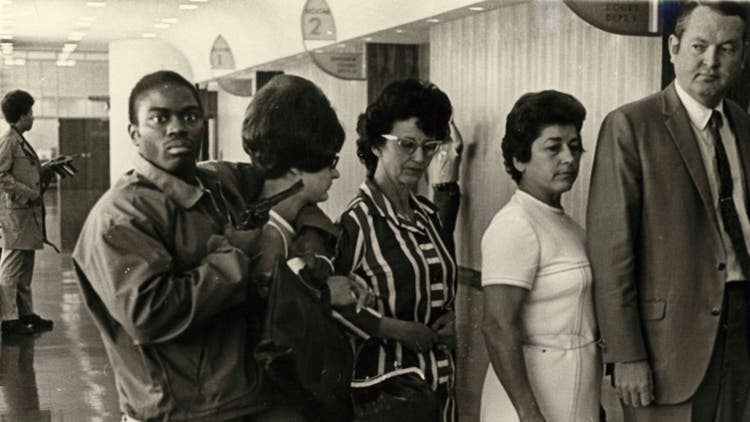
William Christmas was another San Quentin prisoner involved in the Aug. 7, 1970 Marin County courthouse action. He and Ruchell Magee were at the courthouse as witnesses for James McClain when Jonathan Jackson produced weapons, and the prisoners joined his attempt to secure the Soledad Brothers’ freedom. Christmas was killed along with Jackson and McClain. Like McClain, he is explicitly identified in archival materials among the original fallen freedom fighters commemorated by the observance.
18. Mumia Abu-Jamal
Mumia Abu-Jamal is a journalist, author, and former Black Panther who was convicted in 1982 of murdering Philadelphia police officer Daniel Faulkner, a conviction he has long contested. His death sentence was ultimately replaced by life imprisonment without parole, and he remains incarcerated. As Abu-Jamal is closely associated with Black August’s political-prisoner tradition, organizers regularly draw on his writings to explain the meaning of the observance.
19. Safiya Bukhari
Safiya Bukhari joined the Black Panther Party and later became involved with the Black Liberation Army before spending years incarcerated herself. After her release, she became a leading advocate for political prisoners, helping organize the Jericho Movement and the New York Free Mumia Abu-Jamal Coalition. She passed away on Aug. 24, 2003.
20. Fred Hampton
Fred Hampton became deputy chairman of the Illinois Black Panther Party and organized community programs while building alliances across racial and political lines in Chicago. He was killed during a police raid on Dec. 4, 1969, at age 21. Hampton was born on Aug. 30, 1948, and Black August organizers include his birth among the people and events commemorated during the month. Daniel Kaluuya portrayed Hampton in the film Judas and the Black Messiah.