Key Takeaways
- Renée Good, a U.S. citizen and legal observer, was fatally shot by an ICE agent during Operation Metro Surge in Minneapolis.
- The FBI took over the investigation after state officials said they were denied access to key evidence.
- Legal and political tensions have escalated, with lawsuits, subpoenas, and calls for impeachment over the operation’s conduct and oversight.
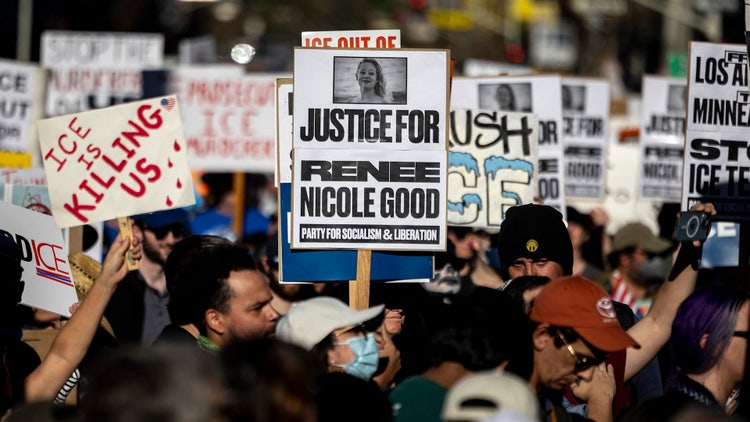
Minneapolis is in the middle of a high-stakes collision between federal immigration enforcement and local resistance, and it escalated sharply after a woman named Renée Nicole Macklin Good was fatally shot by an Immigration and Customs Enforcement (ICE) agent on Jan. 7. What followed was not just grief and protest, but a widening legal and political fight over how the federal government is operating in the Twin Cities, who gets to investigate the shooting, and what accountability looks like when federal agents are involved.
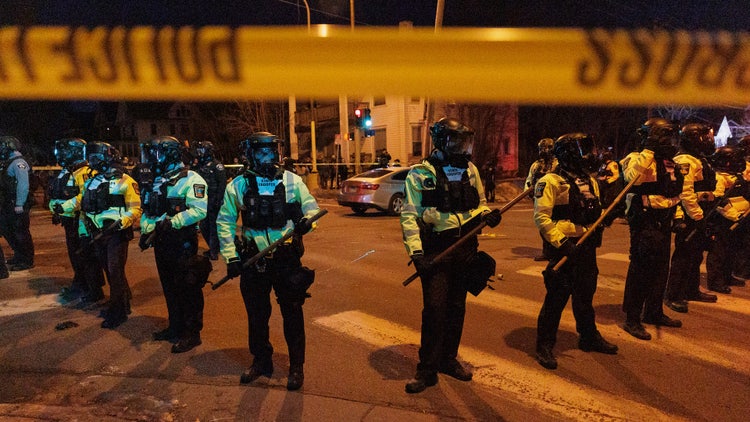
At the center is “Operation Metro Surge,” a Department of Homeland Security (DHS) deployment that, by the government’s own description, brought roughly 2,000 federal agents and officers into the Minneapolis area and has produced some 3,000 arrests since it began. Critics, including Minnesota and city leaders, say the operation created fear, disrupted daily life, and led to aggressive encounters that sweep up U.S. citizens alongside immigrants.
Who was Renée Good?
Renée Nicole Macklin Good was 37 years old, a U.S. citizen, a published poet, and a mother of three, according to federal and local reporting. In the days after her death, local officials and advocates described her as a community “legal observer” who was not the target of an ICE arrest — an important detail because it stresses why her killing has resonated far beyond Minnesota’s immigrant communities.
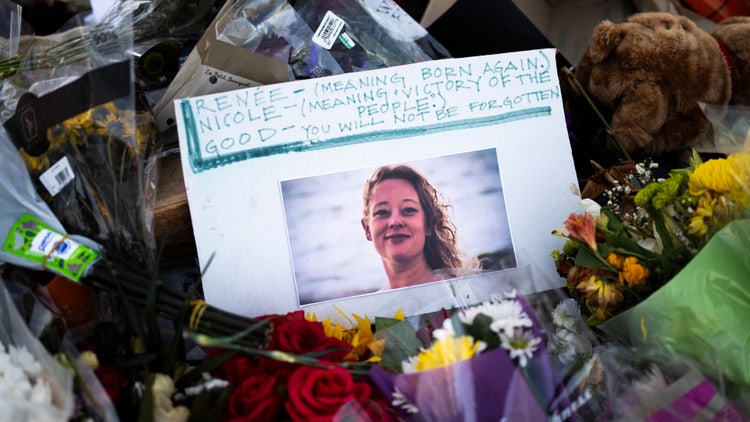
Good’s death quickly became a symbol in a broader debate: Supporters of the operation labeled her a threat to officers, while Minnesota leaders and protesters argued she was a civilian caught in an enforcement environment they view as volatile and over-militarized.
What is Operation Metro Surge?
Operation Metro Surge is DHS’s large-scale immigration enforcement push in and around Minneapolis and St. Paul, that began in Dec. 2025, according to Minnesota and city statements filed in court and public descriptions of the operation. DHS described it as an unprecedented effort — and as revealed by The Washington Post, the largest-ever immigration enforcement operation.
Minnesota Attorney General Keith Ellison and the cities of Minneapolis and St. Paul filed a federal lawsuit seeking to halt the surge, arguing (among other claims) that the operation led to unlawful stops and enforcement actions in sensitive locations. The cities’ public description of the suit depicts masked, armed agents conducting “militarized raids,” though that language reflects the plaintiffs’ allegations in litigation, not an adjudicated finding.
What led up to the Jan. 7 shooting?
The shooting was said to have taken place in south Minneapolis near East 34th Street and Portland Avenue. Good was in her vehicle when an ICE agent, identified by multiple outlets as Jonathan Ross, fired into the car during a confrontation linked to nearby federal enforcement activity.
What happened in the moments before the shots were fired is still disputed, and that dispute is part of the story. DHS’s public narrative described the incident as officers facing “rioters,” with Good allegedly weaponizing her car — language that federal officials have used to justify the shooting as self-defense.
Reporting has also added context around what Good was doing earlier that day. The Associated Press reported she had dropped her 6-year-old off at school before the encounter.
What made the investigation the center of the story?
In many fatal shootings involving law enforcement, a key public question is not only what happened, but who investigates and who will ever see the results. In this case, Minnesota’s Bureau of Criminal Apprehension (BCA) said it was cut off from evidence and interviews after the U.S. attorney’s office changed course, leaving the FBI as the sole investigative agency.
Hennepin County Attorney Mary Moriarty publicly warned that if the FBI remains the only investigative agency, “the State will not receive the investigative findings,” and the community “may never learn” what is in them — her argument for finding a path to a state-level review and greater transparency.
At the federal level, the Justice Department has signaled a narrow approach. The Associated Press reported that a top Justice Department official said there was “currently no basis” to open a criminal civil rights investigation into Good’s killing, and that the Civil Rights Division was informed it would not play a role “at this time,” even as an FBI investigation continues.
That posture matters because it shapes the ceiling of potential federal accountability in the near term — especially in a climate where local officials say they do not trust the federal process to police itself, and the DHS insists the officer’s actions were justified.
How have the politicians responded?
Politically, the response split into two loud tracks: Federal officials defending the operation and the officer, and Minnesota leaders arguing the surge itself is creating unsafe conditions.
On the federal side, DHS Secretary Kristi Noem repeatedly labeled Good a “domestic terrorist,” insisting the officer acted in self-defense. Speaking with the press on different occasions, President Donald Trump called the shooting “a very unfortunate incident” while also backing the broader deployment into American cities. “[ICE will] make a mistake sometimes,” he added, calling Good’s death a “tragedy.” In parallel, the DHS and its allies have argued that hostility toward agents is fueling confrontations — an argument that shows up across administration messaging and supportive political commentary.
At a news conference, Border Patrol official Greg Bovino, who is overseeing the federal enforcement effort, said the operation would continue and argued that “public safety in Minneapolis is not negotiable.” He also accused the state and city government of enabling interference with federal agents, calling local pushback part of the problem rather than a response to the surge.
On the Minnesota side, Governor Tim Walz and Minneapolis Mayor Jacob Frey both said they saw video and rejected the DHS’s description, with Frey calling the self-defense claim false and Walz urging residents not to “believe this propaganda machine.” Frey also angrily called on ICE to leave the city.
National Democrats also stepped in quickly. Senate Minority Leader Chuck Schumer called for a full federal investigation while expressing little faith in the fairness of the process, and House Minority Leader Hakeem Jeffries called Noem a “stone-cold liar.” Some Democrats have pushed further: Rep. Robin Kelly said she planned to file articles of impeachment against Noem, explicitly tying the move to the shooting and broader concerns about ICE tactics.
Republican elected officials and allies have largely defended the agent and the enforcement posture. Fox News reported several House Republicans argued the shooting was justified as self-defense, echoing DHS’s claim that Good used her vehicle as a weapon. At the same time, the backlash has not been perfectly partisan. According to Reuters, GOP Sen. Susan Collins criticized what she viewed as “excessive” ICE tactics, especially masking and broader targeting, placing scrutiny on policy choices even while not blaming officers directly.
The political fight also moved from rhetoric into investigations and subpoenas. Grand jury subpoenas were served at the offices of Walz and Frey (and others) as part of a federal criminal investigation into an alleged conspiracy to obstruct immigration enforcement, with both officials denouncing the move as intimidation and political retaliation.
What happens next?
In practical terms, several things can be true at once. A federal immigration operation can be legal in its broad authority, aggressive in its tactics, and still subject to constitutional limits on stops, force, and due process. The near-term future of this story likely depends on three developments: What the FBI concludes about the shooting, what courts do with Minnesota’s lawsuit seeking to halt the surge, and what emerges from the federal obstruction investigation involving subpoenas to state and city leadership.
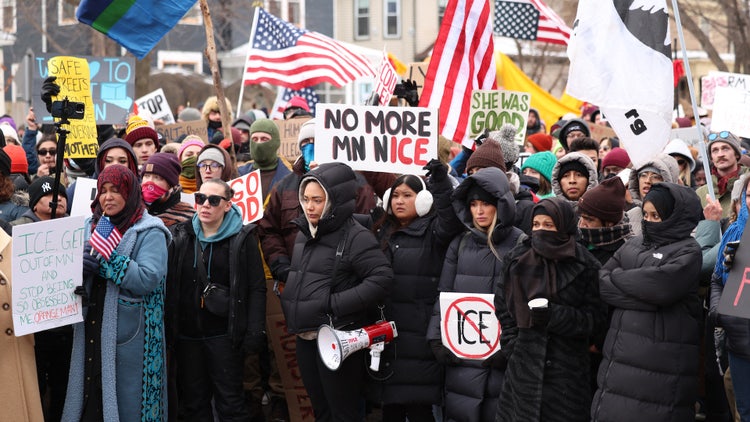
The core question is not just “who was right in one chaotic encounter,” but what kind of enforcement environment Minneapolis is being turned into, and what safeguards exist when federal power expands faster than local oversight can keep up.