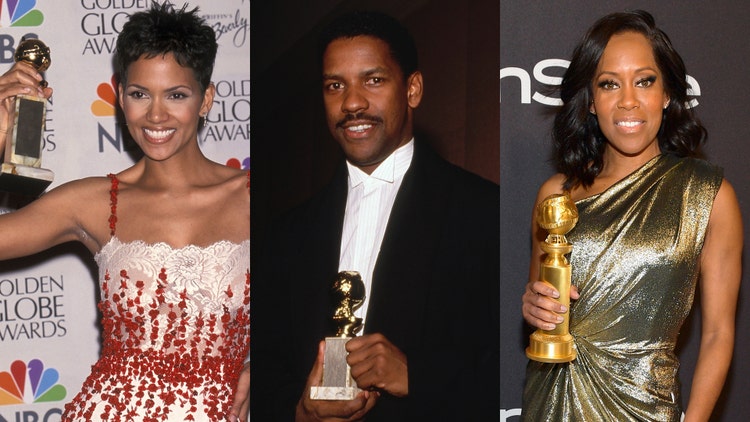
Key Takeaways
- These Golden Globes wins helped expand visibility for Black talent in mainstream entertainment.
- From Sidney Poitier’s historic first to Teyana Taylor’s achievement, each moment marked a shift in industry recognition.
- The list highlights decades of creative excellence and cultural influence across film and television.
The Golden Globes sit in a unique spot: One foot in Hollywood tradition, the other in pop culture. A win can kick open bigger budgets, better scripts, and a new level of “oh, this is the one” visibility — especially for TV, where momentum matters fast.
For Black talent, that spotlight has always come with extra context. The industry has a long track record of limiting who gets “prestige” roles, who gets to be complicated on screen, and who gets to be centered without explanation. The Globes themselves have also taken heat for representation behind the scenes; in 2021, a Los Angeles Times report noted the Hollywood Foreign Press Association had no Black members at the time.
Still, the wins tell their own story: Pioneers who cracked the door, scene-stealers who forced the room to pay attention, and modern stars who made the Globes feel current. In no particular order, below are a sampling of Black Golden Globe winners (including honorary awards) — a mix of acting, filmmaking impact, and career-defining moments.
1. Teyana Taylor
Taylor’s 2026 win for Best Supporting Actress (One Battle After Another) added a major awards stamp to a résumé that already moves like a multi-hyphenate playbook: Music, style, performance, and now a Globes moment that locks her into the film conversation for real.
2. Donald Glover
“Atlanta” didn’t just win; it reset expectations. Glover took home Best Actor in a TV Series (Musical or Comedy), and the show also won Best TV Series (Musical or Comedy). It’s proof that a deeply specific world can still hit globally when the writing (and the point of view) stays sharp.
3. Halle Berry
Berry’s 2000 win for portraying Dorothy Dandridge in “Introducing Dorothy Dandridge” (limited series/TV movie acting category) landed as more than a trophy. It was a full-circle moment honoring a Black Hollywood legend, with Berry anchoring the story as both star power and a serious dramatic force.
4. Regina King
King has a way of making emotion feel very real, not performed. Her 2019 Supporting Actress win for If Beale Street Could Talk rewarded that precision: Quiet devastation, controlled fire, and the kind of presence that can change a scene’s temperature in seconds.
5. Morgan Freeman
Freeman’s 1990 win for Driving Miss Daisy (actor in a musical/comedy category) is a reminder that the Globes have historically been a place where “movie-star authority” gets recognized early. His career later earned the Cecil B. DeMille Award in 2012.
6. Viola Davis
Davis won Supporting Actress for Fences, the kind of performance that doesn’t let you look away. She’s also a DeMille honoree, which speaks to what her career has become. Not just award-winning work, her contributions are an era-defining standard for film and TV acting.
7. Mahershala Ali
Ali’s Supporting Actor win for Green Book showcased his ability to make minimal moves with maximum impact. Instead of overplaying emotions, he lets them simmer before landing with impact onscreen. The Globes recognized that kind of restraint as its own form of power.
8. Whoopi Goldberg
Goldberg has range in the truest sense: she won Best Actress (Drama) for The Color Purple and later won Supporting Actress for Ghost. Two completely different lanes, both unmistakably her: Comedic timing, emotional clarity, and star charisma all at once.
9. Jamie Foxx
Foxx’s win for Ray (Best Actor in a musical/comedy category) captured a moment when his talent stopped being a “he can do it all” talking point and became awards reality. He turned musicianship, transformation, and leading-man weight into one performance people still reference.
10. Octavia Spencer
Spencer’s Supporting Actress win for The Help crowned a performance built on detail, including every look, pause, and punchline. That Golden Globe win marked the moment her “scene-stealer” reputation turned into major awards hardware.
11. Eddie Murphy
Murphy has both the hardware and the lifetime-achievement flowers. He won Supporting Actor for Dreamgirls, then later received the Cecil B. DeMille Award. It’s a clean summary of his impact, which includes being a box-office force, cultural icon, and (simply put) a legit thespian.
12. Chadwick Boseman
Boseman’s posthumous win for Best Actor (Drama) for Ma Rainey’s Black Bottom hit like a collective salute. While this was for a specific performance, the late actor’s career balanced blockbuster symbolism with deliberate, craft-first choices in biopics and stage-to-screen work.
13. Sterling K. Brown
Brown’s win for “This Is Us” (TV drama acting category) marked a modern TV milestone as a performance that made vulnerability feel strong, not soft. He brought high-level emotional chops to network TV and made it feel like must-watch programming.
14. Oprah Winfrey
Oprah Winfrey’s Cecil B. DeMille Award win honors a career that’s bigger than a single lane: On-camera icon, producer, and cultural architect. The Globes officially list her as the 2018 recipient, putting her in a lineage of game-changers recognized for shaping entertainment itself.
15. Denzel Washington
The famed actor has multiple Globe wins across decades, plus a DeMille honor. His Golden Globes profile notes two wins and the 2016 Cecil B. DeMille Award, all of which solidify his role as both a superstar and a standard-bearer.
16. Sidney Poitier
Poitier’s legacy sits at the foundation. Golden Globes coverage notes him as the first Black artist to win Best Actor (for Lilies of the Field, 1964) and the first African American to receive the Cecil B. DeMille Award — early milestones that still echo through award-season history.
17. Ryan Coogler
Coogler’s Sinners landed major Golden Globes recognition in 2026, including Cinematic and Box Office Achievement as a win for the film, with additional high-profile nominations credited to him (director/screenplay). It’s a reminder that Black creative control — writing, directing, producing — can also be the headline.