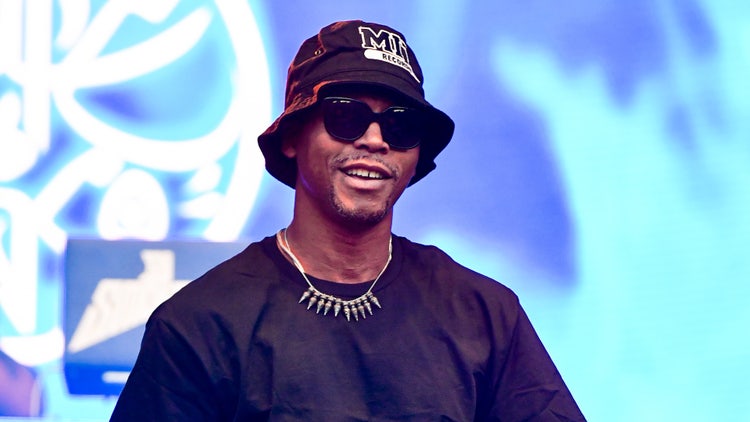
Few rappers balance complexity and clarity like Lupe Fiasco. Hailing from Chicago’s West Side, Wasalu Muhammad Jaco built a legacy on verses that challenge listeners to think deeper — from the political to the philosophical, the absurd to the academic. With a sharp sense of wordplay and an encyclopedic range of references, Lupe’s best verses operate on multiple levels. You might catch a punchline on the first listen, a metaphor on the fifth, and a hidden parable on the 10th.
Whether tackling race and religion, science and skateboarding, or fame and fatalism, Lupe turns every verse into a thought experiment. His bars aren’t just lyrical. They’re architectural. And while he’s earned mainstream acclaim with hits like “Kick, Push” and Lasers, it’s often the deeper cuts, freestyles, and concept-heavy joints that reveal just how singular a writer he really is.
This list highlights 17 of Lupe’s sharpest, strangest, and most powerful verses, from mixtape sermons and album epics to one-verse wonders. Some entries celebrate his most poetic highs; others remind us he can bar up with anyone, including JAY-Z. If you're ready for internal rhyme, triple entendres, and storytelling precision, this is your syllabus.
1. Hurt Me Soul (Verse 3)
Over Needlz’s somber production, Lupe Fiasco unleashed a final verse that read like a global news ticker from the perspective of a wounded poet. He name-checked everything from child soldiers to consumerism — “Catholic Priest fondling, preemptive bombing, and Osama and Obama ‘nem, they breaking in my car again” — offering no solution, just reflection. The verse captured his moral conflict: Loving Hip Hop while rejecting its darker values. The closing image — “all the world's ills, sitting on chrome, twenty-four-inch wheels” — was peak Lupe: Raw, cerebral, and deeply aware of the contradictions that define our world.
2. Put You On Game (Full verse)
Lupe Fiasco delivered one of his darkest and most conceptual verses by personifying evil itself. Over sparse, haunting production, he adopted the voice of a malevolent force responsible for every systemic ill: “I am the blood of this city, its gas, water, and electricity.” It’s a verse soaked in venom and layered allegory, touching on capitalism, imperialism, media, and inner-city decay. With no hook and no relief, Lupe ended The Cool with a villain monologue that blurred spiritual warfare and street survival. Beyond just being a verse, this performance was an indictment, a warning, and a sermon from the mouth of the devil.
3. Dumb It Down (All verses)
Lupe’s defiant response to critics and label pressure, “Dumb It Down” was a meta masterwork. The opening verse was a maze of metaphor: “I’m fearless, now hear this, I’m earless, and I’m peerless, that means I’m eyeless.” He painted himself as a lyrical alien navigating a world begging him to simplify. The track’s structure — three complex verses, three satirical hooks — mocked the mainstream while exposing how intelligence gets treated as a liability in rap. Lupe’s refusal to conform wasn’t just a flex — it was a manifesto. This was one of the sharpest dissections of the culture ever put on wax.
4. Pressure (Verse 2)
On this standout Food & Liquor track, Lupe Fiasco went bar-for-bar with JAY-Z and (arguably) walked away with the best verse. Over Prolyfic’s funky, sample-heavy beat, Lupe took on the drug game, poverty, and peer pressure with sly metaphors and wordplay: “Other n**ga from the block... they was selling Os like ‘Wheel of Fortune.’” He flipped phrases with surgical control, even sneaking in a Common nod and a shot at industry compromise. With lines that felt both coded and direct, Lupe proved he can match a GOAT while staying completely in his own cerebral, Chicago-rooted lane.
5. Mural (All verses)
A nine-minute lyrical monsoon, “Mural” was a marathon of imagination and mastery. Lupe Fiasco rapped without a hook, threading wild metaphors, anime nods, philosophical musings, and sociopolitical commentary into one (almost) uninterrupted stream. “Treat every single one of your words like reinforcements” felt like a personal mantra as he delivered over 1,300 words with near-surgical control. From cartoons to climate change, Stacey Dash to Samsara, “Mural” was a mural in the truest sense: Sprawling, colorful, and permanent. It’s a pure exhibition of craft — rap without compromise, showcasing Lupe at his most unfiltered and virtuosic.
6. Adoration of the Magi (Verse 3)
Lupe Fiasco closed this ethereal standout from Tetsuo & Youth with a verse that’s both cryptic and heartbreaking. He blended religious allegory, video game references, and generational commentary into lines like: “Can’t be eyes closed when you side scroll.” The final bars took a haunting turn, describing a stripper who’s unknowingly two weeks pregnant — “Didn’t even know, he’s dancing with her. D**n.” It's the kind of verse that sneaks up on you emotionally, wrapped in layered phrasing and wordplay. A quiet gut punch, Lupe turned casual observation into a parable on innocence lost and cycles repeating.
7. Gotta Eat (Verse 1)
On “Gotta Eat,” Lupe transformed a street tale into an elaborate fast-food metaphor, turning burgers, fries, and cheese into symbols of criminal enterprise. In the opening verse, he introduced a kingpin figure with lines like, “Even his kids had meals for reals, some rich small fries wrapped in paper since they was lil.” The wordplay was dense but never forced, flipping nutrition and narcotics into one seamless allegory. Whether referencing “grams” or “two-pocket” jeans, Lupe used humor and imagery to critique consumer culture and survival economics. It was witty, sinister, and sharp enough to go over your head on the first listen.
8. Streets On Fire (Verse 2)
Verse two of “Streets on Fire” blurred dystopia, religion, media control, and personal decay into one poetic fever dream. Lupe crafted an apocalyptic love story about a femme fatale who may represent disease, societal collapse, or corrupted divinity. Lines like, “Receipt for her wings and everything that she paid for, and the address to the factory where they made those,” explored artificial salvation in a broken world. His flow was hypnotic, his imagery surreal. It was spoken word over scorched earth, and the further you dig into the verse, the more you realize how eerily prophetic Lupe’s pen really is.
9. The Coolest (Verse 2)
In this continuation of the Michael Young History saga, Lupe used the second verse to reveal the price of worshipping “The Streets” and “The Game.” He weaved biblical imagery, weather metaphors, and hustler logic into a character study of spiritual collapse. “Her and I, Caine, no weatherman could ever stand when her and I came,” set the tone for a relationship that’s powerful, toxic, and apocalyptic. By the time he boasted, “There's more fish in the sea, I'm on my mission to be,” you realize it’s not confidence — it’s a death sentence. The storytelling was so smooth, you almost missed how devastating it was.
10. T.R.O.N. (Verse 2)
Lupe’s second verse on “T.R.O.N.” was a cosmic meditation dressed in digital glitch and metaphor. Referencing everything from Galileo to Versace to sumo wrestling, he bent time and logic into poetic code: “Dance, it’s a new year every time I open my hands.” His flow was fluid yet complex, as if he were unlocking cheat codes for the human condition while dancing through philosophical loops. The verse merged Afrofuturism, ancient wisdom, and gaming culture into a single frame. It was a level-up in both sound and language, matching the track’s arcade motif with bars that felt like power-ups in disguise.
11. XO (Verse 3)
On “XO,” Lupe Fiasco leaned into his sci-fi side with a cinematic third verse that read like alien abduction fan fiction — except darker and deeply metaphorical. He weaved themes of addiction, surveillance, war, and self-erasure: “The square’s self-aware and dares to self-edit.” The alien force became a stand-in for systemic control, stripping the subject of identity while cloaking it in technological ascension. Lupe’s vocabulary is dense but deliberate, using metaphysical language to describe transformation through trauma. The result is an eerie but beautiful ending to a three-act descent into synthetic salvation, as the “pill again” refrain haunted the fadeout.
12. SLR (Verse 2)
Lupe's second verse on “SLR” was a lyrical flex session powered by paranoia, pride, and precision. With lines like, “Flow is so nuts, the track is gettin’ teabagged,” and, “Top 5 alive and I only got two out!” he toed the line between confidence and challenge. He riffed through Chicago legacy, cultural politics, and lyrical hierarchy in a blur of puns and punchlines. It’s battle rap as personal essay, defying trends while weaponizing vocabulary. Referencing Huey Newton, Soulja Boy, and rehab stashes, Lupe elevated this to high-concept bar work. It was a mission statement for artists who won’t water down the art.
13. Us Placers (Verse 1)
Lupe opened “Us Placers” with a dreamscape verse wrapped in satire and social critique. “Bought a big house and a whole lot of Ranges, a closet full of clothes and some brand new dangers,” hit like rap’s version of “Cribs” in a house of mirrors. The verse danced between wealth’s seduction and its spiritual void, filtered through Lupe’s deadpan flow. By threading material flexes with warnings — “All the money in the world don’t make it painless” — he reclaimed the luxury rap trope as commentary, not aspiration. In three minutes, the Child Rebel Soldier movement sounded both inevitable and gone too soon.
14. Failure (All verses)
Lupe Fiasco’s “Failure” is the kind of track that invites rewinds and Reddit threads. Across three layered verses, he dropped punchlines so dense they bordered on puzzles: “It’s Saran Wrap and aluminum foil / Some potpourri, a little machine oil.” The beat from Nottz was moody and a fitting canvas for Lu’s barrage of allusions — from Yao Ming to Yoda. Lyrically, he’s somewhere between a chess master and an English major with a grudge, stacking triple entendres and internal rhymes with surgical precision. “Failure” was a masterclass in lyrical overachievement.
15. Real (Verse 2)
Lupe Fiasco’s second verse on “Real” was a spiritual checkpoint disguised as slick rhyme. “Life ain't meant to come around twice, yeah, that's why I gotta get it right” was more like scripture than rap, as he reflected on divine purpose, dreams, and duty. There’s a graceful urgency to his words as he wrestled with using his talent to illuminate others. It’s a mission statement tucked inside a debut: Stay grounded, stay useful, and give ‘em something real. Lupe wasn’t just showing promise — he was already fulfilling legacy.
16. Muhummad Walks (Verse 3)
Over Kanye West’s “Jesus Walks” instrumental, Lupe Fiasco delivered a closing verse that came off more like a sermon than a freestyle. Speaking directly to his fellow Muslims — especially those caught between faith and the street — Lupe blended spiritual discipline with street wisdom. “You gotta stay on your salats, your zakats, your Qur’an” was delivered not as dogma, but as a plea for focus and redemption. He closed with: “Tellin’ it how it was taught to me, I ain’t tryin’ to sell it, can be bought for free.” It’s Lupe at his most sincere, grounded, and God-fearing.
17. Dinosaurs (Verse 3)
Only Lupe Fiasco could turn a dinosaur lesson into a masterclass in metaphor, linguistics, and existentialism. “Dinosaurs” started as a whimsical science rap for his nephew — “Dinosaurs came in all colors” — before unraveling into an elegy for extinction, climate change, and aging rappers. Lines like, “If they had lawyers, they coulda sued some for sure,” blended sharp humor with sobering commentary. Whether he’s name-dropping Bruce Lee, Grimlock, or malls in Dubai, Lupe used prehistoric creatures as a mirror for modern life. This track proved that even extinction bars can be layered, literary, and laced with legacy.