Key Takeaways
- The full Fifth Circuit upheld the dismissal of Jackson residents’ constitutional claims over lead-contaminated drinking water.
- The ruling concerns constitutional claims and does not eliminate protections established by the Safe Drinking Water Act.
- The court noted that residents may pursue other legal remedies, while Jackson’s water system remains under federal oversight.
A federal appeals court sided against Jackson, Mississippi residents who sued the city over lead-contaminated drinking water. In a 10-5 decision, the full Fifth U.S. Circuit Court of Appeals affirmed a lower court’s dismissal of their claims, declaring that “the Constitution does not guarantee clean water.”
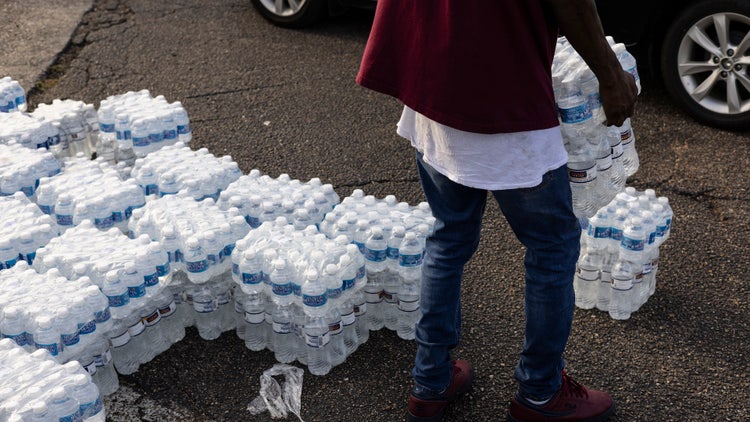
The proposed class-action lawsuit was filed in September 2022 by Jackson residents Priscilla Sterling, Raine Becker, Shawn Miller, and John Bennett amid the city’s massive water crisis. It came weeks after a system failure left much of Jackson without reliable running water and just after officials lifted a nearly two-month boil-water notice. The residents alleged that city officials’ decisions and failures allowed lead to leach into the public water supply and worsen the contamination.
After a federal district court dismissed their constitutional claims in 2024, a three-judge Fifth Circuit panel revived portions of the case in November 2025. The full appeals court later vacated that decision, reheard the case, and ultimately restored the dismissal. The complaint also alleged that Jackson’s problems stretched back years before the 2022 emergency, pointing to state testing from 2010 to 2013 that showed lead levels “increasing at an alarming rate.” Several of Sterling’s children were later diagnosed with lead poisoning, while other plaintiffs alleged effects from lead exposure or other water contamination.
Writing for the majority, Judge Kurt Engelhardt said the residents were asking the court to recognize constitutional protections against exposure to contaminated water and inaccurate information from public officials. The court declined, writing, “It is undisputed that the Constitution does not guarantee clean water.” It also determined that the alleged exposure did not fit within existing Supreme Court precedent protecting a person’s right to bodily integrity.
Five judges disagreed. Judge Catharina Haynes wrote in dissent that the allegations “mirror in various ways” the Flint water crisis. A federal appeals court covering Michigan previously allowed Flint residents to pursue constitutional claims after they alleged government officials knowingly exposed them to contaminated water. The Fifth Circuit majority directly acknowledged that ruling, but said it was neither bound nor persuaded by the Michigan court’s reasoning.
Jackson Mayor John Horhn welcomed the decision. “We are pleased that the Fifth Circuit upheld the dismissal of these claims,” he said in a statement obtained by Mississippi Today, adding that the city remained committed to residents’ health, safety, and well-being.
So, what right do Americans actually have to clean water?
The ruling does not mean public water systems are free to provide unsafe drinking water. The distinction is between a constitutional right and protections created by law. The federal Safe Drinking Water Act authorizes the Environmental Protection Agency to set minimum health standards for tap water and requires public water systems to comply with them. The Fifth Circuit’s decision instead says those protections do not amount to a fundamental right guaranteed by the Constitution itself.
The majority said the Jackson plaintiffs could still pursue other legal remedies, including tort claims, and seek action through state and federal lawmakers. Jackson’s water system also remains under federal oversight following a 2022 agreement involving the EPA, Justice Department, Mississippi health officials, and the city. The EPA says repairs and infrastructure work remain underway, including pipe and valve replacements and improvements intended to stabilize water pressure and reliability.