Key Takeaways
- The Department of Justice moved to intervene in a federal lawsuit targeting Evanston’s housing-based reparations initiative.
- Federal officials argue the program violates the Equal Protection Clause and the Fair Housing Act.
- City leaders and advocates say the housing grants were created to address documented discrimination and are funded largely through cannabis tax revenue.
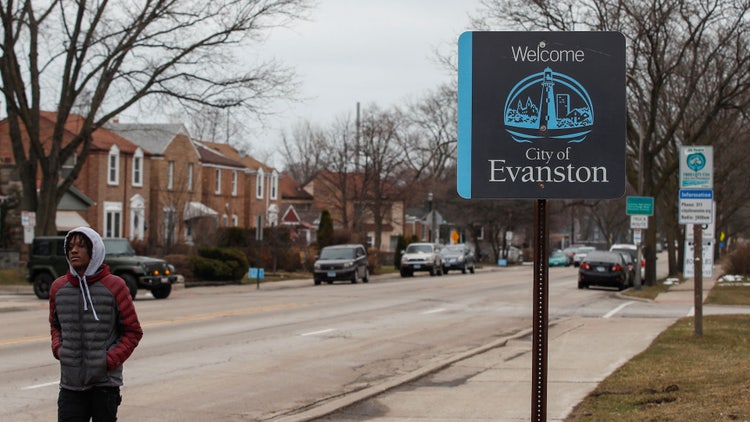
On Tuesday (June 16), the Department of Justice’s Civil Rights Division moved to intervene in an existing lawsuit challenging Evanston, Illinois’ Local Reparations Restorative Housing Program. The first-of-its-kind initiative was created to address decades of housing discrimination that affected Black residents in the Chicago suburb.
According to the Associated Press, Evanston launched the program in 2021 after previously allocating $20 million toward reparations. The city has already distributed more than $7 million through $25,000 payments that can be used for home repairs, down payments, mortgage assistance, property-related penalties, and other housing costs.
The DOJ argued in its filing that the program is “racially discriminatory” and violates the Equal Protection Clause of the U.S. Constitution because it distributes benefits based on race. The department also alleged that the program violates the Fair Housing Act by offering housing-related financial assistance on the basis of race.
“The Constitution demands that the government treat citizens as individuals, not as members of a racial class," said U.S. Attorney Andrew S. Boutros in a statement shared by the DOJ. "Distributing public funds based on an individual's ancestry or race divides the citizenry and establishes the very hierarchy the Equal Protection Clause was designed to dismantle.”
Evanston’s program allows eligible Black residents, or their direct descendants, to receive reparations if they lived in the city between 1919 and 1969 and suffered housing discrimination because of local ordinances, policies, or practices. Residents of any race who can show they experienced housing discrimination due to city policies after 1969 may also qualify, according to AP. Notably, the aforementioned lawsuit was filed in May 2024 by six plaintiffs who said they are descendants of people who lived in Evanston between 1919 and 1969 but are not Black.
How Evanston’s reparations program began
Evanston officials approved the reparations effort after examining the city’s history of discriminatory housing policies, including practices that advocates say contributed to segregation, reduced homeownership opportunities, and widened racial wealth gaps. The program has largely been funded through local cannabis tax revenue.
Robin Rue Simmons, a former Evanston alderperson who helped lead the reparations push, told AP that the federal government’s intervention is a “fear tactic” meant to discourage similar efforts in other cities. She also defended the program as a targeted response to redlining and other policies that harmed Black communities for generations.