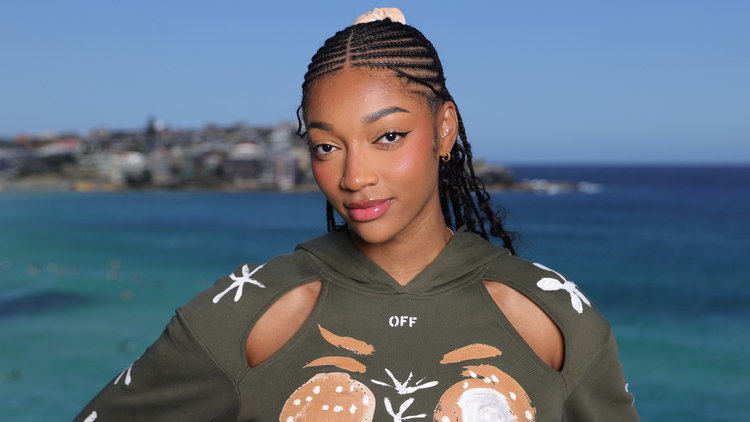
Angel Reese isn’t just redefining the game — she’s helping redefine what power looks like for women in sports. Known as the “Bayou Barbie” for her dominance and unapologetic confidence during her time at Louisiana State University, Reese represents a generation of athletes who refuse to be boxed into a single identity. She is not only a basketball star, but a cultural force whose influence stretches across fashion, business, media, and ownership — and in doing so, she is changing the trajectory of the WNBA itself.
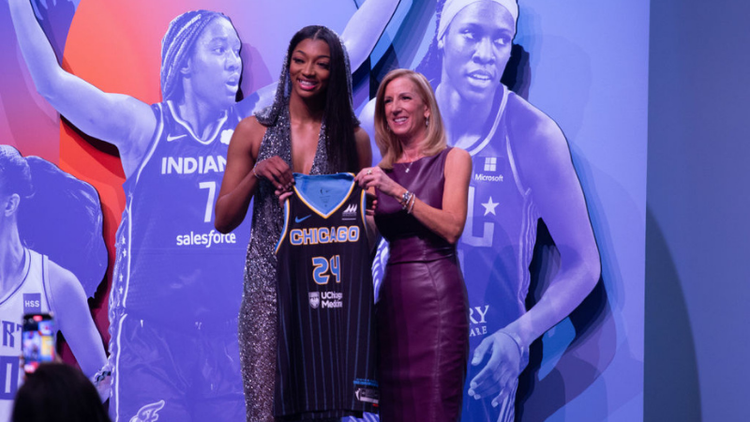
Reese’s rise to national prominence was cemented during her historic run at LSU. After transferring there in 2022, she became one of the most dominant players in college basketball history, setting the NCAA single-season record with 34 double-doubles and leading the Tigers to their first-ever women’s national championship in 2023. That dominance carried into the pros when she was selected seventh overall by the Chicago Sky in the 2024 WNBA Draft.
But Reese’s impact goes far beyond the stat sheet — and that distinction matters. For decades, women’s basketball players were told that success meant minimizing their personality, avoiding controversy, and proving legitimacy solely through performance. Reese has flipped that narrative. Her confidence, femininity, and visibility are not distractions from her game — they are extensions of her power.
In October 2025, Reese became the first professional athlete to ever walk in the Victoria’s Secret Fashion Show, a moment that symbolized a cultural shift not just for women athletes, but for the WNBA. The milestone followed her history-making appearance as the first WNBA rookie to attend the Met Gala in May 2024, where she wore a seafoam green 16Arlington gown that placed her squarely among fashion’s elite.
These moments matter because visibility has long been one of the WNBA’s biggest battles. While the league has steadily grown since its founding in 1996 — expanding media coverage, increasing salaries, and gaining stronger collective bargaining protections — mainstream cultural recognition lagged behind. Reese represents a turning point: a player whose fame doesn’t require explanation, whose presence in elite spaces signals that WNBA athletes are no longer guests in pop culture, but fixtures.
Her partnership with Reebok further underscored that shift. Reese first joined the brand through an NIL deal at LSU, then expanded the relationship during her rookie WNBA season with a major contract extension that included her own signature sneaker, the Angel Reese 1, and an apparel collection. Shaquille O'Neal, Reebok’s president of basketball, positioned Reese as the face of the brand — a move that paid immediate dividends. The shoe’s debut colorways, including “Diamond Dust,” “Mebounds,” and “Receipts Ready,” sold out within minutes. That success is not just personal — it’s structural.
While legends like Sheryl Swoopes and Candace Parker broke ground with signature lines in years past, women players were historically excluded from the sustained, high-velocity sneaker economy that fuels massive athlete wealth. The GOAT actress’ commercial impact further signaled that when provided the same level of investment and marketing machinery once reserved almost exclusively for men’s sports, women athletes can drive sales, trends, and hype at a global scale.
Financial independence has always been central to Reese’s strategy. As one of the highest-earning NIL athletes in college, with a reported valuation of about $1.8 million, she leveraged early success into long-term equity. In May 2024, she became an owner of the DC Power Football Club, joining a small but growing group of women athletes investing beyond their playing careers. Through the Angel C. Reese Foundation, she continues to prioritize education, access, and empowerment for young women and girls.
The Maryland native also understands the power of narrative. Her podcast, “Unapologetically Angel,” launched in August 2024 and quickly became a cultural touchstone. In an era where athletes are increasingly becoming media companies themselves — owning their own distribution, controlling their intellectual property, and bypassing traditional gatekeepers to speak directly to fans — Reese’s platform reflects the future of sports storytelling. By hosting her own show, she ensures she is the primary architect of her public image while building a business that exists independently of the court.
After rising at a time when the WNBA is experiencing record attendance, growing TV ratings, and renewed public interest, the All-Star player stands at the center of its evolution. She embodies a league no longer asking for permission — a league driven by women who are visible, profitable, expressive, and in control. Angel Reese has gone far past simply participating in the culture, moving to a place where she’s truly shaping it. In doing so, she’s laying the blueprint for the next generation of women athletes to build, own, and lead.