Muhammad Ali could make an opponent uncomfortable before either man threw a punch. The predictions, the jokes, the confidence — he understood how to command attention and leave people waiting to see whether he could deliver. Behind that public bravado were relationships that deserve attention, including the father who knew him before the fame and the fellow champion who had every intention of stopping his rise.
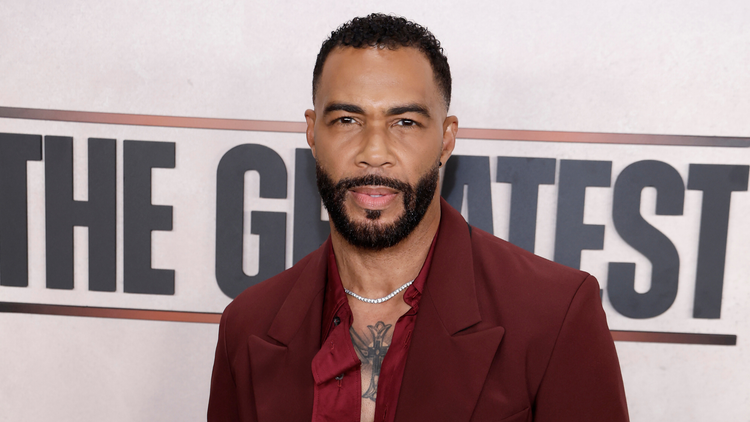
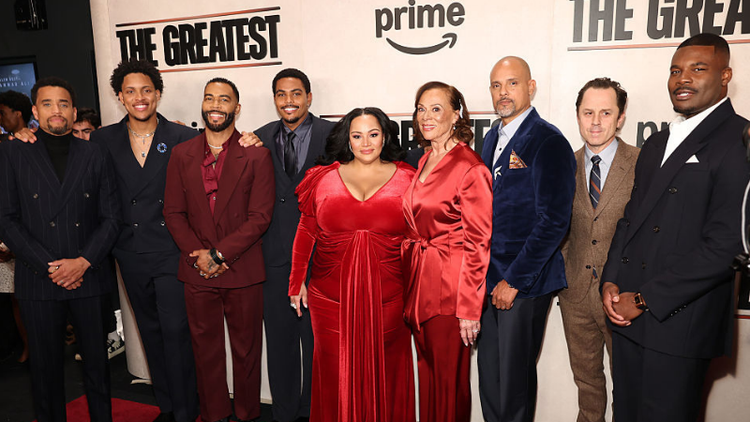
In the Prime Video series “The Greatest,” those men are portrayed by Omari Hardwick and Amin Joseph. Hardwick plays Cassius Clay Sr., Ali’s father, while Joseph steps into the role of heavyweight champion Sonny Liston. Jaalen Best leads the cast as the young boxer whose ambitions would change his life and the sport around him. Other stars who appear in the eight-episode series are Michael Ealy, AEW superstar Chris Jericho, and Dana Gourrier, with Michael B. Jordan serving as an executive producer.
Liston entered their February 1964 fight as the favorite to win. Clay’s upset victory became a defining moment in his career, one that Hardwick and Joseph unpack in the exclusive conversation below, but bringing that history to television also means giving the man across the ring his due. Created by Ben Watkins and executive produced by the likes of Lonnie Ali, Michael B. Jordan, and JAY-Z, “The Greatest” is reportedly the first authorized scripted series about Ali’s life.
For viewers familiar with Hardwick from “Power” and Joseph from “Snowfall,” it offers a chance to see both actors take on historical figures. REVOLT spoke with Hardwick and Joseph at the world premiere about rewriting Liston’s public image, playing complex characters, and what you should be able to do before calling yourself the greatest. Below, read our premiere conversations with the two stars.
History remembers Sonny Liston as the man Muhammad Ali defeated, but rarely asks what it felt like to be Sonny Liston. After playing him, what do you think we got wrong about the man behind that intimidating reputation?
Amin Joseph: I think that this series, which I’m thankful for, gives a proper, three-dimensional [portrayal] of Sonny Liston. The nuance that Sonny was jovial and was a jokester — he liked his peanut chews and whiskey. He loved a good time. He loved gambling, but he was a father, a son. He was also a husband. I think that seeing the nuance of his life paints him in a different picture than the two-dimensional portrayals that we’ve seen in the past.
If Sonny Liston were competing today, with social media, podcasts, and athletes controlling their own narratives, do you think he'd still be seen as the villain, or could he have rewritten his legacy?
Joseph: I think today, we would definitely see Sonny Liston take his own narrative in his own hands. I think he would reach out to his fans through the means of social media; he would have plenty of viral moments where we would see that personality and charisma shine through. More importantly, we would be able to get to the bottom of his untimely demise... [which] wasn’t investigated properly in that time.
Finish this sentence: You cannot call yourself "The Greatest" until you've...
Joseph: You can’t call yourself the greatest until you’ve lived up to your own potential.
Outside of your profession, what's one thing you are absolutely the GOAT at?
Joseph: I’m the GOAT at chess. See me if you want to on Chess.com. AJAdonis (laughs).
We talk so much about Muhammad Ali becoming "The Greatest," but rarely about the man whose name he inherited. What did playing Cassius Clay Sr. teach you about how fathers can both inspire and complicate their sons' understanding of greatness?
Omari Hardwick: Well, it definitely taught me that every day you wake up, you look in the mirror, you brush your teeth, your first opponent is... yourself. And so it definitely taught me... that this guy was trying to get his son to get out of his own son's way, but equally at times. Papa Cash was forgetting that he was in his own way, respectably. And so, they were two titans in one household — both complex, both super talented.
And while he’s trying to take care of Cassius Jr., he's equally trying to take care of Rudy, and trying to take care of a wife, and trying to keep food on the table as a painter. A very talented Black man in what? 1950, trying to figure life out in America. A special guy, loved a lot, was affectionate, super passionate, but equally was complex and sometimes complex [is hard] to live with. We own it all.