Key Takeaways
- Each Beyoncé album marks a shift in sound, visuals, and cultural influence, reflecting her constant evolution as an artist.
- Her discography spans R&B, pop, Hip Hop, country, and more — showcasing her genre-defying approach to music.
- The article offers a chronological breakdown of Beyoncé’s albums, placing each in the context of its era and impact.
Beyoncé is an expert of artistic reinvention. A look back at her track record of daringly pushing past genre boundaries is a reminder of why she sits on a throne of her own.
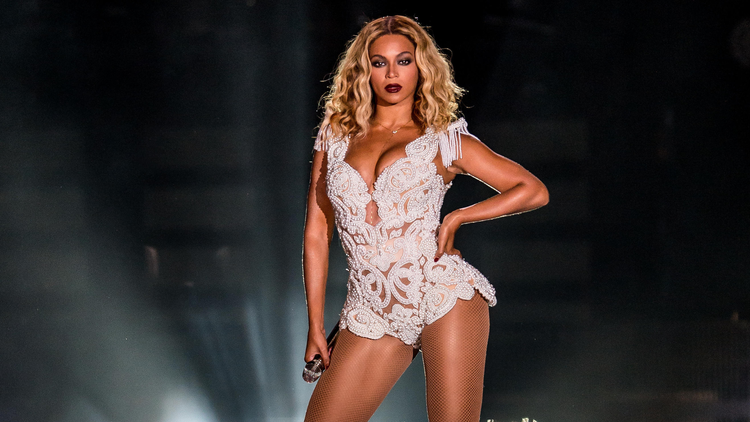
From her Destiny’s Child beginnings to the genre-defying brilliance of albums like RENAISSANCE, Beyoncé’s discography is a masterclass on how to not be boxed in. Each era in her music evolution marks a bold chapter in her legacy, blending sound, style, and storytelling into cultural milestones. She can command that detractors “bow down” because she has more than 100 entries on the Billboard Hot 100 charts, dozens of Grammys, and a plethora of achievement and icon awards.
Since her teen years, Beyoncé has been in the spotlight, honing her craft and leveling up her creative expressions. Revisit the defining eras of her discography that have kept us buzzing about her music.
1. The origin: Destiny’s Child (1996 - 2006)
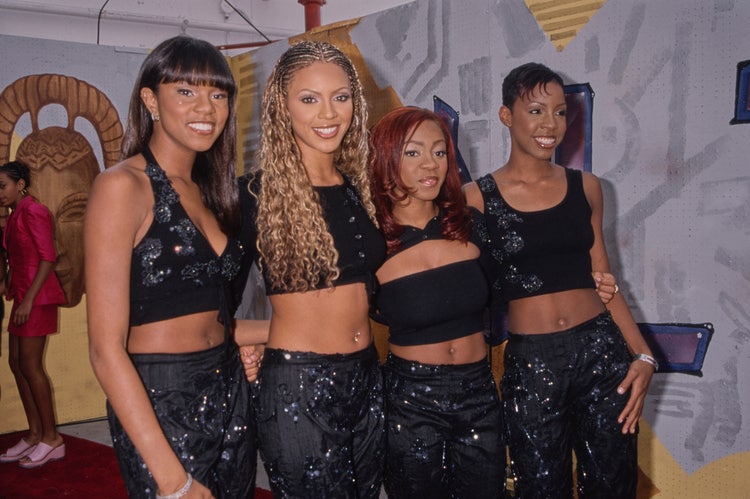
The tenacious girl group made a mainstream name for themselves with the self-titled LP in 1998. They followed up on that success a year later with The Writings on the Wall, boasting huge records like “Bills, Bills, Bills” and “Bug a Boo.” Coordinated outfits were a must, and Mama Tina always made sure her girls — be it the five-member group or DC 3 — were dressed in statement pieces that allowed each of the ladies to shine as an individual and as a unit. Bey and crew gave street but chic and female empowerment, but also romantic vibes all at the same time.
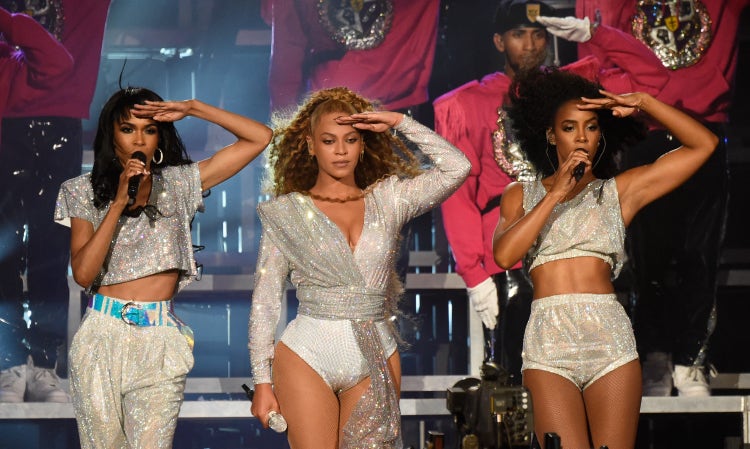
As the lead vocalist on most tracks, Beyoncé showed early signs that she would be a force to be reckoned with in the industry. During this time, she got her first taste of Grammy success alongside group members LaTavia Roberson, LeToya Luckett, Kelly Rowland, and Michelle Williams.
2. Dangerously in Love (2003)
The Houston native ascended the music charts as a solo artist with her debut album. She grew into her own as a singer, tapped into her sensual side, and left countless people “Speechless” with her ballads. The LP also cued the public in on her love life — though, at that time, she played coy about her romance with JAY-Z — with tracks like “Crazy in Love” and “Baby Boy.” The body of work won her Best Contemporary R&B Album at the 46th Grammy Awards. It also marked a style evolution, where glamorous, curve-hugging gowns became the norm.
3. B’Day (2006)
The icon was in her element as a solo star when she delivered up-tempo singles like “Déjà Vu,” “Upgrade U,” and “Get Me Bodied.” Beyoncé was loud vocally (in the best way) and in a lane all her own. The earliest inklings that she would challenge expectations revealed themselves with this sophomore effort. The megawatt entertainer quieted haters who questioned if she could stand beside the likes of Prince, Tina Turner, and Michael Jackson with her stage prowess, too. Whether it was an award show performance or a headlining concert, she executed seemingly effortless live renditions of her hits and choreography. To say that her GOAT status began loading at this point would be an understatement.
4. I Am… Sasha Fierce (2008)
The superstar transcended from an R&B sensation to a bona fide global pop star with swag. Her alter ego, Sasha Fierce, was unveiled as a fueling force behind her unabashed rock star persona. In the age of bandage dresses, this diva donned leotards and a metallic robot-esque glove. The double album showcased her duality as an artist. At times, she is soft and broken-hearted, and at others, she is tauntingly singing about a sweet dream becoming a beautiful nightmare.
5. 4 (2011)
Beyoncé returned from a brief hiatus away from the public eye for a musical rebirth with 4, her fourth studio album. Thus far in her career, it was her most vulnerable, raw, and stripped-down foray into storytelling about love and life. It was a sign of a new chapter in her creative journey, one that ignored the quick singles strategy but stayed true to the long tradition of curating a fully fleshed-out project.
Pop charts wanted EDM mashups, and Bey released the vocally gritty single “1 + 1.” She gave us retro R&B energy with “Love On Top” and seduction vibes with “Dance For You” when fast-paced songs and catchy hooks dominated the radio. In hindsight, she was already controlling what she wanted her legacy to be, not what executives and record sales dictated.
6. Beyoncé (2013)
This was the defining pivot that separated her from her R&B and pop contemporaries. This self-titled project broke all the rules on how to roll out an album. Beyoncé quite literally made the world stop when she unexpectedly released her fifth studio LP. It gave birth to the visual album and established it as a standard approach to satisfying listeners’ appetites, offering the opportunity to stream tracks while simultaneously consuming their cinematic video concepts.
She was “***Flawless,” “Jealous,” “Drunk in Love,” liberated, and grieving unmet desires across 14 tracks (20 if you snagged the platinum edition). The album went multiplatinum and carries her name for a clear reason.
7. Lemonade (2016)
Some might say that Lemonade is her magnum opus, though it was snubbed for the Album of the Year victory at the 60th Annual Grammy Awards, it did win Best Urban Contemporary Album. The gumbo of rock, country, Hip Hop, and R&B hits was a treat on its own, but the cinematic version transformed the thoughtful and intentional body of work into a capstone about the singer's evolution.
8. The Lion King: The Gift (2019) and Black Is King (2020)
By this point, Mrs. Carter had been freed from whatever creative restraints remained. She gave the Black Diaspora the spotlight with a rich reimagining of The Lion King’s story infused with Afrobeats on the album, The Lion King: The Gift. Beyoncé then delved deeper into African history and traditions for the film companion, Black Is King.
“I wanted to present elements of Black history and African tradition, with a modern twist and a universal message, and what it truly means to find your self-identity and build a legacy,” she wrote in an Instagram post about the passion project. A thesis could be written — and let’s be real, several probably were — about the cross-generational legend’s cultural impact.
9. RENAISSANCE (2022)
The BeyHive has described the RENAISSANCE era as legendary, giving everyone a time and a reason to just dance. Plus, the host of songs and visuals that made marginalized communities feel seen and celebrated out loud gave it a deeper impact. Opulence, freedom, inclusion, and self-expression are woven into the DNA of disco, house, and ballroom-inspired tracks like “BREAK MY SOUL” and “ALIEN SUPERSTAR.”
As the first act of a three-part project, it welcomed fans back outside as the world rebounded from the Covid-19 pandemic. The Queen’s influence was evident during her world tour, as hundreds of thousands of supporters were dressed in silver outfits, prompting the fashion industry to acknowledge that Queen Bey sets the trends. “No one man should have all that power,” but Beyoncé sure does.
10. COWBOY CARTER (2024)
Hidden history. Reclamation of country music's deeply melanated roots. Denim. Black cowboy lore. Defying genre expectations. These are all thoughts that come to mind when examining the COWBOY CARTER movement. The songwriter’s audacity to chip away at whitewashed Americana provoked so much discourse that the whole industry had no choice but to take notice.
This sonic dissertation is a pushback against what and who determines what is and isn’t considered “country.” With roots reaching deep into Louisiana, Mississippi, and Texas, she does not need anyone’s permission to be herself or explore her artistry. She unapologetically challenges others to categorize her into a single genre. In her own words, “This ain’t a county album. This is a Beyoncé album.”
Her album eras are more than music. They’re cultural milestones. With each project, she reclaims space, redefines sound, and reminds the world why she continues to dominate the charts, the radio waves, and our hearts.