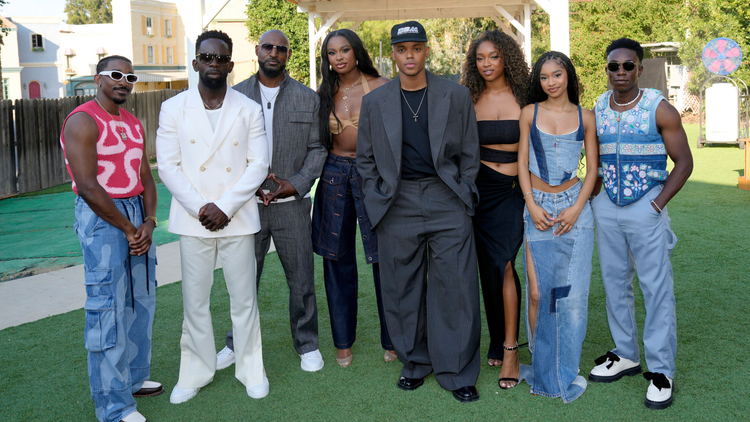
When “Bel-Air” entered its fourth and final season, it was clear that it felt less like a reimagining and more like a generational mirror, reflecting the tension, triumph, and truth of growing up Black in a world that demands everything from you before you even know who you are. When Season 4 premiered on Nov. 26, 2025, with a three-episode rollout, Peacock’s one-hour drama didn't simply pick up where it left off. It arrived with a sharper emotional language, a heavier sense of responsibility, and characters forced to confront what they’ve avoided for three seasons: themselves.
The Banks household has always been a pressure cooker, sitting at the intersection of privilege, identity, and expectation. During the last season, those pressures deepen. Will, who entered Bel-Air as a kid dropped into a world he didn’t ask for, becomes a young man rounding the corner into adulthood from senior year, big dreams, and the fallout of everything he’s survived. Jabari Banks plays him with a confidence that feels earned rather than performed. His swagger is less about bravado and more about clarity: a boy who has finally learned what he refuses to apologize for.
Carlton, played by Olly Sholotan, whose internal battles have long driven some of the show’s most gut-wrenching moments, is inching into something he’s fought tooth and nail for truth. His storyline in Season 4 is not just about consequences, but accountability. And as he and Will face their final year together, we see two Black boys navigating the politics of class, race, masculinity, and friendship with more vulnerability than television typically allows.
Watch Part 1 of the interview below and keep scrolling to see Part 2!
Around them, the men of the Banks universe are all shifting. Jazz, played by Jordan L. Jones, is betting on himself in ways that feel both risky and overdue, tapping into a sense of purpose he used to mask with humor. Geoffrey’s (Jimmy Akingbola) storyline reaches into his past, peeling back the layers of loyalty, survival, and heartbreak that made him the quiet force he is now. And Phil, played by Adrian Holmes, always the patriarch, is finally confronting his own fractures, including the ones he helped create.
In the final season, the show leans deeply into brotherhood, emotional honesty, and the messiness of becoming. And speaking to the cast, it’s clear this was intentional. These characters aren’t simply evolving, but they’re maturing in real time, reflecting back the complicated ways Black men learn to center themselves, confront harm, challenge ego, and rebuild connection.
It’s a show that refuses easy answers, challenges the boundaries of manhood, and celebrates the full spectrum of Black adolescence. As the cast tells REVOLT, the final season isn’t about endings, but it's about evolution. Below, the stars of “Bel-Air” open up about confidence, community, conflict, and the choices that define them
Will feels freer in Season 4. What unlocked that confidence for him — and for you?
Jabari Banks: The traumatic experiences [Will] has been through, especially after the third season, he’s tackling his last year in high school going face-first. I’ve been doing it in my personal life, too. I’ve learned so much from this character, like authentically being myself, whether it’s with acting or music. Doing it full out and not holding back.
Lisa chooses love without losing herself. What’s a moment where you feel she holds her ground?
Simone Joy Jones: It’s a masterclass of standing on business, especially in Episode 8. In the second episode, she joins the dance team and shows she is not who anyone says she is, and I can be anything I want and reinvent myself.
Carlton makes a few “promising choices.” What’s the one choice that marks real growth?
Olly Sholotan: There’s a scene this season where his classmate, Connor, and his friends walk down the hallway, and they have these “Whitecess” shirts on. It’s a play on words for the Blackcess brand that Will and Carlton put together. While they think it’s funny and a joke, there’s something beautiful about watching Carlton check him on it in that moment and say how it’s not funny. It’s an important beat in Carlton’s evolution because in Season 1, we see him let a room full of white boys say the N word. The writers and I’s goal with Carlton is introducing you to someone who is in transition and had to sacrifice so much of himself to fit in. Also, allowing the audience the chance to fall in love with him and root for him. It shows his full circle of growth.
You acted opposite your real-life wife as your on-screen rival — two bosses going head-to-head. What surprised you most about discovering a new “competitive chemistry” with someone who knows you better than anyone else?
Adrian Holmes: When my wife [Caroline Chikezie] and I are home, we do our auditions together, and we read together, and it’s not always easy. We’re both worried about what it's going to be like on set, and it was fantastic. We felt so supported on set. She was a bit nervous, and she told me that, but she said I helped anchor and ground her, and we really had a great time. We had one scene together, and I was so proud to see her do her thing. She came into our world effortlessly and was so smooth. We’re lucky to have had her, and she brought nuance and strength to her role and the show. I’m excited for us to do something like this again. This is the first, but not the last.
Jazz is taking himself seriously, investing in his own dispensary, betting on himself in ways he didn’t before. What’s a foundational skill or resource Jazz is finally learning to build instead of fake, skip, or outsource?
Jordan L. Jones: One of the main things that he’s learning is to love unconditionally, whether it’s in his relationship with Hilary or Charlie's Vinyl and the gentrification of it all. Whatever you love or are passionate about, there’s no money or force that can change that. You’ll see a lot of that in Season 4, but that theme is definitely constant.
We get this beautiful flashback of Geoffrey, Phil, and Viv, which feels like a reminder of humble beginnings, loyalty, and chosen family. What did tapping into Geoffrey’s past unlock about his present-day purpose, especially in how he protects and anchors the Banks family?
Jimmy Akingbola: I think for me, going on that journey with Geoffrey returning to the beginning really opened up an internal dialogue for him to remind him what’s important, and for him, the most important thing is family. But what happens when a big family splits? The word for him is fracture, as I feel like he fractures the family, and he needs to make a choice on how to authentically manage this situation because Phil and Geoffrey are both heads of the household, trying to protect, and they are at a crossroads where there may not be forgiveness after this third act. I think that’s what makes the tension so beautiful and edgy. This isn’t about if they will be okay tomorrow — it’s about life or death in terms of family or friendship. I love that we earned that over the season, but the flashback anchors us for this season.
Jazz, Phil, and Geoffrey represent a different kind of Black manhood — protector, hustler, and patriarch. What’s a truth about Black male friendship or brotherhood you hope audiences pick up on from your trio in Season 4?
Holmes: What we really want people to walk away with is the camaraderie we have, and vulnerability is a superpower we all have. We don’t have to be that pillar that society depicts us to be — you can be strong, but also open and vulnerable. That’s a huge part of humanity and of manhood. I think we do a great job of showing that.
Akingbola: The different versions of who we are as Black people are important, and the show is intentional to show all these different nuances. Jazz is entrepreneurial with his shop, his car, and a good life. Then you have Phil and Geoffrey on different levels, navigating. When it comes to conflict, the show does really well with showing how we can resolve it in a different way without making it seem like we're weak. While Geoffrey and Phil do it well onscreen, Jazz has a great way of showing vulnerability and leading with his heart. I’m so proud of everyone, from the writers, the producers, and Carla [Banks-Waddles].