Key Takeaways
- Bad Bunny’s lyrics often double as political statements, calling out corruption, racism, and colonialism.
- Tracks like “El Apagón” and “LA MuDANZA” spotlight the island’s ongoing struggles with displacement and identity.
- His work continues to dive deeper into themes of resistance, gentrification, and Puerto Rican pride.
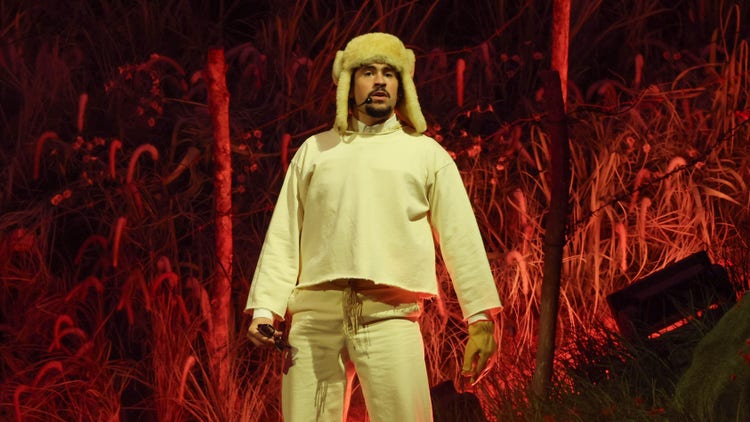
The world has never really seen a superstar quite like Bad Bunny. Beyond earning multiple No. 1 albums, selling out countless stadiums worldwide, and becoming the first Latin male artist to headline the Super Bowl, he's never hesitated to make political statements through his music.
On “Afilando los Cuchillos,” for example, Bad Bunny — alongside Residente and iLe — openly called for Ricardo Rosselló to step down as Puerto Rico’s governor. Elsewhere, the SoundCloud-released “COMPOSITOR DEL AÑO” found him voicing support for Black Lives Matter and speaking out against racism. Some of his strongest political statements also surface on DeBÍ TiRAR MáS FOToS, which many consider among his most outspoken projects.
Below, REVOLT revisited 12 of Bad Bunny’s most politically charged lyrics over the years. Take a look.
1. “Con el gobierno no me envíen na', que esos cabrone' lo van a esconder / Van pa' la calle, pa' fotos na' má', por mi, toditos se pueden joder / Fueron 5,000 que dejaron morir y eso nunca se nos va a olvidar.”
Released seven years after Hurricane Maria devastated Puerto Rico, Bad Bunny’s “Una Velita” finds him reflecting on the island’s political climate and calling out government leaders for “hiding” while people suffered. “They're going out onto the streets just for photos, they can all go to hell / 5,000 were left to die, and that we'll never forget,” he sings, referencing the hurricane’s death toll, which a Harvard study later estimated “at least 4,645 died” despite the official count remaining at 64.
2. “Que Ricardo Rosselló es un incompetente / Homofóbico, embustero, delincuente / A ti nadie te quiere, ni tu propia gente.”
Residente, iLe, and Bad Bunny were fed up with the state of things during Ricardo Rosselló’s time as governor, and on their first collaboration, “Afilando Los Cuchillos,” the trio joined the rest of Puerto Rico in demanding his resignation. “That Ricardo Roselló is incompetent / Homophobic, liar, delinquent,” the YHLQMDLG artist rapped, after calling him a “corrupt man” who exploits his own people.
3. “Debí tirar más fotos de cuando te tuve / Debí darte más beso' y abrazo' las vece' que pude / Ey, ojalá que los mío' nunca se muden.”
Funnily enough, the very last track Bad Bunny recorded for DeBÍ TiRAR MáS FOToS turned out to be its biggest hit. On the chorus of “DtMF,” he sings, “I should've taken more pictures when I had you / I should've given you more kisses and hugs whenever I could / Ayy, I hope my people never move away.” Beneath the massively popular lyrics, Bad Bunny encouraged listeners to hold onto their memories and appreciate every moment, especially considering how many Puerto Ricans have found themselves separated from home.
4. “Black Lives Matter / Que en paz descanse Kobe / 2020 y el racismo es peor que el COVID / Un negro con pistola, ya eso e' un criminal / Pero un blanquito se la engancha y dicen que e' un hobby.”
Released in 2020, “COMPOSITOR DEL AÑO” mirrored the turbulence that many — if not most — of us experienced that year. In the lyrics mentioned above, Benito voiced support for Black Lives Matter in the wake of George Floyd’s death, paid tribute to Kobe Bryant following his tragic death, and spoke about racism feeling almost more overwhelming than the COVID-19 pandemic. Whether you agree with him or not, there’s no denying that Bad Bunny tackled a wide range of political issues on the record.
5. “Uh, uh, uh, ojalá no conozca otra como tú / Uh, uh, uh, tú ere' mala, te fuiste como la luz.”
Although “PIToRRO DE COCO” describes missing an ex during the holiday season, Bad Bunny still found space to call out the island-wide power outages that often affect Puerto Rico. “Hope I never meet another like you,” he sings on the bridge. “You're bad, you left just like the lights do.”
6. “Se oye al jíbaro llorando, otro más que se marchó / No quería irse pa' Orlando, pero el corrupto lo echó.”
“You hear the jíbaro crying, another one who's left / He didn't want to leave to Orlando, but thе corrupt one pushed him out,” Benito sings at the close of the opening verse on “LO QUE LE PASÓ A HAWAii,” arguably one of the most political songs on his sixth studio album. For those unfamiliar, a "jíbaro" refers to a Puerto Rican farmer or rural laborer. In other words, Bad Bunny speaks to how corruption has forced many Puerto Ricans from their homes on the island to relocate to the mainland United States.
7. “Quieren el barrio mío y que abuelita se vaya / No, no suelte' la bandera ni olvide' el lelolai / Que no quiero que hagan contigo lo que le pasó a Hawái.”
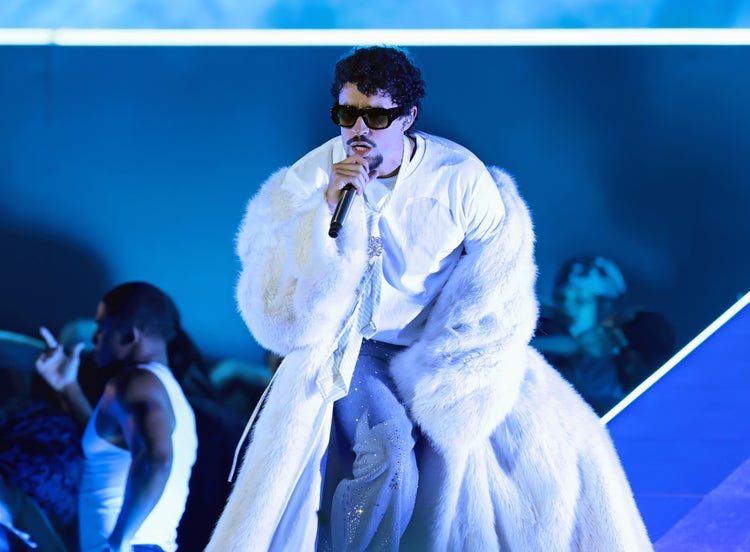
“They want my neighborhood and grandma to leave / No, don't let go of the flag nor forget the lelolai / 'Cause I don't want them to do to you what happened to Hawaii,” Bad Bunny sings on the chorus of “LO QUE LE PASÓ A HAWAii.” In those lines, he’s called out the influx of often white, wealthy Americans relocating to Puerto Rico and pushing native residents out in the process. By invoking Hawaii, Benito drew a parallel to displacement brought on by gentrification.
8. “A mí me importa un b**ho lo que a ti te vale v**ga / Aquí mataron gente por sacar la bandera / Por eso es que ahora yo la llevo donde quiera.”
Between the spoken intro and Benito wearing his Puerto Rican pride from start to finish on “LA MuDANZA,” it’s hard to imagine a better closer for what many consider his most political album. “Here, they killed people for waving the flag / That's why, now, I carry it everywhere,” he sings in reference to Law 53 of 1948 in Puerto Rico (also known as the Gag Law).
9. “Si mañana muero, yo espero que nunca olviden mi rostro / Y pongan un tema mío el día que traigan a Hostos / En la caja la bandera azul clarito.”
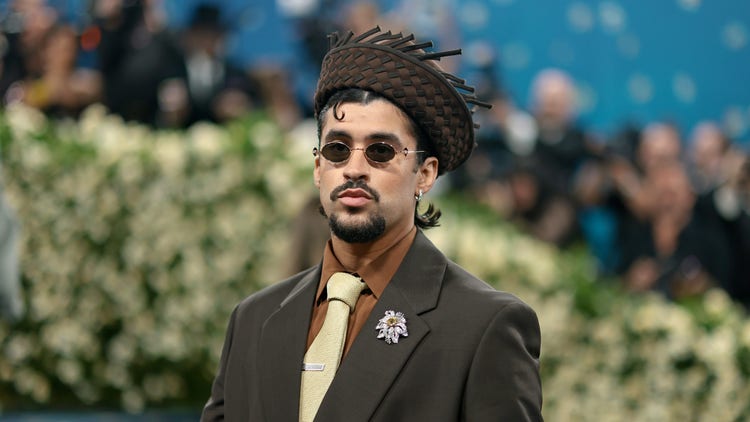
Also on “LA MuDANZA,” Bad Bunny mentions Puerto Rican philosopher and educator Eugenio María de Hostos, who famously requested that his body — which was buried in the Dominican Republic upon his death — only return to an independent Puerto Rico. “If I die tomorrow, I hope they never forget my face / And play one of my songs on the day they bring Hostos,” he says at the start of the song’s final verse.
10. “Maldita sea, otro apagón / Vamo' pa' lo' bleacher a prender un blunt / Antes que a Pipo le dé un bofetón.”
Puerto Rico’s islandwide blackouts come up once again on Bad Bunny’s “El Apagón,” which quite literally translates to “The Blackout.” On the track, he also name-drops Pipo, referring to former Puerto Rico Governor Pedro Pierluisi. Plus, who can forget the politically charged outro, sung by Gabriela Berlingeri: “No me quiero ir de aquí / Que se vayan ellos, que se vayan ellos / … / Lo que me pertenece a mí se lo quedan ellos / … / Esta es mi playa, este es mi sol / Esta es mi tierra, esta soy yo.”
11. “El pueblo no aguanta má' injusticia' / Se cansó de tus mentira' y de que manipulen las noticia' / Ey, ey, to' los combo', los caserío', somo' nuestra milicia.”
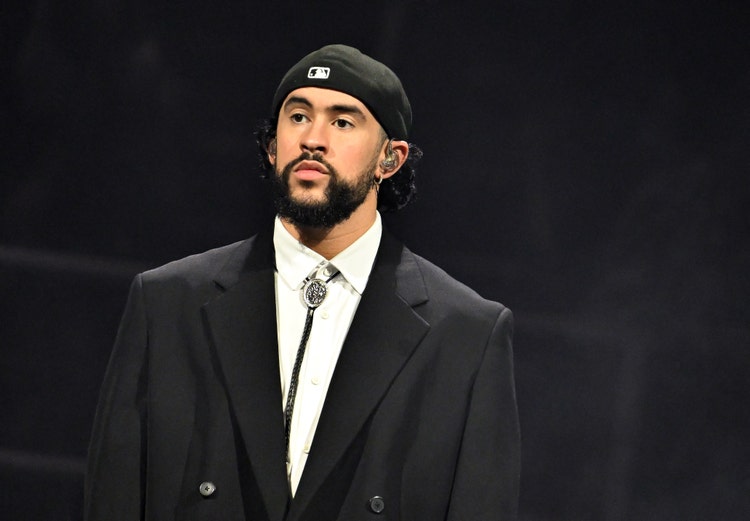
At the top of Bad Bunny’s verse on “Afilando Los Cuchillos,” he delivered even more politically charged lines: “The people cannot stand more injustices / They got tired of your lies and how you manipulate the news / Hey, hey, all the groups, all the hoods, we are our own militia.” The Latin superstar really didn’t hold back on how he and the rest of Puerto Rico felt about Rosselló.
12. “En mi vida fuiste turista / Tú solo viste lo mejor de mí y no lo que yo sufría / Te fuiste sin saber el porqué, el porqué de mis herida’.”
The consequences of tourism have always been a hot topic in politics. On "TURiSTA," Benito directly speaks to those who show up to Puerto Rico unaware or uninterested in the daily struggles that locals endure. He sings, “In my life, you were a tourist / You only saw the best of me and not what I was suffering from / You left without knowing the reason, the reason for my wounds.”