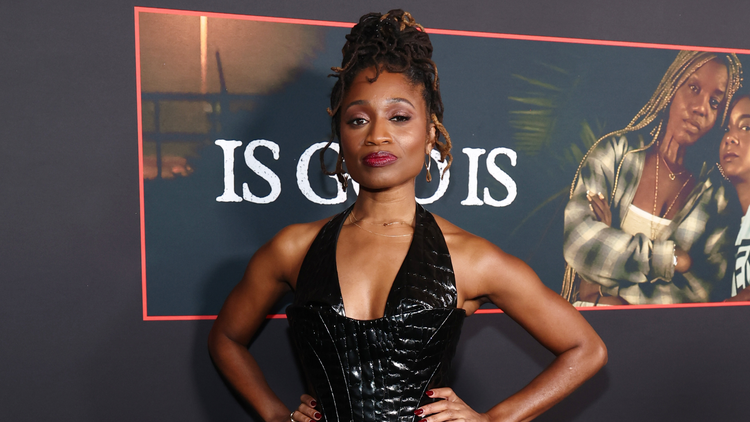
Before Is God Is became a film, it built a devoted following onstage after premiering at Soho Rep and earned major acclaim for its daring vision. Written by Aleshea Harris, the story challenged audiences with its mix of grief, fury, dark humor and mythic storytelling. Years later, in 2026, Harris brought that same world to the big screen in her directorial debut, expanding a cult favorite into a cinematic revenge tale that still keeps its emotional center intact.
At the heart of Is God Is are twin sisters Racine, played by Kara Young, and Anaia, played by Mallori Johnson. Scarred by a violent childhood act that changed their family forever, the sisters are summoned by their mother, Ruby, portrayed by Vivica A. Fox, and sent on a mission to confront the father who abandoned them. What follows is part road trip movie, part thriller and part meditation on what justice really costs.
The movie also features a sharp supporting cast including Sterling K. Brown, Janelle Monáe, Erika Alexander and Mykelti Williamson. Behind the scenes, Harris also serves as a producer alongside Tessa Thompson, Kishori Rajan, Riva Marker and Janicza Bravo, helping bring her vision to life.
What makes Is God Is stand out is how it refuses to flatten Black women into familiar stereotypes. Racine and Anaia carry the same trauma in very different ways: one hardened by pain, the other still searching for meaning. Harris uses their journey to ask larger questions about rage, healing, loyalty and whether revenge can ever bring peace.
In this exclusive conversation with REVOLT, the award-winning playwright opens up about translating her acclaimed play to film, using the camera to uncover new layers of the twins’ relationship, building the movie’s striking visual language and what directing her first feature taught her about trust, collaboration and stepping fully into her voice.
I just want to say that Is God Is is an incredible movie, from the casting to the storyline, I thoroughly enjoyed it.
Thank you.
You created this story as a play first. What did you learn about it once you brought it to the screen?
To bring it to the screen, I had to understand more deeply different aspects of the characters, right? I have access to all these different tools. I have cameras that can sort of zoom in, and things we can't do on the stage. I have different locations I can take them [to]. So, there were, like, corners of the story that aren't given voice in the play that needed to rise to the surface on the screen. Things that happened to the twins that weren't discussed before, their point of view on each other. I made a lot of discoveries about how it feels for Anaia to have had a life of watching her sister, the fighter, and also how it feels for Racine to watch her sister be harmed the way that she's been harmed, right? So, yeah, I just discovered different things. I also added a couple of characters. There are two characters in the movie who were not in the play just to help with the machine of the movie. I thought it was really useful to add some new folks, and it was a lot of fun to do.
This film has such a distinct look and feel. How did you build that visual world while keeping the emotional heart of the play intact?
Yeah, so I tried to allow them to work hand in hand so that the visual at the beginning... I remember telling the director of photography I wanted it to feel kind of flat. Like, it's like an effed up fairy tale, is what I've said. So, it feels kind of flat until the twins bring us in, until we meet them. So really, I think about what does the visual do to help deepen the story, to help us to understand these characters with more nuance? And it was making use of our incredible locations, right? We shot it in New Orleans, but how can we tell the story of these different spaces that have different meanings for the twins emotionally, right? So, lighting… The world starts off quite compressed and small and dark and in shadow. And as the movie goes on, it opens up for them. It gets lighter. So, we talked about how the colors would shift, how the lighting would shift as the story progressed, things like that.
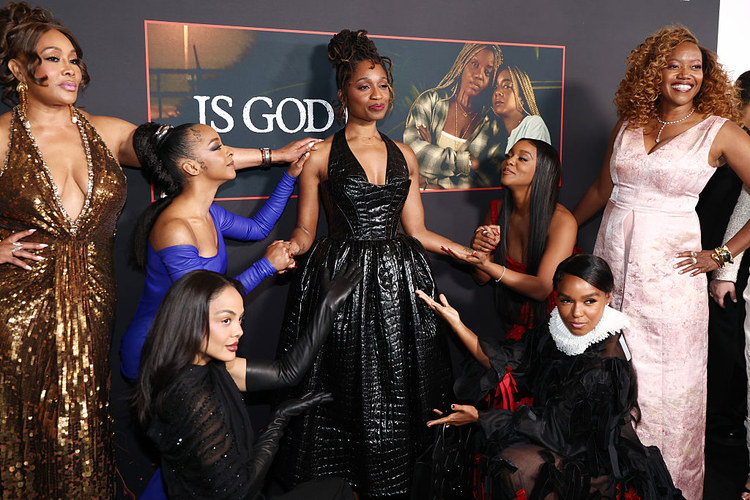
We’ve seen revenge stories before, but this one feels deeply personal and layered. It doesn’t lean into the usual stereotypes placed on Black women. What did you want to explore about justice through these sisters?
I think I understood that there's a way that people aren't interested in Black women, and certainly not in our anger, and in giving us the full measure of our humanity. So, I wanted to see and feel justice expressed through these folks who had been harmed, which we don't always see in the world. I just needed that as medicine for myself. And I wondered if other people could use it as well. So, I'm thinking about justice, but the cost of justice, I guess, right? What is the impact on the person who's carrying out the act of revenge, and how to be okay in the face of harm?
What did making your first feature teach you about yourself as a director?
Wow. Well, I hadn't done much directing prior to this, and I certainly had not directed a movie or had anything to do with a movie. So, what I learned was… I was affirmed. I mean, it was very empowering to have so many people who cared what I thought about how the story should be expressed. And I learned about the power of collaboration, about what it means to sort of hand a task to another person and let them just handle it, and the importance of being able to communicate with them so that they feel empowered to go and do their thing.