Key Takeaways
- Uncle Nearest was placed into court-ordered receivership after its primary lender alleged loan defaults exceeding $108 million.
- The court-appointed receiver ended Fawn Weaver’s employment and removed Keith Weaver from involvement while investigating alleged financial misconduct.
- A pending counterclaim accuses the lender of negligence, and a potential asset sale or Chapter 11 filing could determine the company’s future.
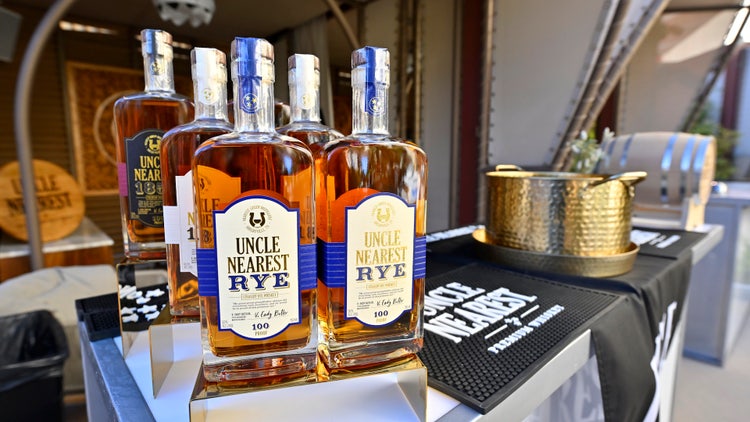
Fawn Weaver built her spirits brand Uncle Nearest by restoring Nathan “Nearest” Green to his place in American history. Green, a formerly enslaved man now recognized as the first known African American master distiller, taught the young Jack Daniel how to make whiskey and later oversaw production of the adult beverage at Daniel's own distillery operation. Named in Green’s honor, Uncle Nearest grew into a celebration of Black history, entrepreneurship and ownership within an industry that had rarely centered those stories.
That makes the company's current crisis especially striking. Uncle Nearest is now at the center of a widening financial and legal battle involving its founders, former chief financial officer, primary lender, and a court-appointed receiver.
The conflict began publicly in July 2025, when Farm Credit Mid-America sued Uncle Nearest and related companies. The lender alleged that the businesses violated their loan agreements and accumulated debts exceeding $108 million. A federal judge later placed the companies into receivership, meaning control of their operations and assets was temporarily handed to Phillip G. Young Jr. while the lawsuit continued.
The case entered a new phase in summer 2026. Young ended Fawn Weaver’s employment and Keith Weaver’s involvement with the company effective June 1. On July 7, the receiver filed a counterclaim accusing Farm Credit of missing warning signs as former CFO Michael Senzaki allegedly submitted inaccurate financial information and unauthorized requests to borrow money from the company’s credit line. Farm Credit moved to dismiss the counterclaim on July 17.
Those filings have complicated the public account of how Uncle Nearest reached this point. The Weavers and the receiver have accused Senzaki of serious financial misconduct, while the receiver also argues that Farm Credit failed to properly review the borrowing requests. Farm Credit disputes that account and says Uncle Nearest was responsible for overseeing its own CFO and financial records.
The allegations do not settle who is ultimately responsible. Young said his continuing investigation could produce legal claims against Senzaki, Fawn Weaver, Keith Weaver, and entities controlled by former company officials. Here are seven things the available records show about the widening case.
1. The receivership followed alleged loan defaults and concerns about Uncle Nearest’s assets
Farm Credit filed its lawsuit on July 28, 2025, alleging that Uncle Nearest Inc., Nearest Green Distillery Inc., and Uncle Nearest Real Estate Holdings LLC breached a credit agreement and related loan documents. The lender also asked the court to appoint a receiver to oversee the companies while the case proceeded.
During an August 2025 hearing, Farm Credit presented evidence that it showed the companies had defaulted on contractual obligations and might lack enough assets to satisfy a judgment if the lender prevailed. The defendants largely focused their response on the argument that receivership would cause unnecessary harm and that Farm Credit could be protected through less intrusive measures. The court granted the lender’s request and ultimately selected Young, who was proposed by the defendants, to serve as receiver.
The receivership was therefore based on the court’s assessment of the loan dispute and potential risk to the companies’ assets. It was not a court finding that Senzaki or another individual committed fraud.
2. Fawn Weaver’s employment and Keith Weaver’s involvement ended June 1, 2026
Young disclosed the Weavers’ removal in his fourth quarterly report, filed July 10, 2026. He said he terminated their employment and involvement with the company, effective June 1, 2026, restricted their access to facilities and systems, and returned their personal property. Keith separately maintained that he was not an employee, making it more precise to say that Fawn’s employment ended while Keith was removed from further involvement.
The receiver attributed the decision to several factors detailed in the report. He said litigation initiated by the Weavers created confusion among employees, vendors, and distributors, distracted the receivership team, and threatened operations and the effort to preserve the value of the company’s assets. Young reported that business operations became smoother after their departure.
Their removal was not a judicial finding that either founder committed the alleged financial misconduct. However, the same report says the receiver believes the estate likely has viable claims against Fawn, Keith, Senzaki, and associated entities. Young said he does not expect to file those actions until his forensic investigation is complete.
3. Michael Senzaki was accused of falsifying records and concealing the company’s true finances
Fawn and Keith Weaver and Grant Sidney Inc. sued Senzaki in Tennessee in December 2025. Their civil complaint accused the former CFO of manipulating financial information, concealing liabilities, inflating inventory values, forging corporate records, and diverting company assets. The receiver later intervened in that case after the federal receivership expanded to include Grant Sidney, Inc.
The receiver’s July counterclaim against Farm Credit contained additional allegations. It said Senzaki admitted during interviews with third-party investigators that he falsified monthly reports beginning in 2022, placed Fawn’s signature on corporate documents without permission, diverted equity interests, and fabricated board minutes. The filing also accused him of rerouting vendor payments through companies he controlled and concealing millions of dollars in outstanding bills.
Those claims appear in pending civil litigation and have not been established through a final court ruling. Young’s July 10 report stated that no answer was filed in the Tennessee case against Senzaki as of that date.
4. The receiver says Farm Credit should have recognized several warning signs
The dispute centers heavily on Uncle Nearest's revolving credit facility, which began at $35 million and increased to approximately $66.98 million by August 2023. Between July 22, 2022, and Aug. 2, 2023, Senzaki allegedly submitted 28 separate draw requests totaling nearly $67 million. A draw request asks a lender to release money available through an existing credit line.
According to the receiver, Senzaki was the only person who signed the requests, prepared the supporting financial information, and regularly communicated with Farm Credit about the facility. Young alleged that the lender approved the withdrawals without independently confirming them with Fawn or another company leader.
The counterclaim also said Farm Credit failed to sufficiently verify inventory reports and continued processing requests after an inspection allegedly showed that the company’s borrowing base was overstated by approximately $21 million. Young further alleged that Farm Credit collected close to $400,000 in origination and amendment fees as the revolving facility expanded. He characterized the lender’s conduct as negligence, gross negligence, and willful blindness.
These remain the receiver’s allegations. They do not erase Uncle Nearest’s acknowledged defaults or establish that Farm Credit is legally responsible for the debt.
5. Farm Credit says it did not need to independently verify the company's statements and is being unfairly blamed for Uncle Nearest's alleged internal failures
Farm Credit filed its motion to dismiss on July 17, 2026, and strongly disputed the receiver’s account. The lender argued that it relied on documents that appeared valid and were submitted by an authorized company officer. It says the counterclaim improperly attempts to make Farm Credit responsible for alleged fraud and inadequate financial oversight inside Uncle Nearest.
The motion stated that an April 15, 2025, forbearance agreement included a broad release covering claims related to earlier activity under the loans. Since the withdrawals, credit increases, and cited inspection all occurred before that date, Farm Credit contended that the Uncle Nearest companies waived their ability to bring the counterclaim.
Farm Credit also said its agreement with Uncle Nearest did not require the lender to independently verify statements and reports provided by authorized officers. The lender pointed to Fawn’s signatures on amendments increasing the revolving facility as evidence that she knew the company had access to larger amounts. It further argued that Senzaki’s alleged conduct occurred while he was acting as the company’s CFO and therefore cannot simply be separated from Uncle Nearest’s own responsibility.
The motion asked the judge to dismiss the receiver’s negligence and gross-negligence claims with prejudice, launching a waiting game for the court's ruling on the request.
6. The federal subpoenas establish that authorities requested documents, but little else
Young’s quarterly report disclosed subpoenas for documents from the U.S. Attorney’s Office for the Southern District of New York and the Securities and Exchange Commission. He added that he and his professional team were working to comply with both requests.
The filing did not disclose the documents requested, the conduct authorities may be examining, or the identity of any potential target. It also didn't announce an indictment, criminal charge, SEC enforcement action, or finding that a particular person violated the law.
The public information therefore established that federal authorities sought records connected to the receivership. It does not establish that Senzaki, the Weavers, Farm Credit, or Uncle Nearest itself was accused by either agency of a specific federal offense.
7. A sale or receiver-authorized Chapter 11 could determine the brand’s future
Young reported that he entered into a letter of intent to sell substantially all assets associated with Uncle Nearest’s operations to an unidentified third party. The parties were negotiating an asset purchase agreement, and the receiver said he hoped to submit a formal sale notice within 30 to 60 days of his July 10 report. The filing does not disclose the proposed buyer or purchase price.
The receiver could complete the sale through the current federal court case or file a planned Chapter 11 bankruptcy and ask a bankruptcy judge to approve it. That would be different from the bankruptcy cases Fawn filed earlier, which were dismissed because the court ruled that Young, as receiver, had control over major decisions for the company.
Young said Uncle Nearest remains insolvent and that selling the company as an operating business is necessary to preserve its value. He believes a buyer could attempt to rehabilitate the brand by providing new capital and different financial and operational leadership.