Key Takeaways
- Tyla is pushing back against industry expectations, staying rooted in her African musical influences.
- She explained how she is seen as coloured in South Africa but identified as Black in the U.S., highlighting cultural differences.
- Her recent interview reflects her effort to clarify her identity and maintain creative control of her music career.
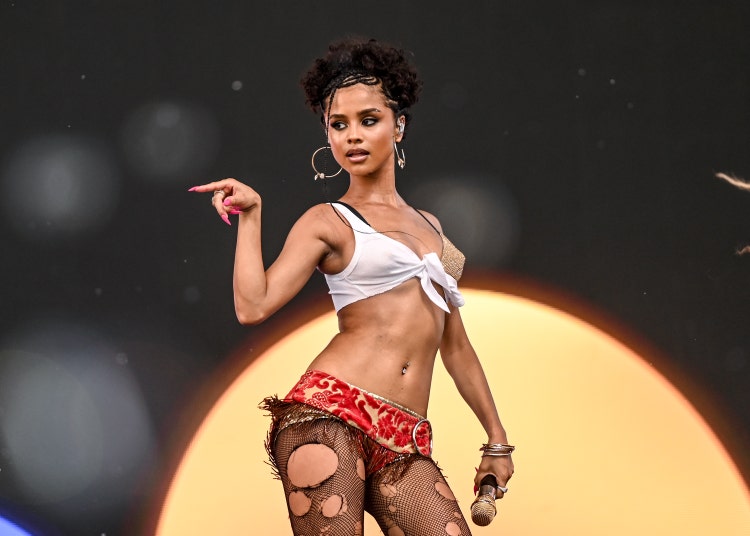
Tyla is making it clear that no one else defines her — not in music, and not in identity. As she prepares to release her sophomore album following her 2024 self-titled debut, the South African star continues to shape her sound and story on her own terms. She unveiled her latest single, “Bliss,” in April on stage at Coachella.
In a new interview with Variety, the South African star reflected on the experience of becoming a seemingly overnight sensation. The songwriter signed to Epic Records at just 19 years old in 2021. “When I got signed, a lot of opinions came in, and it was a very overwhelming experience,” she said. There were those who wanted her to embrace a more mainstream pop sound. The process of workshopping that style of songs was not the vision she had hoped for. She recalled that the ideas “didn’t feel like me at all” and “were the most generic compositions you could ever think of.”
“I remember being in my hotel room, and my managers were calling me. ‘Come down, we need to cut the song,’" she said of one instance. “I was crying and thinking, ‘This is not what I want. I didn’t get signed to do this,’” she continued, adding, “They had to [coax] me out of that room. But I think through doing that, I realized how much more I love African music. It made me more persistent in keeping my ideas.”
What she instead delivered was “Water,” a sonic introduction that made Tyla stand out among her peers and amplified the sounds of Amapiano music. The breakout track earned her a Grammy for Best African Music Performance and created a viral dance craze on TikTok, the undeniable Gen Z sign that she had arrived at superstardom. But weaving her culture into music is just one way that she maintains control of her own narrative.
Tyla addresses racial identity — is she Black or coloured?
The answer is both. Tyla was at the center of a debate about her racial identity in 2023. Back home, she is considered “a coloured South African.” Her ethnic heritage is a medley of Zulu, Irish, and Mauritian-Indian roots, but she is viewed as Black by American fans.
Amid the discourse, she released a statement to explain, “I don’t expect to be identified as coloured outside of [South Africa] by anyone not comfortable doing so because I understand the weight of that word outside [of South Africa]. But to close this conversation, I’m both coloured in South Africa and a Black woman.”
Today, she remains proud of every part of her heritage. “That [controversy] was really confusing for me,” she told Variety. “I understood both sides of the story, but I was left asking, ‘Ok, but what do I do now?’ When who you are is challenged, especially when it’s all you’ve ever known, it shakes you. You want to stand your ground, because if you don’t, someone else will try to define it for you.”
Tyla’s refusal to let anyone else tell her story — whether by genre or by identity — is a reminder that global artists don’t have to conform to expectations. As she continues to rise, the singer is making space for more nuanced conversations about culture, race, and self-definition.