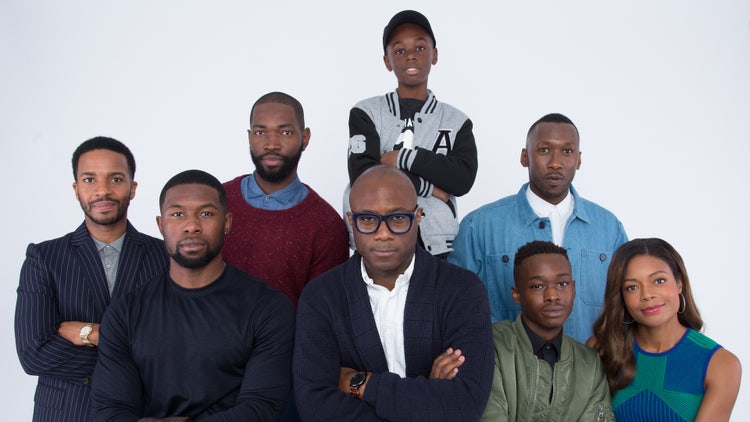
Barry Jenkins' 2016 film Moonlight follows Chiron, a young Black man growing up in Miami's Liberty City neighborhood, through three stages of his life. Alex R. Hibbert played him as a child, Ashton Sanders portrayed him as a teenager, and Trevante Rhodes took over as an adult. Jenkins adapted the story from Tarell Alvin McCraney's "In Moonlight Black Boys Look Blue," drawing on experiences that both creators had during their childhoods in Miami.
The film earned three Academy Awards, including Best Picture (unrelated, that crazy mixup during the telecast!) and Best Adapted Screenplay, but its significance extends beyond Hollywood recognition. Through Chiron's relationships, personal struggles, and gradual understanding of himself, Moonlight challenged familiar ideas about Black manhood. Check out eight ways the film approached masculinity, identity, and human connection from a different perspective. NOTE: If you haven't yet seen the film, make sure you press play before reading through the spoilers below.
1. Showing vulnerability without treating it as weakness
Hollywood frequently celebrates male characters who respond to danger with aggression. Chiron offered another perspective: As a child, he ran from boys who bullied him, struggled to communicate his feelings, and often kept his thoughts to himself. Rather than turning his silence into a character flaw, Jenkins gave audiences time to understand the emotions behind it.
Chiron's fear and uncertainty became essential parts of his story. His experiences showed that a Black boy can feel overwhelmed, struggle with confidence, or need protection without losing his dignity. The film gave those emotions the attention that action and confrontation often receive in traditional stories about men.
2. Presenting a complicated Black father figure through Juan
Mahershala Ali's character, Juan, became an important mentor to Chiron despite having no family connection to him. He offered the young boy guidance, welcomed him into the home he shared with Teresa (Janelle Monáe), and reassured him that he had nothing to be ashamed of as he began questioning his sexuality.
However, Juan also sold drugs to Chiron's mother, Paula (Naomie Harris), whose addiction caused tremendous pain at home. When Chiron questioned him about his involvement, Juan admitted the truth without attempting to justify his actions. The feature allowed him to demonstrate genuine compassion while holding him accountable for the harm connected to his livelihood. His contradictions made him a complicated father figure rather than a simple hero or villain.
3. Placing Black queer identity at the center of the story
Chiron's sexuality played a central role in his development, but the movie approached the subject through his everyday experiences. His initially shaky relationship with Kevin gradually developed into something intimate, culminating in a private encounter on the beach during their teenage years. Their conversation and physical closeness allowed Chiron to explore feelings he struggled to express.
Moonlight treated his attraction to another young man with care, allowing the characters to experience affection, uncertainty, and desire without turning their relationship into a spectacle. Chiron's sexuality remained part of a larger story about his life, giving Black queer identity the depth and attention that mainstream films often overlook.
4. Showing the lasting consequences of bullying
Chiron experienced harassment throughout his childhood, with school bully Terrel becoming one of his most persistent tormentors. The situation reached a breaking point when Terrel pressured Kevin into punching Chiron while other boys watched and eventually joined the attack. Kevin's involvement made the incident especially painful because Chiron previously trusted him.
Chiron eventually retaliated by striking Terrel with a chair at school, prompting police to take him into custody. The sequence showed how repeated humiliation and violence can push someone toward destructive decisions. Instead of celebrating Chiron's retaliation as a victory, the feature film revealed the consequences of an environment that offered him few opportunities to feel safe.
5. Questioning the idea that masculinity requires toughness
When Chiron returned as an adult, his appearance changed dramatically. He was known as Black, wore gold fronts, had a muscular build, and sold drugs in Atlanta. His lifestyle and intimidating appearance resembled those of Juan, the man who once protected him.
Despite his transformation, Chiron still carried the emotional struggles he experienced growing up. During his reunion with Kevin, his guarded behavior gradually gave way to the sensitivity that audiences recognized from his childhood. His transformation highlighted the difference between appearing powerful and feeling secure. By showing how Chiron built a harder exterior, Jenkins examined the pressure men face to hide vulnerability behind a convincing image of toughness.
6. Making Black male tenderness part of the story
One of the feature's most memorable scenes showed Juan teaching young Chiron how to swim. Juan held him in the ocean, supported his body, and encouraged him to trust the water. The interaction presented physical affection and patient guidance as natural expressions of care between Black males.
Years later, Kevin offered another example when he prepared a meal for Chiron at the diner where he works. Their reunion unfolded through conversation, shared memories, and the simple act of feeding someone. Both scenes challenged the idea that meaningful relationships between Black men must revolve around competition, conflict, or emotional distance. Jenkins gave ordinary acts of kindness the same importance that other films reserve for dramatic confrontations.
7. Exploring how family and environment influence identity
Chiron grew up surrounded by difficult circumstances, including poverty, his mother's drug addiction, and the absence of his biological father. Those experiences shaped his relationships and how he understood himself. The film also revealed how people within his community offered support. Teresa continued welcoming him into her home even after Juan died, providing stability during an increasingly difficult adolescence.
As an adult, Chiron visited Paula at a treatment center, where she acknowledged her failures as a parent and apologized for not giving him the love he needed. Their conversation addressed the emotional damage that can follow someone long after childhood. Drawing on the personal histories of Jenkins and McCraney, the feature presents a community with both hardship and compassion, without reducing its residents to stereotypes.
8. Rejecting the traditional Hollywood ending
Rather than ending with revenge, a major victory, or a neatly resolved romance, Moonlight brought Chiron and Kevin together for a deeply personal conversation. During their reunion, Chiron admitted that Kevin remained the only man who touched him intimately and that he hadn't experienced similar closeness with anyone since their teenage encounter.
Kevin comforted him, and Chiron finally allowed someone to hold him without hiding behind the tough image he developed. The movie left their future uncertain and offered no immediate solution to the problems Chiron faced. Instead, Jenkins ended the story with a moment of honesty and emotional openness, allowing Chiron to experience the affection he struggled to accept throughout his life.