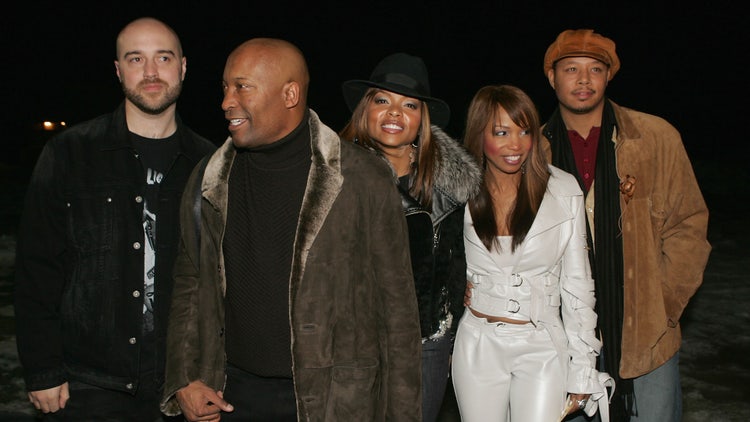
When Hustle & Flow premiered at Sundance, it wasn’t just another indie drama. Craig Brewer’s Memphis-set story of a pimp turned rapper became a breakout that would take Hip Hop to the Oscars. What began with a stolen car and a struggling filmmaker’s inheritance ended with Three 6 Mafia walking away with Academy gold. It’s a journey as unlikely as the story it told.
How Craig Brewer’s story took shape in Memphis
Brewer traced the origins of Hustle & Flow back to his own Memphis life. Speaking at the Austin Film Festival, he recalled when his sister-in-law’s car was stolen and reduced to a stripped skeleton at the impound lot. Watching her cry over the loss, he imagined what would happen if the thief witnessed her pain. It became the seed of a story about survival, desperation, and redemption through music.
With a $20,000 inheritance after his father’s sudden death, Brewer made his first feature, Poor and Hungry. Producer Stephanie Allain saw the promise in it and passed his next script to John Singleton, who agreed to finance Hustle & Flow. Singleton also insisted Brewer direct. “Look what you did with 20 grand,” he told him. “We’ll just give you a little more money.”
Casting Terrence Howard and Ludacris
Terrence Howard wasn’t an obvious lead at first. Brewer admitted he worried Howard’s subtle, scene-stealing style might not translate as a protagonist. He told Howard directly, “You’re the lead now. You can’t do that on every scene.” Howard responded by delivering both restraint and explosive energy, like the scene where DJay yells, “You think I look like a pawn shop?”
Ludacris, meanwhile, almost passed on the role of Skinny Black. In an interview with Fuse, he said, “I was like, ‘I’m not going to be a rapper in a movie. I’m already a rapper.’ The point in acting is to be somebody different.” Singleton kept urging him to read the script, and when he finally did, Ludacris realized the character wasn’t like him at all.
Making Hustle & Flow in Memphis
The production reflected both Brewer’s roots and Memphis’ realities. Actress Taryn Manning told “One Bad Movie” the cast’s first table read was “the most incredible” she’d ever experienced. But the shoot wasn’t without chaos — she also recalled returning one morning to find their trailers looted: “They took everything but the shell.”
Brewer leaned on Singleton’s mentorship throughout filming. When Brewer wanted elaborate setups, Singleton told him to finish key scenes in three shots, a discipline that pushed the director to find efficiency. Howard also improvised humanity into DJay. During one scene, Brewer expected him to sit down at the piano with a baby, but the child started crying. Howard comforted the infant in character (“Cut them tears s**t out, man”). These lines that weren’t in the script, but made the moment more authentic.
The music carried equal weight. Brewer compared the recording sequences to Amadeus, telling the Austin audience he wanted to show “line by line” how rap songs are built so even viewers unfamiliar with Hip Hop could connect to the creative passion. The result was raw energy in studio scenes that led to “Whoop That Trick” and the Oscar-winning “It’s Hard Out Here for a Pimp,” anchored by Taraji P. Henson’s fragile but determined vocals.
Sundance breakout and Oscar milestone
Hustle & Flow won the Audience Award at Sundance, and Paramount distributed it nationwide. Howard earned an Academy Award nomination for Best Actor, while Three 6 Mafia’s raucous Oscar performance made history as the first Hip Hop group to win Best Original Song. Castmate Anthony Anderson later said recording those tracks felt as electric for the actors as it did for audiences: “The excitement and the energy… That’s what it felt like.”
Behind the acclaim, not everyone seemed to reap every reward deserved. Manning has long claimed she never received her promised producer points. Howard told Memphis’ WREG News Channel 3 he made only $12,000 upfront and $1,000 in royalties, with Paramount pocketing the performance rights. “Actors are struggling,” he said, linking his frustrations to broader industry inequities. Singleton and Paramount settled a dispute after the former accused the latter of owing him $20 million.
Legacy and the “Empire” connection
The film’s legacy extends beyond its Sundance-to-Oscars run. A decade later, Howard and Henson reunited as Lucious and Cookie Lyon on FOX’s “Empire,” prompting widespread fan theories that the show was secretly a continuation of Hustle & Flow. Reddit threads debated whether DJay and Shug had simply reinvented themselves in New York as the heads of Empire Records (a legal issue regarding Howard and the show’s logo added to that).
All-in-all, Hustle & Flow remains a rare film that married indie storytelling with Hip Hop authenticity. It was forged in Memphis’ clubs and neighborhoods, elevated by Singleton’s backing, and immortalized by a soundtrack that reached the Academy. For Brewer, who once feared he had ruined the film in the edit bay, its endurance proves otherwise. It was a story of hustling to create, and it flowed into history.