Key Takeaways:
- Singleton’s first film helped redefine what Black stories could look like on the big screen, opening doors for future filmmakers.
- The movie’s depiction of South Central LA, fatherhood, and systemic violence remains powerful and relevant.
- Singleton’s early success came with challenges, fueling his later push for more authentic Black narratives in Hollywood.
A long time has passed since the release of Boyz n the Hood, but the film remains a cultural milestone — not only for its unflinching portrayal of life in South Central Los Angeles, but for the way it radically altered the landscape of American cinema. John Singleton, then just 23 years old and fresh out of USC's School of Cinematic Arts, wrote and directed what would become a defining work of Black storytelling. A deeply personal, politically charged coming-of-age story, Boyz n the Hood made Singleton the first Black filmmaker to be nominated for the Academy Award for Best Director, and the youngest ever to receive the honor.
Singleton’s vision: A personal story rooted in South Central
As Singleton himself told the BBC, “The picture is really just a reflection of my experiences at that time, growing up in Los Angeles.” He was raised navigating two different homes — his mother’s in Inglewood and his father’s in South Central — and that duality forms the emotional core of the film. The story centered on Tre Styles (Cuba Gooding Jr.), a smart teen sent to live with his father, Furious (Laurence Fishburne), a stern but loving man who taught his son to navigate the dangers and complexities of urban life with dignity, integrity, and purpose. Around Tre were his friends Ricky (Morris Chestnut), a promising football player with dreams of college, and Doughboy (Ice Cube), a streetwise but emotionally scarred teen who slid deeper into the world of gang violence.
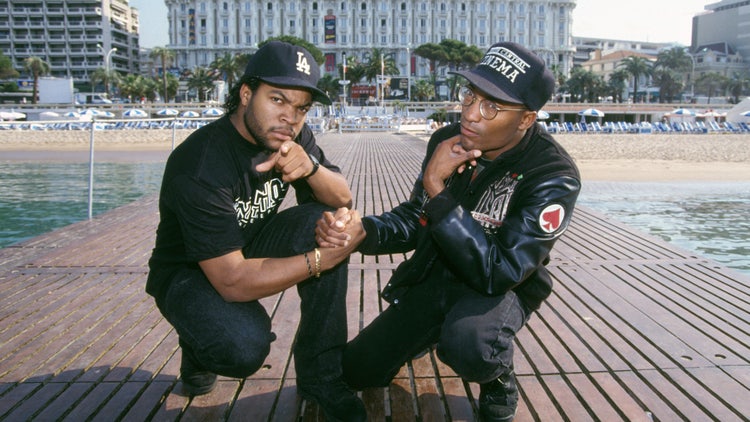
Singleton wrote the script while still in film school and famously refused to let anyone else direct it. Studio execs initially balked at the idea of such a young, unproven director leading the project. “So many pictures have been ruined by that – I had to do it,” Singleton recalled to the BBC. His insistence paid off. The film premiered at the Cannes Film Festival, receiving a standing ovation, and later grossed over $57 million at the U.S. box office on a modest $6.5 million budget. It not only catapulted Singleton into the Hollywood spotlight, but also launched the acting careers of its young cast, including Gooding Jr., Chestnut, Nia Long, Regina King, and Ice Cube, who was making his screen debut.
Breakout performances and a global message
“Casting is 90 percent of the whole process,” Singleton told the BBC, reflecting on his decision to cast Cube, then best known as a founding member of N.W.A. “He was a reflection of one of my best friends... that dude on the block that was like the everyman.” That sense of authenticity permeated every scene of the film, elevating it beyond mere drama into something urgent, raw, and lived-in. The moment where Tre broke down after being harassed by the police, or when Ricky was tragically gunned down, were not just cinematic flourishes. They were gut-punch realities for many viewers across the country.
In a retrospective interview with Entertainment Tonight, Cube praised the film’s accuracy and impact: “I had a father who taught me, just like Tre’s father taught him,” he said. “I had a father that always knocked me back on the right track. I know exactly what I have to do as a father to be a father to my son and raise him right. It’s opened my eyes, even though Boyz n the Hood is not a documentary, it’s so close to it.”
The film’s depiction of fatherhood, particularly the presence of a strong Black father figure like Furious Styles, was a deliberate counter-narrative to media stereotypes that often depicted Black men as absent or negligent. As Singleton told Oprah, “My father whipped me into shape... We need more brothers, if they're going to have a child, to [understand] they have to look out for the well-being of their children.”
Cultural critique, legacy, and the Hollywood ceiling
Boyz n the Hood also invited critique for its treatment of women. As Robert Daniels noted in a Letterboxd editorial, most of the Black women in the film fell into familiar tropes — either as quick-tempered or morally restrained. Sociologist Nicole Rousseau added that motherhood in the film was often portrayed through grief or dysfunction. Singleton later admitted to The Guardian that he was learning to direct as the film progressed.
Still, the weight of the film's message about systemic inequality, cyclical violence, and survival has made it timeless. One of the most iconic lines from the film, delivered by Doughboy after his brother Ricky was killed, summed up Singleton’s indictment of indifference: “Either they don't know, don’t show, or don’t care about what's going on in the hood.”
That line still resonates, especially in the wake of George Floyd’s murder and the global protests that followed. As Entertainment Tonight noted in its 30-year anniversary coverage, the film’s unofficial slogan, “Increase the peace,” remains painfully relevant. The pain and frustration depicted in the film are not relics of the past; they are reflective of an ongoing crisis.
Angela Bassett, who played Tre’s mother, Reva, spoke about Singleton’s legacy at the Tribeca Festival shortly after his death in 2019. “Pretty difficult for all of us,” she began. “Because he made such an impression on our lives, on filmmakers, on actors, on audiences, on his family. On the world over, you know, a great storyteller. Great legacy he leaves behind, but we miss him dearly already.” These personal tributes reflected the breadth of Singleton's influence — not just in film, but in the lives he touched.
A film that changed the industry forever
The film also paved the way for a wave of “hood films,” including Menace II Society, Juice, Clockers, and South Central. Arguably, none matched the emotional nuance and cultural resonance of Boyz n the Hood. As CNN’s Brian Lowry stated, it took 18 more years before another Black director, Lee Daniels (Precious), was nominated for Best Director at the Oscars. Singleton's trailblazing moment was both a breakthrough and a reminder of how far the industry still needed to go.
In his later years, Singleton grew increasingly frustrated with Hollywood’s limitations. "I could have done more movies," he lamented to The Guardian, where he also explained his turn of focus toward television with the FX series “Snowfall.” That show, which chronicled the rise of the crack epidemic in ‘80s LA, served as a thematic continuation of the issues raised in Boyz n the Hood.
For many viewers, that film is a rite of passage. The film’s most heart-wrenching moment — Tre screaming “RICKY!” in a bloodied alleyway — was etched into the cultural memory. More than a movie, it was a mirror. As actor Oscar Kightley told Letterboxd, “I don’t know if Black filmmakers understand what their work has meant to other people... It means a lot.”
Even Singleton himself was surprised at the global impact of his hyper-local story. “I was only focused on making a film about LA... I had no idea that its experiences were universal,” he admitted to BBC. And yet, that universality is exactly what made Boyz n the Hood an enduring masterpiece.
In the final years of his life, Singleton remained dedicated to telling authentic stories rooted in Black life. He planned a biopic on Tupac Shakur, and even as his health declined, he mentored young filmmakers and advocated for systemic change in the industry. When he passed away following a stroke, tributes poured in from every corner of the culture.
Today, when we talk about representation, authenticity, and who gets to tell which stories, Boyz n the Hood is a reminder of what happens when a storyteller is allowed to speak from the heart. Singleton said he made the film for Black America. In doing so, he created something for everyone.