Key Takeaways
- Eve believes ghostwriting isn’t a dealbreaker if the music connects, but she still values personal storytelling.
- She’s worked with writers like Taneisha Jaxxon, reflecting a shift in her creative process.
- Her perspective shows how Hip Hop is evolving to embrace collaboration without losing authenticity.
With nearly 30 years in the game, Eve has witnessed the evolution of Hip Hop. And when it comes to ghostwriting, she’s not afraid to speak the truth. Whether fans realize it or not, their favorite songs are being shaped by uncredited lyricists and behind-the-scenes collaborators.
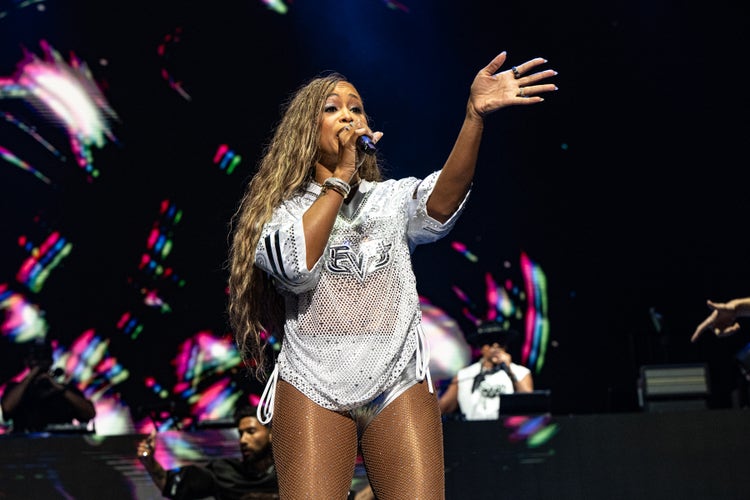
The Ruff Ryders’ first lady weighed in on the taboo topic during her new interview with The Shade Room host Thembi. “The way I came up was like, if you don’t write your own lyrics, you’re not real. It’s not real… but as I’ve gotten older, I have pulled in other writers when I do certain projects,” said the Philadelphia-bred superstar.
Eve’s 2019 comeback single “Reload” marked a shift in her creative process. After a six-year break, she teamed up with London songwriter Taneisha Jaxxon, known for her work on Doja Cat’s Grammy-nominated album Planet Her. “It’s more of a collaborative effort,” the entertainer said of their process. “I’m lyrics first, so I do think it’s important that you have a hand in writing the thing that you write. But also at the same time, good music is good music, and I think the times have changed.” Moreover, the Barbershop actress is not alone in finding help in others. “I think there’s lots of rappers out there that don’t contribute. I think we don’t know them all, but there’s definitely quite a few,” she said.
As for the taboo nature of employing ghostwriters, the hitmaker explained, “I think because of what Hip Hop is, it’s supposed to be telling your story. It’s supposed to be coming from where you come from, what your opinion is, who you are… It’s supposed to be personal… I personally don’t hold onto that as much, but I would never not write a full record. Like, I would never not have a hand on something that I write… For me… I just can’t really embody someone else’s lyrics. If it’s a full song, I need some part of that for me emotionally, but that’s just me.”
Ghostwriters are shaping Hip Hop from behind the scenes
One of the most prominent figures in the debate is that of Quentin Miller. His name, in some ways, became synonymous with Drake’s album If You’re Reading This It’s Too Late. He has hit back at the claims that aim to reduce or downplay his talent, though, instead describing himself as more of a collaborator than a ghostwriter for the 6 God. But regardless of any controversy, many have praised his lyrical storytelling.
Lil Yachty has also found himself at the center of the polarizing discussion. Several Hip Hop fans posted frenzied reactions in 2019 when he revealed himself as a significant contributor to the City Girls’ song “Act Up.” But the list of people pitching in to make a hit is often far more exhaustive than most would imagine. And that’s not a testament to an artist’s song-making ability, no matter how hard individuals use the pen as a barometer of talent. Eve’s take on the matter reflects a broader truth in Hip Hop — the culture is evolving, and so are its rules.