Key Takeaways
- Her debut album topped the Billboard 200, making her one of the first female rappers to do so.
- She won a Grammy for “Let Me Blow Ya Mind,” expanding her reach beyond Hip Hop audiences.
- Eve transitioned into acting with roles in major films and her own sitcom, showing her versatility.
Eve didn’t need a slow build-up to become impactful. She showed up with Ruff Ryders energy, a sharp pen, and a look nobody could copy, then turned that first spark into a career that keeps finding new stages. One minute she’s trading bars with the hardest voices in rap, the next she’s landing a movie role, headlining network TV, or chopping it up on daytime television like she’s been there forever.
What makes her run feel so replayable is how clean the pivots are. Instead of simply “crossing over,” Eve picked lanes, showed up prepared, and made each move feel like a natural extension of the last one. From rap dominance to pop-leaning hits, from acting to hosting, she’s built a resume that reads like multiple careers stacked into one.
Here are some of the moments that explain why her name will always hold weight.
1. Ruff Ryders’ First Lady becomes a real title
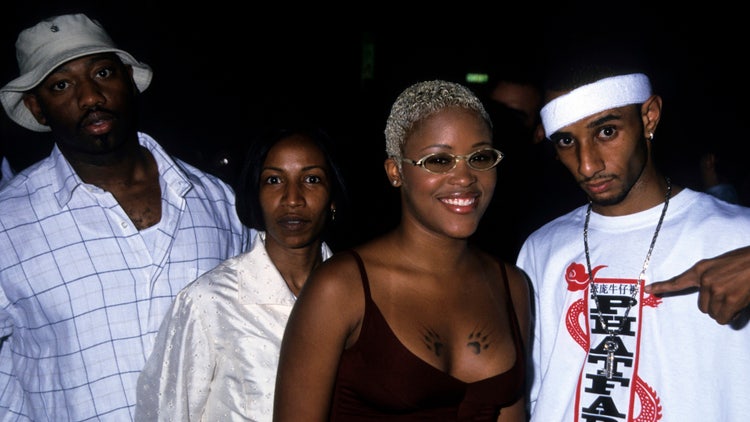
Eve didn’t get slotted into the roster as a novelty. She claimed space in a crew built on raw street rap and made the “First Lady” label mean something. Features, videos, and early momentum all pointed to the same conclusion: She wasn’t visiting the era, she helped define it.
2. A debut album that went straight to the top
Let There Be Eve… Ruff Ryders’ First Lady arrived as a full statement, not a mixtape warm-up. The project hit No. 1 on the Billboard 200 and turned her into a household rap name in a single swing. Even now, it stands as one of the clearest “introductions” in late-’90s Hip Hop.
3. “Love Is Blind” proved she can tell a powerful story
Some artists wait years to drop a record with real gravity. Eve did it near the start. “Love Is Blind” brings storytelling, tension, and consequences, and it proved she could make music that hit beyond the club and the radio. It’s one of the tracks that made fans take her seriously fast.
4. A BET Awards win that stamped the era
When the culture needed a scoreboard, Eve put points on it. She won BET’s Best Female Hip Hop Artist, a moment that lined up with how loud her run felt in real time. Awards are not everything, but that one matched the temperature of the streets and the charts.
5. “Let Me Blow Ya Mind” became a crossover classic
The Gwen Stefani collaboration did what big collaborations are supposed to do: It introduced Eve to a wider world without sanding down her identity. The song turned into her biggest mainstream record, and it still sounds like a perfect snapshot of early-2000s radio that rap helped drive.
6. A Grammy and a VMA put hardware behind the hit
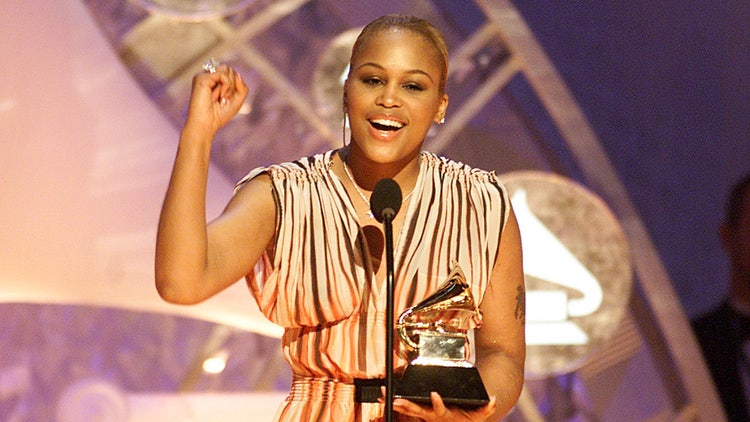
Big songs come and go. This one came with receipts. “Let Me Blow Ya Mind” picked up a Grammy and its video earned major MTV love (including a Video Music Award), which helped lock the record into pop culture memory instead of letting it fade into “remember when” territory.
7. “Gangsta Lovin’” with Alicia Keys kept her in heavy rotation
Eve didn’t treat her first mega-hit as a one-off. She followed with “Gangsta Lovin’,” teaming up with Alicia Keys and landing another record that dominated radio and playlists. It kept her in the sweet spot where rap credibility and mass appeal met in the middle.
8. Hollywood calls: xXx and Barbershop opened the acting lane
Eve moved into film with real roles, not blink-and-miss cameos. xXx put her inside a major action franchise, and Barbershop let her tap into a comedy world that still lives on cable reruns and streaming queues. Together, those films made it clear she could carry scenes, not just show up for a name-check.
9. A self-titled sitcom, plus a later TV comeback with Queens
Landing a self-titled UPN sitcom was a rare flex, especially in the 2000s, and Eve made it look normal. Years later, she returned to scripted TV with ABC’s “Queens,” a music-driven drama about women rappers reconnecting with their past and their ambition. Put together, those shows stamped her comfort as a lead, not just a guest star.
10. Verzuz vs. Trina turned into a celebration of women’s rap
Verzuz battles can feel like sport, but this one played like a living archive. Eve and Trina ran through signature records, fan favorites, and the kind of moments that shaped an era for women in Hip Hop. It also reminded newer listeners that the early 2000s had depth, not just nostalgia.
11. A memoir that puts her story in her own words
With “Who’s That Girl?,” Eve laid out the bigger picture of her career and life beyond headlines. Memoirs work best when they connect the dots for readers, and her journey has plenty of dots to connect: Philly roots, rap superstardom, industry pressure, reinvention, and family life.
12. Daytime TV: “The Talk” proved she can host, not just perform
Joining “The Talk” added another layer to her public persona. It asked for quick thinking, vulnerability, and the ability to carry conversation daily, not just on release weeks. Her run on the panel showed how naturally she translates to mainstream TV, which is its own kind of performance skill.
13. Lip Lock marked a long-game return to album mode
After years of fans asking “When’s the next project?,” Eve came back to albums with Lip Lock. The release framed her as an artist who can take time, live life, and still re-enter the conversation with intent. Even if the industry shifted, the move reinforced the fact that she never needed to rush to matter.