Key Takeaways
- Donald Trump threatened to target Iran’s electric plants, oil wells, and Kharg Island if the Strait of Hormuz is not reopened immediately.
- He said negotiations are progressing, but warned military action would follow if a deal were not reached soon.
- Kharg Island handles about 90 percent of Iran’s crude exports, making it central to the country’s oil industry.
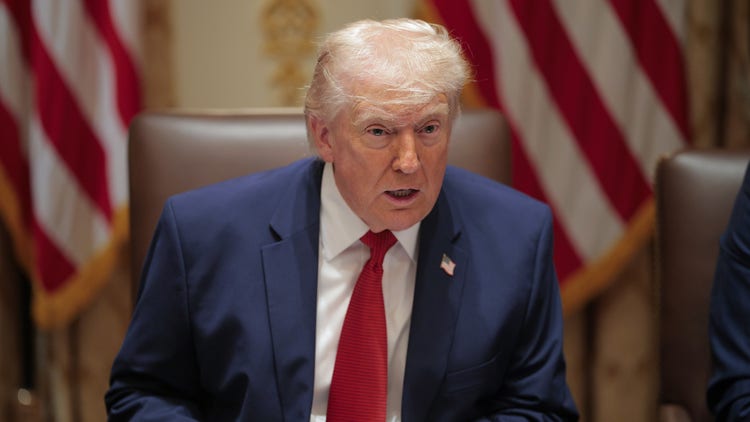
On Monday (March 30) morning, Donald Trump threatened to blow up Iran’s electric generating plants, oil wells, and Kharg Island if the Strait of Hormuz isn’t reopened “immediately.”
Taking to Truth Social, the U.S. president said there’s been “great progress” in negotiations to end military operations in Iran. The politician added that “if for any reason” a deal wasn’t reached “shortly” — though he said it “probably will be” — he’d move ahead with destroying the three aforementioned targets.
Trump then warned the U.S. military would conclude its “lovely ‘stay’ in Iran by blowing up and completely obliterating all of their Electric Generating Plants, Oil Wells and Kharg Island (and possibly all [desalination] plants!), which we have purposefully not yet 'touched.’” The post continued, “This will be in retribution for our many soldiers, and others, that Iran has butchered and killed over the old Regime’s 47-year ‘Reign of Terror.’ Thank you for your attention to this matter.”
Why Kharg Island matters to Iran’s oil exports
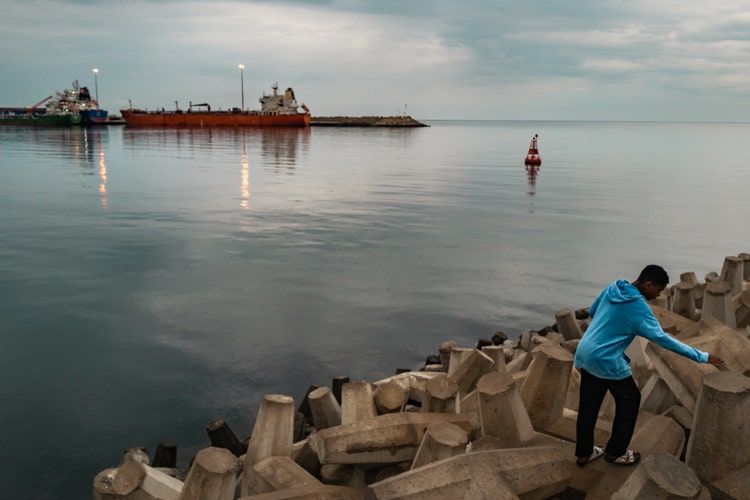
With the Iran war entering its fifth week, CNBC noted Kharg “serves as the centerpiece of Iran’s oil industry,” with an estimated 90 percent of the country’s crude exports traveling through it. According to the publication, the island is believed to have a “loading capacity of roughly 7 million barrels per day.”
Of course, this isn’t the first time Kharg Island has come up. On March 13, Trump said that the U.S. “totally obliterated every MILITARY target” there and warned he would strike its oil infrastructure if Iran continued blocking ships in the Strait of Hormuz.
“Our weapons are the most powerful and sophisticated that the world has ever known, but, for reasons of decency, I have chosen NOT to wipe out the oil Infrastructure on the island,” Trump wrote at the time. “Should Iran, or anyone else, do anything to interfere with the free and safe passage of ships through the Strait of Hormuz, I will immediately reconsider this decision.”
When did the Iran war begin?
On Feb. 28, many people woke up to find out the United States and Israel began military operations against Iran. Ayatollah Ali Khamenei, the country’s supreme leader at the time, and several others were killed in the polarizing first wave of strikes. His son, Mojtaba Khamenei, was later named his successor.
In the weeks since, Iran has launched attacks on Israeli government and military sites in Tel Aviv and several other locations. Last Friday (March 27), The Washington Post reported that 1,443 innocent civilians, including 217 children, have died since the war began. To make things worse, some of the fatalities were a result of “targeting errors and misidentification” from old intelligence, as well as explosives being used in heavily populated areas.
As negotiations continue and tensions remain high, the Strait of Hormuz and Kharg Island remain central to the conflict. Trump’s warning adds further uncertainty to an already volatile standoff.