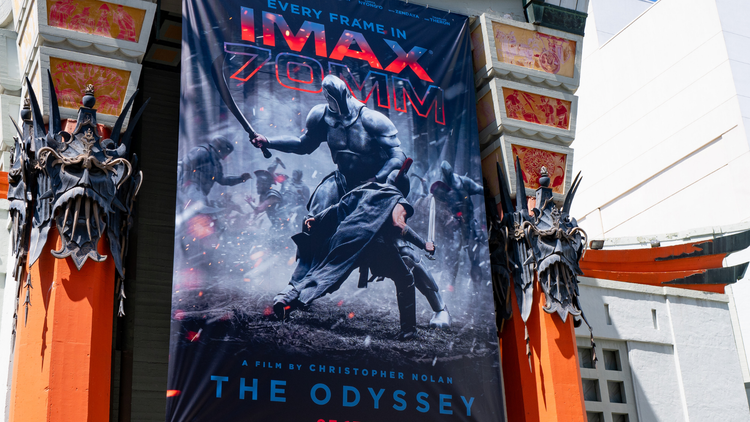
For centuries, "The Odyssey" has stood as one of the greatest adventure stories ever told. A timeless tale of war, survival, and the relentless pursuit of home. With acclaimed filmmaker Christopher Nolan taking on Homer’s legendary epic, he delivers a bold cinematic experience that transforms an ancient myth into a modern masterpiece. From the haunting silence inside the Trojan horse to the terrifying encounters with mythical creatures and the emotional reunion that has defined the story for generations, 2026's The Odyssey has redefined what a historical epic can be on the big screen. So come on now, let’s delve into the film’s most unforgettable moments.
1. The Trojan horse
The Trojan horse scene was one for the books! And it shows Odysseus’ greatest weapon: his mind. Unlike other heroes who win through pure strength or numbers, Odysseus wins through intelligence. The horse represents his ability to outthink an entire city. Nolan focuses on him as a complicated strategist rather than just a warrior, and also on the graphic details of sitting in the bottom of the horse. It was an intense scene to say the least.
2. The cyclops
Let’s be real... this encounter set the entire series of unfortunate events into motion. While it proves that intelligence can be more powerful than strength — because Odysseus and his men had no chance of defeating the cyclops through combat — it also tested Odysseus’ leadership. He was forced to come up with an escape plan while simultaneously keeping his remaining crew calm and mourning the loss of some of his men. This scene blends myth with human emotion. The cyclops is a legendary monster but the scene is ultimately about fear, survival, grief, and resilience.
3. Circe’s Island
One of the most mesmerizing sequences in Christopher Nolan's The Odyssey is the visit to Circe’s Island, where myth, temptation, and psychological warfare collide. Rather than presenting Circe as simply a powerful sorceress, the film frames her as a force that challenges Odysseus’ resolve, exposing the fears, desires, and vulnerabilities of both him and his crew. The island itself feels detached from time, creating an unsettling atmosphere where reality becomes uncertain, and every choice carries hidden consequences. The scene is impactful because it shifts the story away from physical survival and toward emotional and mental endurance. As Odysseus confronts Circe’s enchantments, he must rely on wisdom instead of brute force, reinforcing the central theme that his greatest strength is his intellect. The haunting visuals, deliberate pacing, and growing sense of unease transform the encounter into more than a mythical obstacle.
4. The sirens
The sirens sequence is one of the film's most psychologically rich moments, transforming one of Greek mythology’s most famous encounters into a powerful exploration of temptation and self-control. Rather than relying solely on spectacle, the scene immerses the audience in an atmosphere of suspense, where every note of the siren's song becomes a test of Odysseus’ discipline and determination. The tension comes from the struggle to resist the irresistible rather than from a physical battle. What makes this sequence so memorable is how it reinforces a central theme of the film: the greatest obstacles are often internal rather than external.
5. The Scylla and Charybdis passage
The passage between Scylla and Charybdis stands as one of the most intense and emotionally devastating moments in the film. Faced with two impossible threats, Odysseus is forced to make a decision that no leader ever wants to face: choosing the path that will save the many while knowing it will cost the lives of a few. Rather than portraying the sequence as a conventional action sequence, it emphasizes the crushing weight of leadership where every choice carries irreversible consequences. Scylla and Charybdis symbolize the impossible decisions that define Odysseus’ journey. The impact in this scene is not just the emotional depth but also the special effects that drive the whole thing home.
6. Calypso’s Island
This sequence offers a quiet pause amid the chaos of Odysseus’ long voyage home. Isolated from the dangers of the sea, the island presents him with an alluring alternative to his endless struggles- a life free from war, loss, and responsibility. Rather than depicting the island as a simple paradise, the film explores it as a place where comfort becomes its own type of prison, challenging Odysseus to decide whether peace without purpose is worth more than the difficult journey back to the people he loves. Calypso embodies the temptation to abandon the pain of the past and embrace an easier future, but Odysseus’ unwavering desire to return to Ithaca reminds viewers that home is a part of who he is. Through breathtaking scenery, intimate performances, and a quiet emotional intensity, Nolan transforms this chapter into a meditation on sacrifice and resilience.
7. Odysseus' return to Ithaca
Odysseus finally returning home is one of the film's most emotional and satisfying moments, bringing an end to a journey defined by sacrifice, loss, and unwavering determination. After years of battling mythical creatures, surviving devastating storms, and enduring unimaginable hardships, the sight of his homeland represents far more than the end of an adventure — it symbolizes hope, redemption, and the fulfillment of a promise. Rather than celebrating his arrival with immediate triumph, the film lingers on the quiet weight of returning home as a man forever changed by war and the long road that followed. Odysseus returns not as the confident king who left for Troy, but as a weary survivor carrying the emotional scars of every decision he has made.
8. The bow contest
The bow contest marks the beginning of Odysseus reclaiming the life that was stolen from him. Disguised as a humble beggar, he watches as Penelope’s arrogant suitors fail one by one to string the legendary bow, their confidence slowly giving way to frustration. The tension reaches its peak when the seemingly insignificant stranger steps forward, effortlessly strings the weapon that no one else can master, and reveals the true king of Ithaca has returned. The power in this scene lies in its perfect balance of patience, symbolism, and payoff. The bow itself represents his rightful place as king, husband, and protector, proving that true strength comes from character rather than arrogance. The sequence builds with deliberate pacing and quiet intensity, allowing every glance and every moment of silence to heighten the anticipation before the inevitable reveal.
9. The battle of the suitors
The battle of the suitors serves as the explosive climax, delivering years of built-up tension in a single, unforgettable confrontation. After enduring war, shipwrecks, mythical creatures, and countless personal sacrifices, Odysseus finally stands in the great hall of Ithaca to reclaim his home from the men who have abused his hospitality, threatened his family, and sought to seize his kingdom. What begins as a quiet moment of revelation quickly erupts into a brutal struggle for justice, where every arrow and every strike carries the weight of a king reclaiming his identity. Nolan presents this battle as the culmination of Odysseus’ entire journey, emphasizing the cost of leadership.