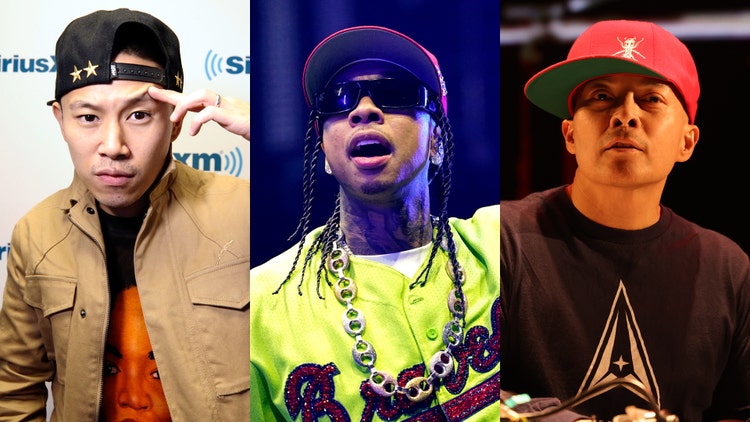
Hip Hop has always been bigger than one sound, one coast, or one kind of story. Across generations, Asian American, Native Hawaiian, and Pacific Islander artists have shown up as DJs, battle rappers, hitmakers, producers, regional architects, and cultural organizers. Some helped shape turntablism, some broke through on national television, and some built scenes that did not have much mainstream visibility. Others carried their heritage into global pop-rap spaces or helped make the Pacific Islander presence impossible to ignore.
Below lies a list of impactful artists and crews whose careers changed what representation looked like in Hip Hop, opened doors in specific lanes, or built résumés strong enough to be part of the conversation. From DJ Qbert’s battle dominance to Tyga’s hitmaking run, Sudden Rush’s Native Hawaiian rap foundation and Boo-Yaa T.R.I.B.E.’s Samoan presence in West Coast history, each entry speaks to a different piece of the culture. Check them out in no particular order below.
1. DJ Qbert
This Filipino American turntablist is one of the most respected DJs to ever touch the decks, with a background that includes the 1991 DMC USA title and back-to-back DMC World Championships in 1992 and 1993. As a member of Invisibl Skratch Piklz, he helped push the art form from technical skill into full-on musical language. His influence can be heard in generations of battle DJs, scratch technicians, and crate-digging obsessives who studied his precision like game tape.
2. DJ Kuttin Kandi
DJ Kuttin Kandi deserves her flowers as both a Filipina American Hip Hop figure and a major woman in turntablism. She won the 1998 Source DJ Championship and became the first woman to reach the DMC USA Finals, placing her in an area that has often been centered around men. Her work also extends beyond battles, as she has been connected to activism, education, and community-building. That mix of skill and purpose makes her impact feel even deeper than the titles alone.
3. MC Jin
MC Jin’s story still feels major because of the moment he broke through. The Chinese/Hong Kong American rapper became a national name through BET’s “Freestyle Friday,” where he won seven straight battles and entered the show’s Hall of Fame. His Ruff Ryders signing then made him one of the most visible Asian rappers in the mainstream rap industry during the early 2000s. Jin did not just rap well on television; he forced a wide audience to take an Asian MC seriously in real time.
4. apl.de.ap
apl.de.ap helped carry Filipino American visibility into one of the biggest Hip Hop-adjacent groups in the world. As a co-founder of the Black Eyed Peas, he was part of a crew that moved from rap roots into global pop domination, collecting major awards and stadium-sized success along the way. His presence also meant Filipino culture had a place inside a group that reached audiences far beyond traditional Hip Hop spaces. For a list built around impact, crossover power matters, and apl.de.ap has plenty of it.
5. Boo-Yaa T.R.I.B.E.
Boo-Yaa T.R.I.B.E. brought Samoan American presence into West Coast rap history at a time when Pacific Islander artists were rarely a part of the conversation. Made up of brothers from Carson, California, the group blended street rap, funk, family energy, and a hard-edged L.A. identity. Their 1990 album, New Funky Nation, helped establish them as a force, while their image and sound gave Pacific Islander fans a group that looked and moved with unmistakable pride.
6. Sudden Rush
Sudden Rush is essential to any serious conversation about Native Hawaiian Hip Hop. The group is widely recognized as the first to record nā mele pāleoleo, a Hawaiian form that fused Hip Hop with Native Hawaiian language, politics, and cultural expression. Ultimately, they helped create a lane where Hip Hop could speak directly to land, sovereignty, identity, and local experience without losing its edge or rhythm.
7. Lionel Wright / Club Rox Rock
Lionel Wright and Club Rox Rock belong here because their work sits near the beginning of recorded Native Hawaiian rap history. Club Rox Rock released one of Hawaiʻi’s earliest rap CDs in 1991, making Wright and company part of the foundation before many outside listeners even knew the scene existed. Their importance comes from documentation as much as performance. They put a Native Hawaiian Hip Hop voice on record early, helping preserve a chapter that could have easily been overlooked.
8. Dumbfoundead
Dumbfoundead built his name through battle rap, underground circuits, internet culture, and a sharp sense of identity. The Korean American rapper came out of Los Angeles’ Koreatown and became one of the most visible Asian American rap voices of his era, especially for fans who discovered artists through YouTube, battles, and independent scenes. His career has stretched into acting, podcasting, and publishing, but rap remains the root.
9. P-Lo
P-Lo’s case comes from regional influence and behind-the-scenes weight. The Filipino American rapper and producer helped shape modern Bay Area Hip Hop as a co-founder of HBK Gang, a collective tied to the area’s post-hyphy evolution and party-ready sound. He has produced for major artists, built his own catalog, and kept his Bay identity front and center.
10. Savage
Savage brings the Pacific Islander side of the story into a global frame. The Samoan New Zealand rapper was at the forefront of New Zealand Hip Hop’s rise, and “Swing” became a major U.S. crossover moment after gaining new life through film and club culture. For many listeners, he was one of the first Pacific artists to feel truly international in a Hip Hop context.
11. Anderson .Paak
Anderson .Paak is not easy to place in one box, which is part of his power. The Korean and Black American artist moves through rap, R&B, funk, soul, and live musicianship with rare ease. His Grammy wins, festival presence, and work as one-half of Silk Sonic made him one of the most decorated modern artists connected to Hip Hop culture. Even when he is singing, drumming, or sliding into funk mode, his phrasing, rhythm, and attitude carry a clear rap foundation.
12. Tyga
Tyga’s career gives this list one of its strongest commercial cases. The Vietnamese and Jamaican American rapper has been a mainstream presence for years, with hits like “Rack City,” “Faded,” “Ayo” and “Taste,” the latter becoming diamond-certified. His run spans blog-era Young Money momentum, club records, radio success, and viral-era relevance. Tyga may not always get placed in heritage conversations, but his background and résumé make him hard to ignore here: He is one of the most successful Asian-descended rappers in modern Hip Hop.